
An Irish doctor, has called on the Government to improve the care for women living with endometriosis.
Dr Rachel O'Connor made this plea to the Government, having had to travel abroad for lifesaving surgery, after she was told that her endometriosis was "too severe" to treat here in Ireland.
Dr O'Connor underwent more than 10 hours of specialist endometriosis surgery in Warsaw, which she said involved extensive surgery to her bowel and other organs. Her surgeon had later said that she was lucky to survive at all.
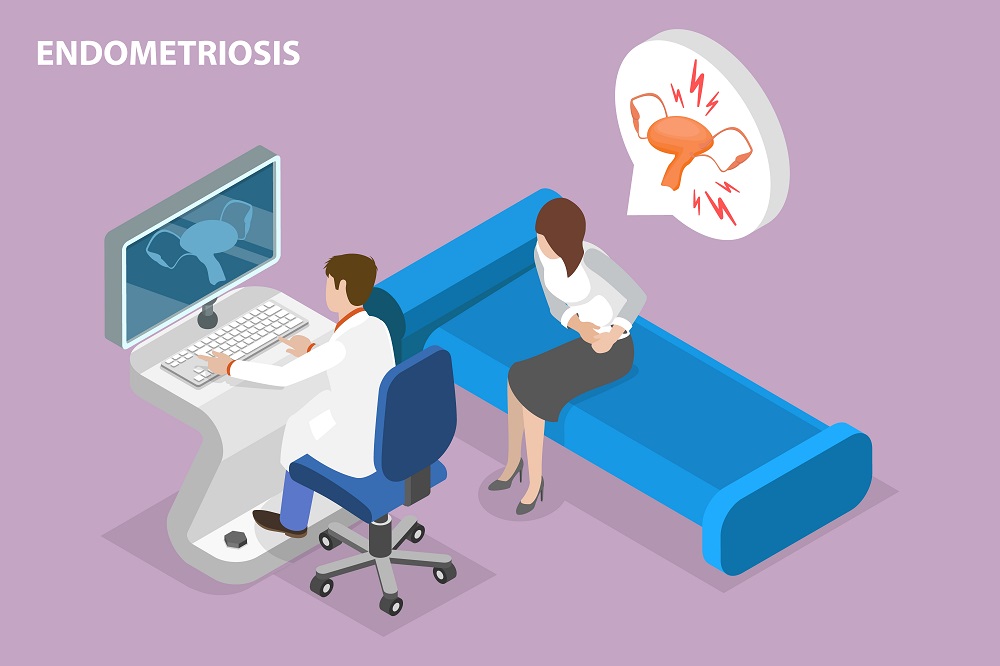
Endometriosis is a chronic condition where tissue like the inner lining of the womb grows elsewhere in the body, which causes inflammation and scar tissue, possibly affecting fertility. It can affect up to one in seven women and girls in Ireland.
It is a condition which has been largely misunderstood for generations of women, and often dismissed and normalised as an acceptable period pain, according to reports in RTÉ.
But in recent years, endometriosis has come to the forefront of growing public awareness, regarding the condition and its whole-body impact, with several well known figures talking about the issue more openly about suffering with it.
Having suffered severe urinary pain monthly as a teenager, Rachel later developed severe gastrointestinal symptoms, and repeatedly sought medical help for more than a decade.
"Each time I went to a doctor, I was just diagnosed with a UTI [urinary tract infection] and I was paralysed. I was just prescribed antibiotics - 'take these, you’ll be fine’. It didn’t help. I also had chronic bowel habits; they were never normal. I was told I was sensitive to food", she explained.
"I was referred to urologists, gynaecologists, ED doctors, general medicine, West Doc, university campus doctors and nobody knew what to do. Twelve years later I started developing heavy periods, so I was bleeding for 10 days a month minimum".
Eventually, it was suggested for the first time when she was 28, that she may have endometriosis, which left Rachel devastated, as she knew it would affect her fertility.
"Given the fact that I did want to have children, it was devastating. And leaving that appointment, I still had no treatment", she said.
Eventually, she travelled to Warsaw at her own expense, where she was diagnosed with stage four of the condition..
Following this, she decided to become a doctor, specialising in women's health, given her influences. While training, she worked on rotation at various hospitals, while simultaneously balancing working with her own symptoms, calling the pain "horrendous".
Eventually, Rachel returned to Warsaw, where she was finally told that she could receive the treatment she needed.
Extensive surgery was planned in early 2025, removing as much of the endometriosis as possible, with Rachel advised to retrieve eggs, if she was to have any hope of conceiving in the future.
She sought help from the Government's publicly funded fertility treatment scheme for help, only to be told that it does not fund egg preservation for women battling endometriosis.
"I didn’t even get past the first consultation", she said.
She was then required to leave Ireland for this, due to the severity of her diagnosis, as well as having to fund her IVF rounds herself. But due to the severity of her disease, her propects of conceiving looked bleak.
Rachel eventually had her specialist endometriosis surgery in Warsaw, Poland, in March last year, which involved fourteen cysts removed from her ovaries, as well as removing extensive adhesions, her appendix, two-thirds of her rectum and sigmoid colon, 20cm of her small intestine, her left fallopian tube and the ligaments supporting her uterus.
The surgeon also shaved tissue from the outer wall of her bladder.
"When I asked how long did I have left, it was at that point where they said that I had multi-organ failure and multi-organ damage and gastrointestinal organ failure - the surgeon told me that I should not have survived", Rachel said.
While it did lead to her losing 10kg, Dr O'Connor said the surgery did bring great relief.
Last October, the Government had introduced its first framework for endometriosis, which sets out plans for faster clinical care pathways for women who have or may have the disease, as well as new financial supports for endometriosis patients who are required to get treated abroad.
The Department of Health called this a huge step forward towards improving diagnosis and getting the appropriate treatement.
"In 2025, established specialist services saw almost 1,200 new patients and more than 5,000 review patients, with over 1,400 endometriosis-related surgeries performed," a statement said. "Activity increased further in the first half of 2026.
"Minister [Jennifer] Carroll MacNeill is committed to expanding specialist services and improving support and awareness". (All quotes in this piece according to RTÉ).