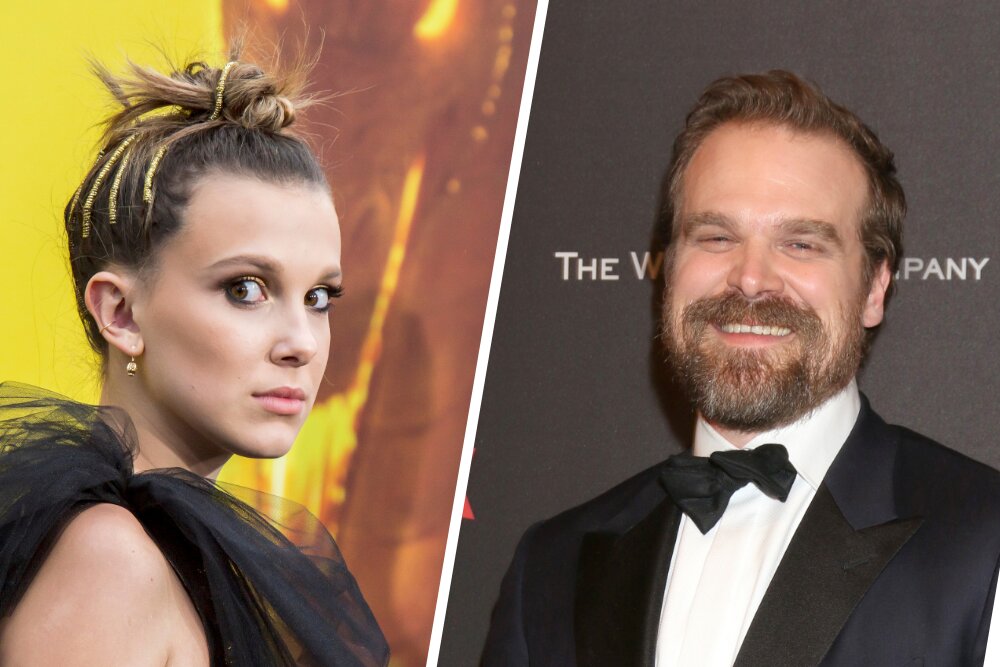

According to multiple reports, Millie Bobby Brown has filed a formal harassment and bullying claim against David Harbour ahead of Stranger Things Season 5, alleging a broad litany of misconduct in the early episodes of season 1. She supposedly lodged “pages and pages of accusations” before filming began, triggering an internal investigation that is said to have stretched over months. Notably, sources emphasise the allegations are not sexual in nature, but rather centre around intimidation, emotional distress, or on-set pressure. One insider claimed Brown had a personal representative present with her while filming some scenes. If true, the claim underscores a deep fissure in what has long been presented as a close working relationship.
Millie Bobby Brown first captured global attention as a child actor — she was just 11 years old when she was cast as Eleven in Stranger Things, a haunting yet vulnerable role that would become iconic. Beyond that breakout, Brown’s early years were marked by rapid growth: born in Marbella, Spain and raised between England and Florida, she moved into the spotlight while still navigating adolescence. Over the years she has evolved from a breakout teen star into a multi-faceted entertainer: she’s not only an actor but also a producer, entrepreneur and public figure. She launched her own beauty and lifestyle brand, Florence by Mills, and has taken on substantial film roles such as Enola Holmes and its sequel, and most recently the fantasy feature Damsel (2024).
Her ascent from child stardom to one of Gen Z’s most recognisable faces has not been without scrutiny, but she’s largely managed to control her narrative. Brown has been candid about her early start, the pressures of fame and her evolving sense of identity. She has spoken out against media commentary on her appearance, stating: “I started in this industry when I was 10… My face grew — what do you want me to do?” (paraphrased) — an assertion of her right to grow up on her own terms. Her brand-and-business ambitions have flourished as well: reports estimate her net worth at between US$15–20 million by 2025, thanks to her acting work, brand ventures, and endorsements.
Away from the spotlight her life has taken on new chapters: she married actor and model Jake Bongiovi in 2024, and in the summer of 2025 she and Bongiovi announced the adoption of a baby girl. She and her husband now live on a farm in Georgia, US, where Brown has described the setting of animals and rural life as chaotic yet rejuvenating: “There’s so much chaos … and that is where I thrive.” These moves reflect her transition from child actor in a streaming sensation to a young woman balancing personal life, business and creative ambition.
David Harbour, by contrast, only joined the Stranger Things story later — yet his presence quickly became central. He plays Jim Hopper, the adoptive father figure to Eleven, bringing to the role a brooding intensity shaped by his own career in film and television (Hellboy, The Newsroom, various character roles). Harbour has in past interviews referred to a somewhat paternal sense of responsibility toward Brown on set, sometimes saying he felt protective of her. That real-life dynamic now beams brighter in the spotlight, given new claims that have surfaced.
So far, Harbour has remained largely quiet about the matter. In earlier remarks — made before these allegations were public — he said: “I’m protective of the people and the reality of my life … There’s no use in that form of engaging [with tabloid news] because it’s all based on hysterical hyperbole.” But with scrutiny now turning inward, every past comment, gesture, and expression takes on new interpretive weight.
Complicating the narrative further is Lily Allen’s recent emergence into the arena. Allen, who until recently was married to Harbour, released her fifth studio album, West End Girl, on October 24, 2025 — her first in seven years. She has openly said that the record reflects the untangling of her marriage, blending “fact and fiction” as she processed emotional turmoil. She told The Independent that life had “blown up,” and in turn, the album “will p*** people off.” Among its 14 tracks are pointed lyrics about betrayal, gaslighting, and emotional disconnection, and she implies that Harbour violated their marriage arrangement. On one track, she sings: “Am I looking at a sex addict?” referencing a dynamic of distrust and hidden infidelity.
Though Allen has said West End Girl is not a direct “revenge album,” her outspokenness is clear. She emphasized she did not want to “sound like a victim” and described the work as a “mixture of fact and fiction.” Reports now suggest one song, “Madeline,” references a woman named Natalie Tippett — a costume designer who, some allege, had a relationship with Harbour during the marriage. Tippett has publicly confirmed messages she sent to Allen were used as lyrical material, but declined to comment further, saying she has “a family and things to protect.”