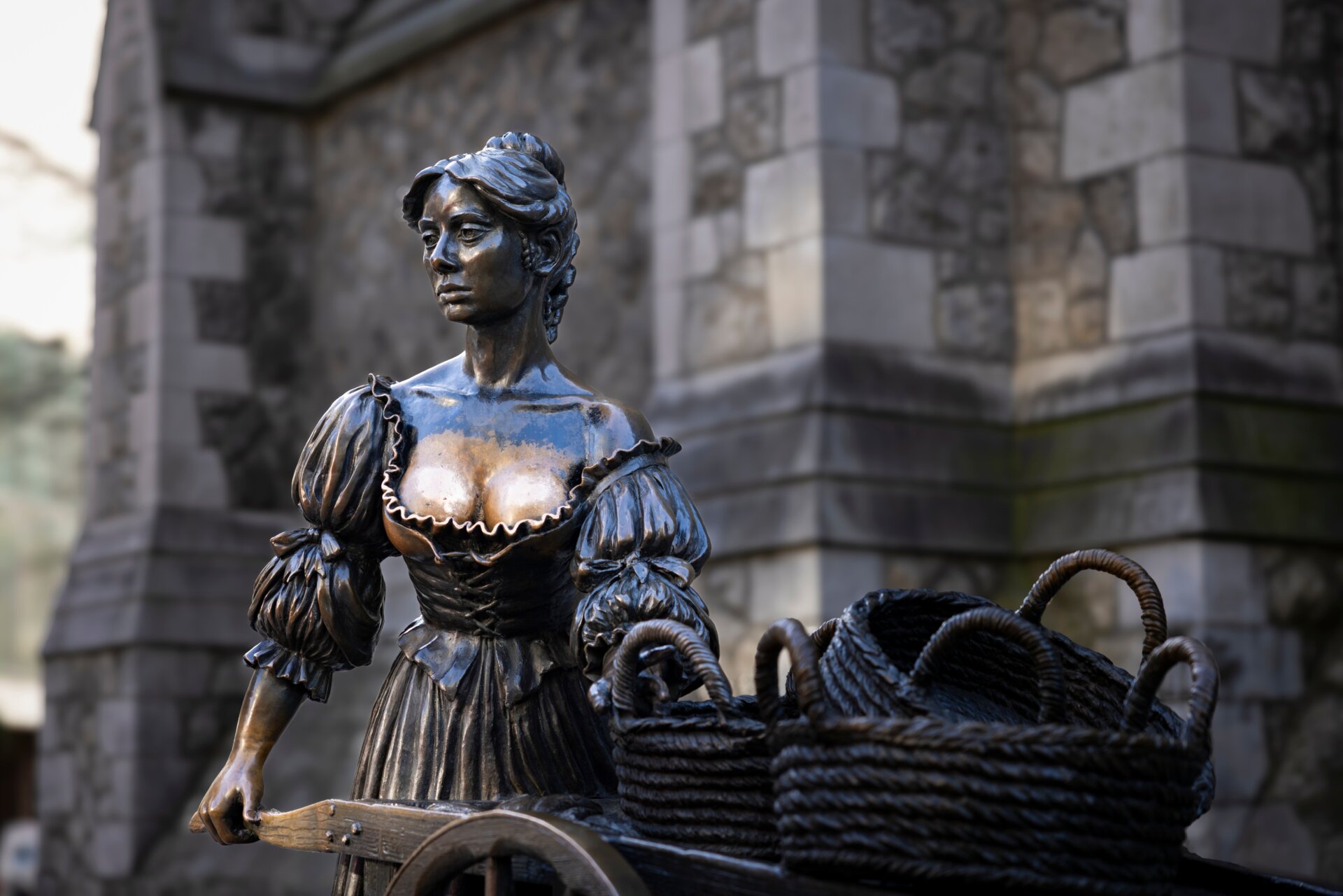

The iconic Molly Malone statue in Dublin has been temporarily boarded up for restoration, sparking renewed discussion about respect for public art and tourism behavior. The statue, which stands prominently on Grafton Street, has become one of the city’s most photographed landmarks, but in recent years it has also become a source of controversy due to inappropriate touching by visitors.
Installed in 1988 to commemorate the fictional fishmonger immortalized in the famous song “Molly Malone”, the bronze statue depicts the character in 17th-century attire, pushing a wheelbarrow of fish. Over time, it has become a popular photo spot for tourists, but its fame has also brought significant wear and damage, particularly to the chest area, which has been repeatedly touched by visitors believing it brings good luck.
The board-up and ongoing restoration come as Dublin City Council seeks to preserve the statue’s condition. Council officials explained that the bronze had developed discoloration and surface damage due to the high volume of contact, as well as exposure to weather and pollution. The restoration will involve treating the bronze to protect it for future generations.
The statue has long been at the center of debate about public behavior and gendered expectations. Critics argue that the groping of Molly Malone reflects a broader societal issue, where women’s bodies — even in statue form — are treated as objects for public amusement. Campaigners and some local artists have called for clearer guidance and stewardship to ensure the statue is treated respectfully, rather than a “touchable” attraction.
In recent years, Dublin City Council trialed stewards stationed near the statue to advise tourists not to touch it. The pilot programme proved somewhat effective in curbing inappropriate gestures, but many argued it was not enough to protect the statue from repeated damage. Some have suggested raising the statue on a plinth, which would make it harder to reach, while others advocate for a transparent protective barrier similar to those used for famous artworks in museums.
Local tourism experts note that while the statue is a major draw for visitors, education about cultural and historical significance is equally important. One proposal under discussion includes installing an interpretive plaque explaining the story of Molly Malone, her significance in Irish culture, and the importance of respecting public art. Officials hope that by combining restoration with educational measures, tourists will better appreciate the statue’s heritage rather than seeing it as a photo prop.
The controversy also raises wider questions about how cities handle popular landmarks. Dublin, like many major tourist destinations, faces a delicate balance: allowing visitors to enjoy cultural icons while preventing damage and maintaining dignity. The Molly Malone statue has become a symbol not just of the city, but of how heritage sites can be both celebrated and exploited in the age of social media.
Some locals have expressed frustration at the years of misuse. Artists and historians have noted that statues like Molly Malone are meant to be public art for reflection and appreciation, not a tool for superstitious rituals or jokes. “It’s a symbol of our city’s story, not a touchstone for luck,” one cultural commentator remarked. Others point out that the restoration is long overdue, as repeated groping, weathering, and pollution have significantly degraded the statue.
The debate has also prompted discussions about gendered behavior in tourism. Many argue that the repeated touching of Molly Malone is emblematic of a broader issue in society, where women’s bodies — whether real or depicted — are objectified. By boarding up the statue and considering more permanent protective measures, Dublin City Council hopes to send a clear message.
Despite the controversy, many Dubliners still embrace Molly Malone as a cultural icon. The statue represents not only the beloved song but also the resilience and vibrancy of Dublin itself. Council officials emphasize that the temporary boarding is a necessary step to preserve the landmark, and that once restoration is complete, visitors will again be able to enjoy the statue, hopefully with greater awareness and respect.
As restoration work continues, discussions about the future of public art in Dublin are likely to expand. Whether through elevated displays, protective barriers, or educational campaigns, the goal is to ensure that landmarks like Molly Malone can be appreciated safely, respectfully, and for generations to come. In the meantime, the boarded-up statue serves as a reminder of the city’s need to protect its heritage, and the complex conversations that come with it about tourism, respect, and cultural responsibility.