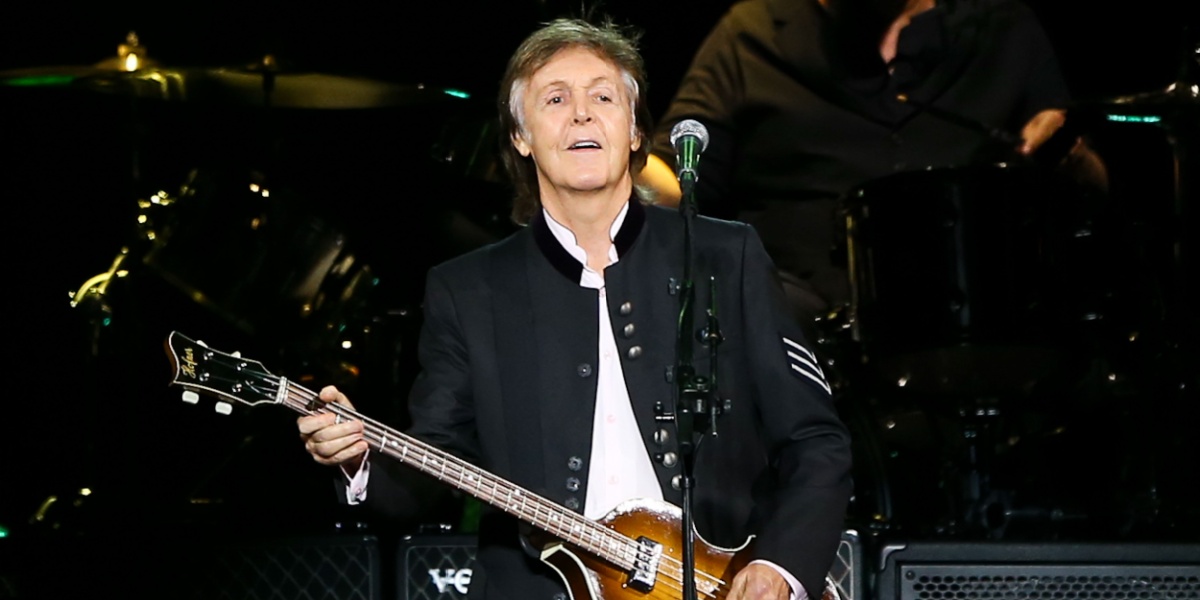

Paul McCartney’s appearance at Live Aid in 1985 was always going to be momentous. What it nearly became, however, was a complete shambles on the biggest stage imaginable — a comeback performance broadcast to an estimated 1.9 billion people around the world that was, for two agonising minutes, completely inaudible.
McCartney hadn’t performed live in six years. Wings had dissolved amid internal strife, and a disastrous arrest for cannabis in Japan left McCartney cold on the chaos of touring. Then, in 1980, came the unimaginable: John Lennon was murdered. From that point, MacCartney withdrew from the stage altogether, and for years the idea of a live return wasn’t even a consideration.
It took Bob Geldof, wielding both the power of persuasion and the cultural magnitude of Live Aid, to coax him out. Geldof wanted a statesmanlike icon to legitimise the event — and who better than one of The Beatles? McCartney agreed, reportedly encouraged by his children, and chose to perform Let It Be, a song he’d never had the chance to deliver to a proper audience during The Beatles’ time.
The plan was sound. The moment was set. The result? Immediate catastrophe.
As McCartney sat at the piano and sang the opening line “When I find myself in times of trouble…” the microphone failed. The stadium couldn’t hear a thing. What followed was two surreal minutes of silence from the world’s most recognisable voice.
Bob Geldof, watching side-stage with David Bowie, Alison Moyet and Pete Townshend, realised the show needed saving. “Pete says, ‘We’ve got to go out and sing it for Paul,’” Geldof recalled. They walked out, joined the performance, and just as they did — the mic finally came back on.
McCartney later joked he’d altered the lyrics: “There will be some feedback, let it be.” Somehow, through sheer legacy and communal goodwill, the disaster became a triumph. The comeback he feared became the moment that reignited his touring passion. Since 1989, he's barely left the road.