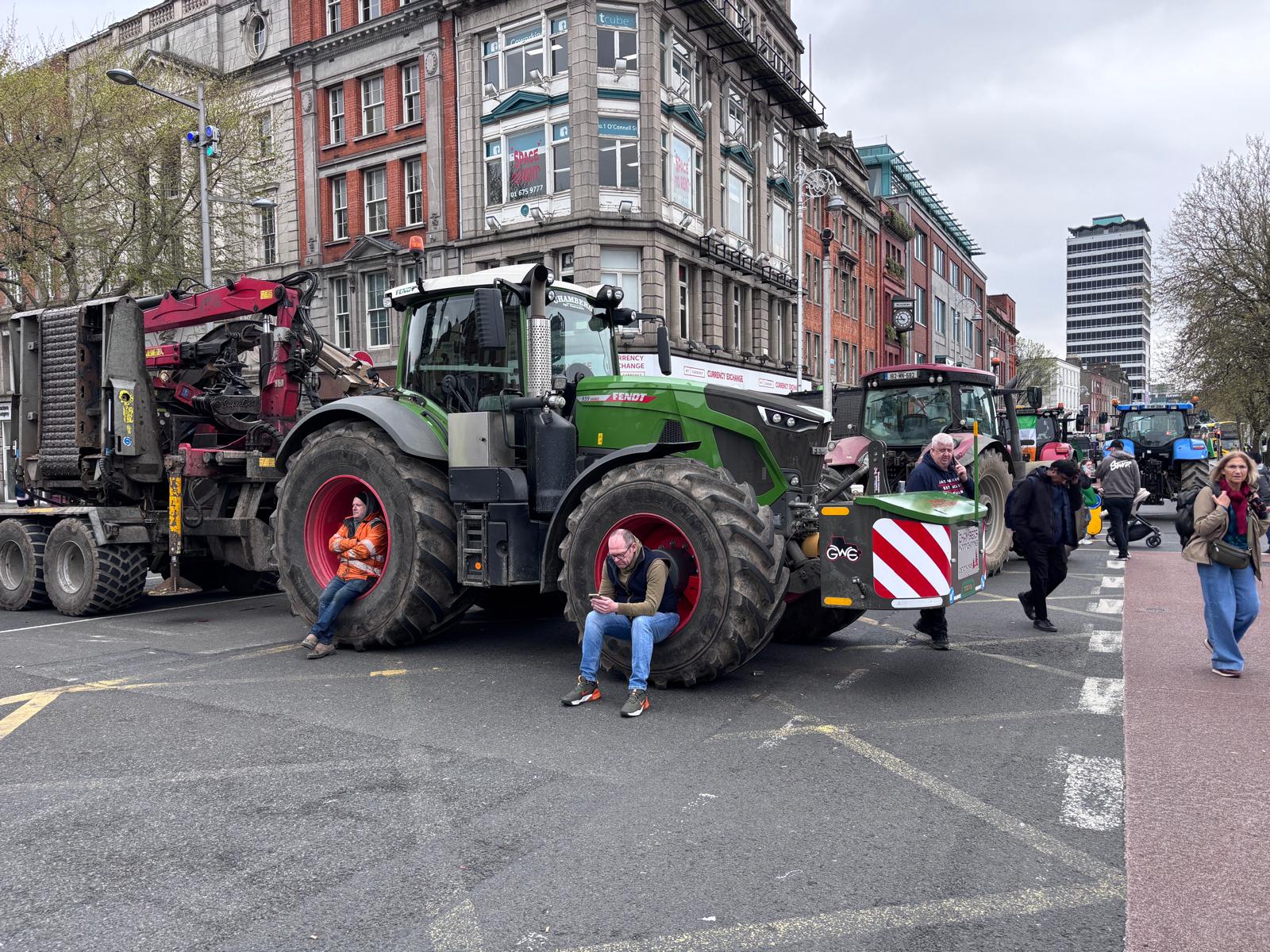

Fuel blockades that brought Ireland to a standstill for nearly a week have mostly been lifted, with the whole country returning to near-normal conditions as the Government rolls out a €500 million support package aimed at easing the pressure on households and key sectors.
In Dublin, O’Connell Street has fully reopened following a major Garda operation overnight, bringing an end to one of the most visible symbols of the protests.
Public transport in the capital has largely stabilised, with Dublin Bus services resuming from early morning and both Luas lines operating normally, though some minor diversions remain in the city centre.
Across the wider commuter belt — including parts of Kildare, Wicklow and Meath — conditions are improving but not yet fully back to normal.
Residual delays continue on key routes, including stretches of the M50, N7, and N81, where some slow-moving convoys and knock-on congestion are still affecting journeys into the capital.
Outside Dublin, the situation is also easing following the lifting of key blockades at major infrastructure points.
In Galway, access around the port has reopened after earlier disruption, while in Cork, traffic near Ringaskiddy and other key routes is moving again, albeit slowly in places.
Limerick, Clare and other regions affected by fuel depot and road protests are likewise seeing a gradual return to normal traffic conditions.
However, a major issue remains nationwide: fuel supply.
While deliveries have resumed to petrol stations across the country, many forecourts remain partially stocked or empty, with industry figures warning it could take between six and ten days for supply chains to fully recover.
Logistical delays, reduced delivery capacity and the backlog caused by the blockades mean motorists in both urban and rural areas may continue to experience shortages in the coming days.
The easing of disruption comes at a crucial time, with public transport services across the country returning ahead of the end of the Easter break, helping commuters, students and workers prepare for a more normal week.
The developments follow the Government’s confirmation of a €500 million-plus package of measures designed to respond to the crisis.
The plan includes a further 10 cent cut in excise duty on petrol and diesel until the end of July, as well as a 2.4 cent reduction in green diesel, aimed at supporting farmers and the agricultural sector.
In addition, direct financial supports will be provided to hauliers, bus operators, farmers and those in the fisheries sector, many of whom were central to the protests and have been among the hardest hit by rising fuel costs. The Government has also delayed planned increases to carbon tax until October, in an effort to reduce immediate financial pressure.
Ministers have defended the scale of the intervention, describing it as one of the most significant support packages in Europe relative to population size, and signalling that further measures could follow if required.
Despite the lifting of blockades, uncertainty remains around whether protests could resume. Some organisers have indicated that while the immediate action has ended, the wider campaign is not over, and further demonstrations have not been ruled out if additional demands are not met.
For now, though, the picture across Ireland is one of gradual recovery, as roads reopen, public transport stabilises, and fuel begins to flow again — bringing an end to several days of widespread disruption that affected communities from Dublin to Galway, Cork, Limerick and Clare.