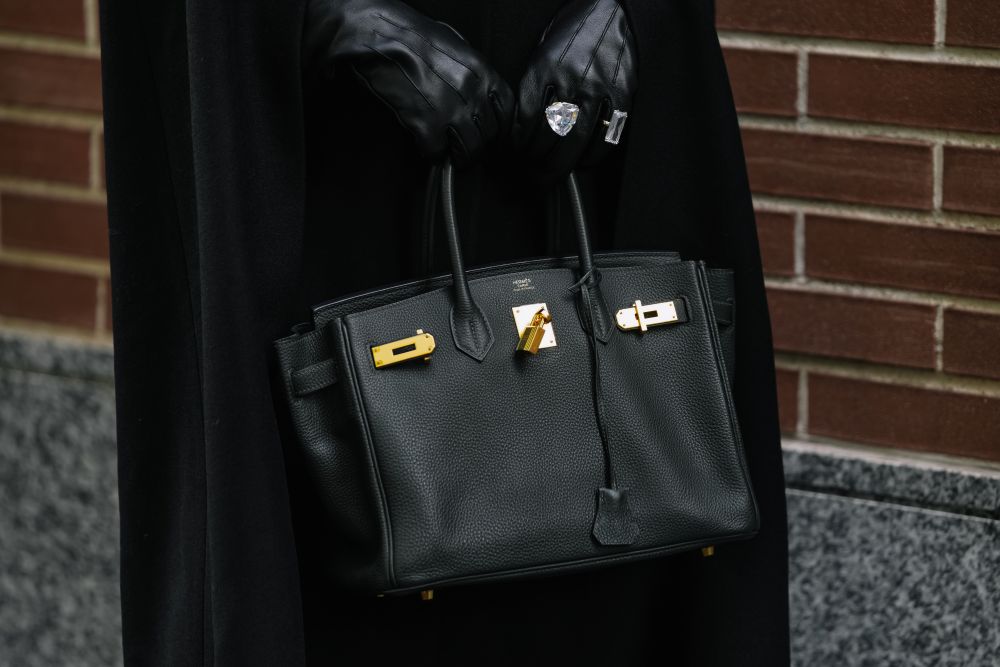

Hermès has long cultivated an aura of near-mythical exclusivity around its Birkin handbag, but fresh reports suggest the French luxury house may go further than most consumers realise to decide who is “worthy” of owning one.
According to multiple industry accounts, prospective Birkin buyers are quietly vetted by sales staff, with checks allegedly extending beyond purchase history to include social media presence, lifestyle signals and even the location of a customer’s home via Google Maps, to assess whether it meets the brand’s standards of prestige. Other reported measures include observing whether clients wear high-end watch brands or demonstrate familiarity with Hermès’ wider product range.
Hermès does not publicly comment on individual sales practices, but the brand has never denied that Birkins cannot simply be bought on demand, regardless of wealth. The bags are intentionally scarce, produced in limited quantities each year as part of a tightly controlled strategy designed to preserve exclusivity.
Some of the rarest versions, such as the Himalayan Birkin, are believed to be made only once or twice annually worldwide. This deliberate shortage has helped transform the bag into one of the most coveted status symbols on the planet, with resale prices frequently exceeding retail value.
At the heart of the scarcity is craftsmanship. Each Birkin takes up to 48 hours to produce and is handcrafted by a single artisan, making mass production impossible. Customers are typically expected to build a long-term relationship with a sales associate, purchasing other Hermès items before being offered the chance to buy a Birkin — a system often described as a “quota” model.
“Hermès has turned what could be a straightforward retail transaction into a privilege,” one luxury analyst noted, pointing out that money alone does not guarantee access. “Scarcity is not a by-product of the brand — it’s the product.”
The Birkin’s origin story adds to its legend. In 1981, actress Jane Birkin happened to sit beside Hermès chief executive Jean-Louis Dumas on a Paris–London flight. After her belongings spilled from her bag, the pair discussed the idea of a practical yet elegant weekend handbag. Dumas sketched the concept on an airsickness bag, and the Birkin officially launched in 1984.
While initially low-key, the bag surged to global prominence in the late 1990s, becoming a fixture of celebrity wardrobes and a marker of elite cultural capital. Today, owning a Birkin signals patience, access and insider status, not just luxury.
Unlike brands such as Chanel or Louis Vuitton, where iconic handbags can often be purchased immediately, Hermès has positioned itself as the ultimate gatekeeper of high fashion, ensuring the Birkin remains not just a bag, but a symbol of belonging to an exclusive world.