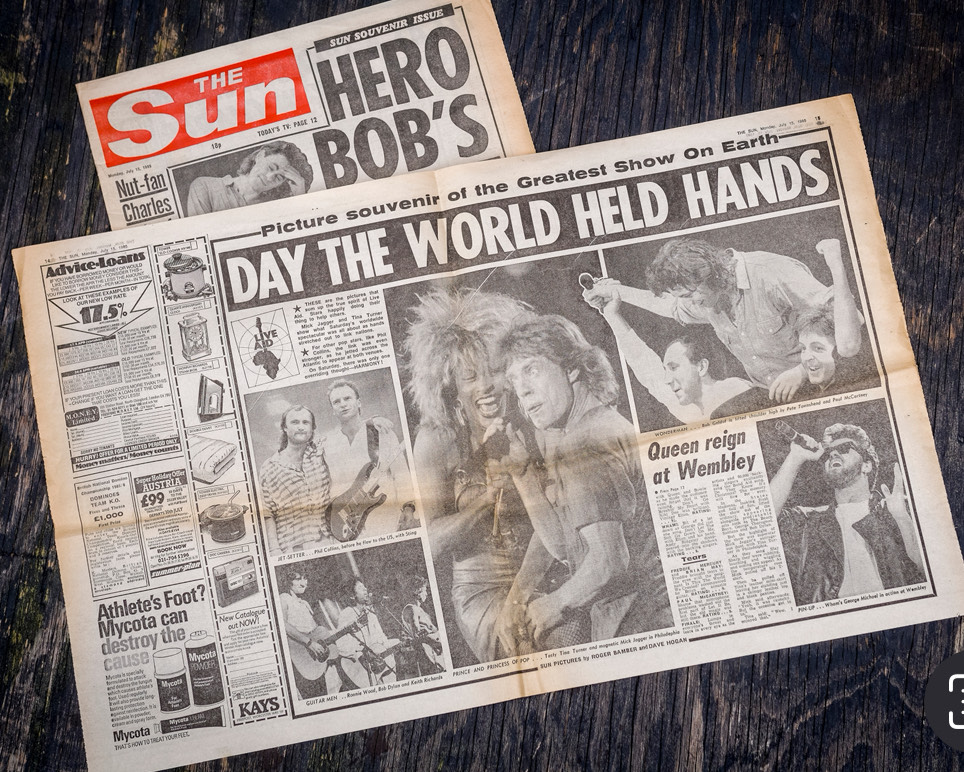

Today marks the 40th anniversary of one of the most iconic music events in history: Live Aid, the global benefit concert that united two continents, 70 acts, and nearly two billion viewers in a day that changed the world.
On July 13, 1985, music fans from across the globe tuned in to a transatlantic rock spectacle in London’s Wembley Stadium and Philadelphia’s JFK Stadium, raising millions for famine relief in Ethiopia and redefining what a concert could achieve.
To mark the milestone, Ireland’s Classic Hits Radio invited our presenters to share their memories of that unforgettable day, from grainy television screens and wedding receptions to jaw-dropping performances that still echo through music history. Here’s what they had to say:
“Wow, one of the greatest rock concerts of all time,” Phil Cawley recalls. “Based on the success of Band Aid, who else but Bob Geldof could have convinced the greatest artists in the world to take part in the greatest show on earth?”
Despite it being the pre-internet era, nearly two billion people tuned in. “We almost didn’t have Freddie Mercury,” he adds. “Geldof’s last words to him before going on stage? ‘Freddie, just play the hits.’ The rest was history.”
Gareth O’Callaghan remembers being in London at the time, unable to get a ticket but still determined to watch every second. “I watched it on a 13-inch Mitsubishi TV which was about the size of a microwave perched on a pile of books. My job? Tweaking the rabbit’s ears!”
Among the standout moments for Gareth was Phil Collins appearing at both Wembley and Philadelphia, flying on Concorde in between. “It was extraordinary. We just couldn’t get our heads around that kind of technology.”
He laughs about the moment when, at 3am, one of his friends “with one too many on him” fell into the pile of books and smashed the TV. “Happy memories,” he says .
“I was 12 years old when it happened,” says Damian Farrelly. “It was the most incredible music event of our generation.”
He remembers watching the performances from Status Quo, Queen, Phil Collins, and David Bowie, and being struck by the unity of pop stars coming together for a vital cause. “It was amazing to see them all, people you’d usually only see on Top of the Pops. After seeing those harrowing reports from Ethiopia on the BBC.”
For Colm Hayes, Live Aid fell on the same day as a friend’s wedding in Malahide. But that didn’t stop him from recording the event. “I had a friend stay in my apartment all day, her job was to keep changing the VHS tapes every couple of hours to record everything.”
At the wedding, guests even passed around a bucket labelled “Money for Live Aid.” “No idea where that bucket ended up,” Colm admits, “but what a memory.”
“I was 11 at the time and already a huge music fan,” says Andy Preston. “I loved acts like Howard Jones, Style Council, and Spandau Ballet, but it was watching Queen and Freddie Mercury that changed everything for me.”
Andy vividly remembers sitting with his dad, mesmerized. “Freddie stole the show. He was on fire that day. Afterward, my dad handed me a tenner and said, ‘Go down to Golden Discs in Crumlin and get a Queen album.’ I did.”
He also recalls U2’s now-legendary set, which was meant to be three songs but ended up as two after Bono leapt into the crowd to rescue a fan. “They thought about firing him after that,” Andy says, “but he later called it the best day of our lives.”
Andy sums it up perfectly: “For anyone who hasn’t seen the footage, it’s all online now. In my opinion, the greatest day for music ever, and I thank my lucky stars I was around to witness it.”
Whether watched on a tiny TV or remembered through stacks of VHS tapes, Live Aid’s legacy still burns bright in the hearts of those who lived it. It was more than just a concert, it was a global moment of unity, music, and hope that lives on 40 years later.