
A newly announced Government package aimed at easing fuel costs has triggered sharp criticism from trade unions and opposition parties, who argue it fails to address the financial strain facing ordinary workers.
Trade union Unite said the measures, unveiled today, will do little to alleviate the burden on PAYE workers already struggling with rising living costs. The union claimed that recent budget decisions disproportionately favoured businesses, pointing to over €1 billion in tax reliefs for the hospitality and development sectors, while workers saw no inflation adjustment to tax bands.
Unite’s Irish Secretary, Susan Fitzgerald, criticised the Government’s approach, accusing it of prioritising “sectional interests” over households.
She warned that ongoing instability in the Middle East could further worsen the cost-of-living crisis and urged workers to strengthen collective bargaining power through unionisation.
Political tensions are also rising ahead of a confidence vote in the Government scheduled for Tuesday in Dáil Éireann. Opposition parties, including People Before Profit and Sinn Féin, are pressing independent TDs to withdraw their support for the coalition.
People Before Profit TD Richard Boyd Barrett described the vote as a critical test for independent representatives, questioning whether they truly represent their constituents or align with the Government. His colleague Paul Murphy warned that backing the Government could carry electoral consequences for independents.
Two key independent TDs, Gillian Toole and Danny Healy-Rae, have yet to declare how they will vote.
Both acknowledged widespread public frustration, with Healy-Rae suggesting that Taoiseach Micheál Martin may be increasingly out of touch with voters.
Meanwhile, Sinn Féin has intensified its criticism of the Government’s response to rising costs.
Speaking on RTÉ’s Morning Ireland, the party’s finance spokesperson Pearse Doherty accused the Government of failing to make fuel affordable and ignoring public anger.
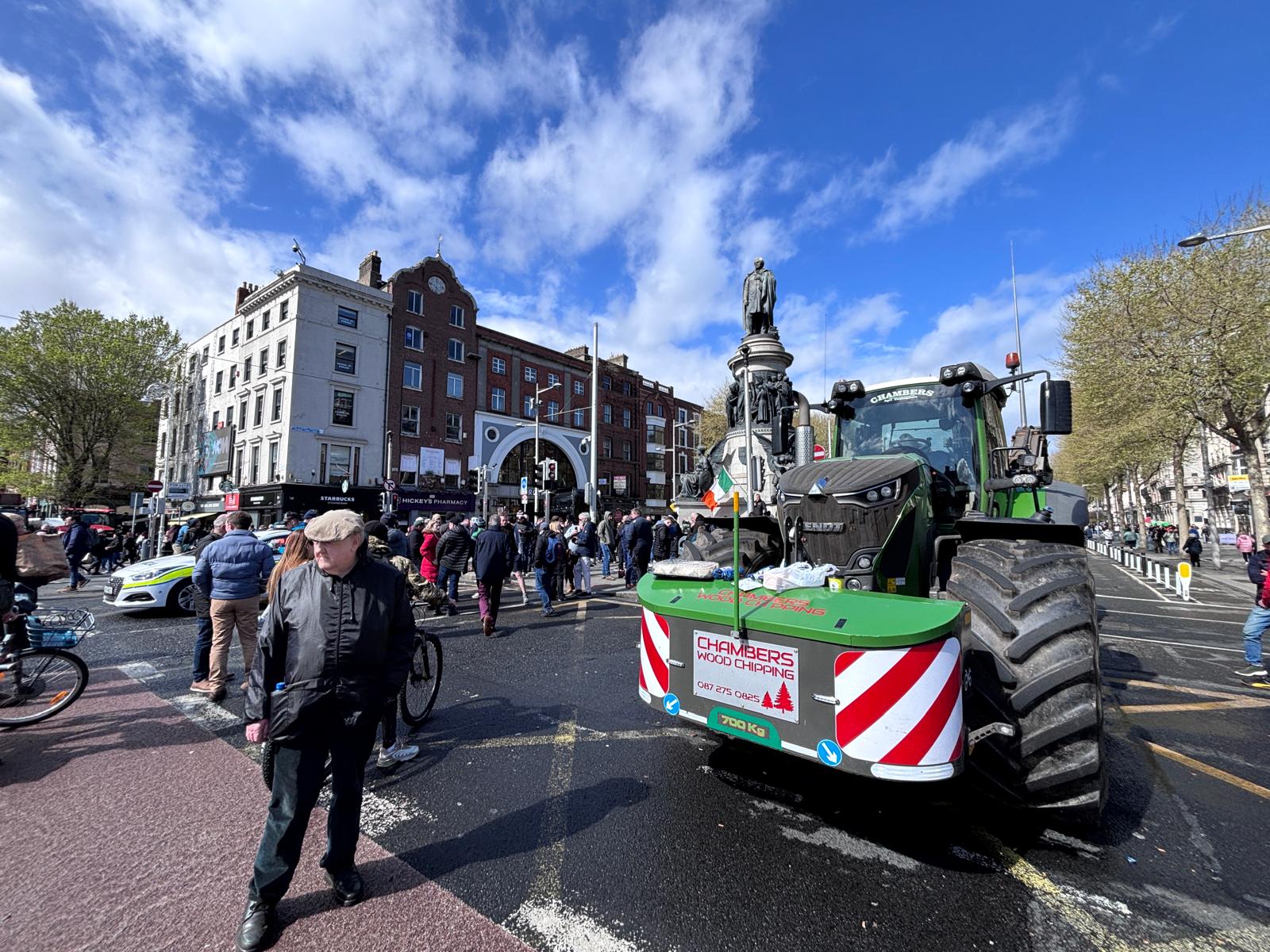
He said recent nationwide protests reflected broader frustrations beyond fuel prices, encompassing the overall cost-of-living crisis.
The unrest has included blockades at key infrastructure sites, including ports and the country’s only oil refinery, raising concerns about fuel supply disruptions.
The Government has condemned these actions, with Taoiseach Micheál Martin accusing opposition parties of tacitly supporting the protests.
In response to mounting pressure, the Government has introduced a package worth over €500 million. Measures include a temporary 10-cent reduction in excise duty on petrol and diesel until the end of July, a 2.4-cent cut on green diesel, and a delay in planned carbon tax increases until October. Direct financial supports will also be provided to sectors such as transport, agriculture, and fisheries.
Government ministers have defended the package, arguing it represents one of the most substantial per capita responses in Europe. Helen McEntee, Minister for Foreign Affairs and Defence, rejected claims that the measures were rushed, stating that extensive engagement had taken place with affected sectors. She emphasised that the crisis is driven by global factors, including geopolitical instability, and insisted the Government remains committed to supporting households.
However, critics argue the measures fail to deliver direct relief to ordinary workers. Michael Collins, leader of Independent Ireland, said the Government had “misread the situation” and warned that the package would not put money directly into people’s pockets. He expressed support for peaceful protests, saying they were necessary to highlight the severity of the crisis.
As political divisions deepen, further protests are expected, although transport authorities report that disruptions have eased compared to last week. With public anger still high and uncertainty among independent TDs, the outcome of the confidence vote could prove decisive in shaping the Government’s response to the ongoing crisis.
The coming days are likely to be pivotal, not only for the stability of the coalition but also for the direction of Ireland’s strategy in tackling rising living costs and public discontent.