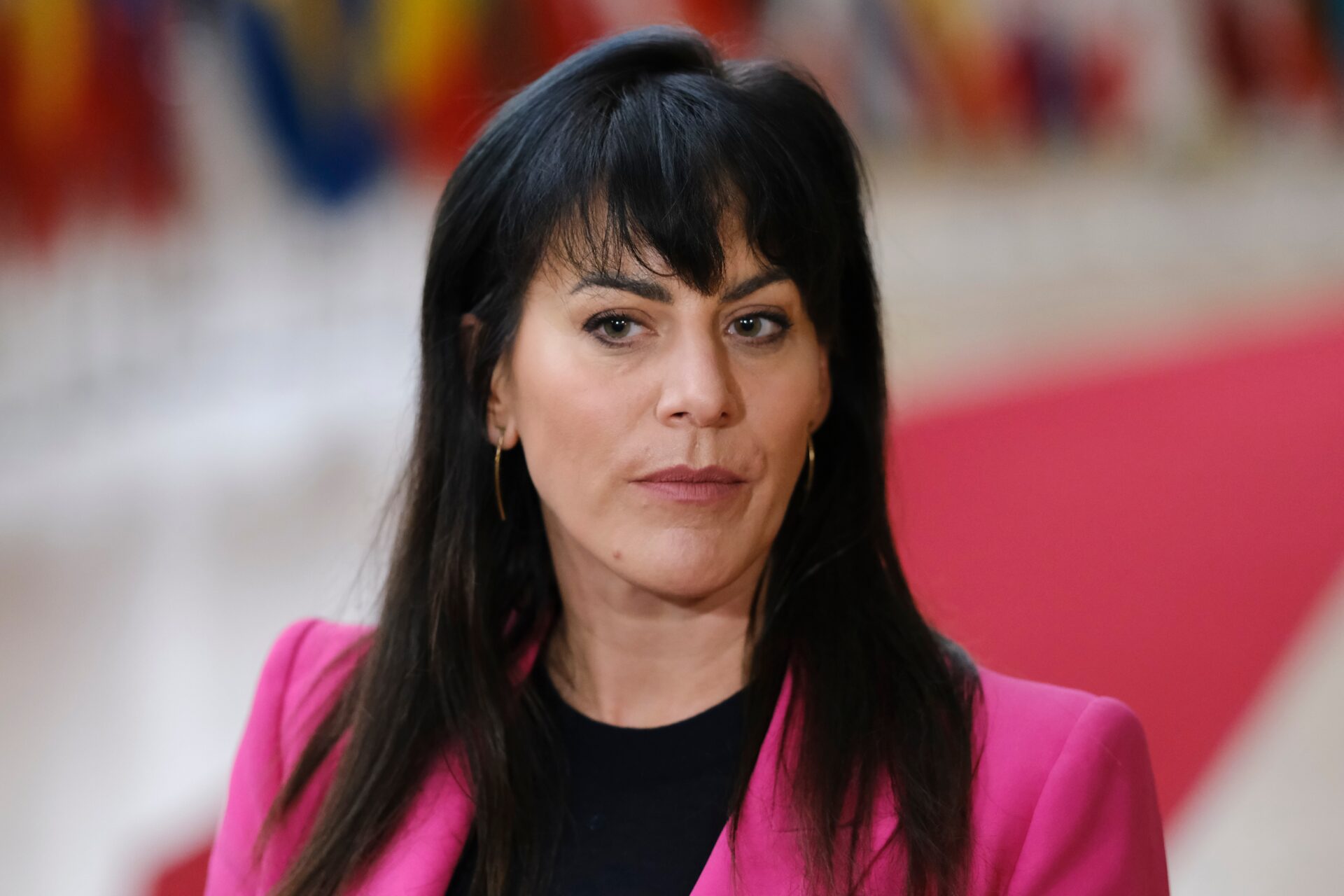

The Minister for Health has hinted that a redacted version of the report into Children's Health Ireland (CHI) sent to Gardaí last week could be made public this week due to its contents “of such seriousness”.
Concerns were raised in the report, completed between 2021 and 2022, around a "negative and toxic" work culture at a hospital run by CHI, as well as about misuse of the National Treatment Purchase Fun in relation to waiting lists.
The report was referred to An Garda Síochána by the HSE. Contents of the as-of-yet unpublished report reportedly contain references to concern for the "emotional and physical wellbeing" of staff in the service.
Health Minister Jennifer Carroll MacNeill has previously called for a redacted version of the report to be published.
Speaking on Newstalk’s Anton Savage Show this morning, she said she had not published the report after checking with the Attorney General because she has "no legal basis" to do so.
"This was an internal human resources-type report going into some very serious cultural issues, and the people who participated in it, nurses, junior doctors and so on, they participated in it on that basis, in a confidential way," she said.
Carroll MacNeill said the report reflects what some staff said in confidence and that some of them would be identifiable.
"In the normal course, you’d never publish something like that, but the issues in this are of such seriousness that in the broader public interest, a version of it must be published," she said.
She added that CHI are reflecting on how to publish the report “responsibly” so that it “tells the maximum story behind it and the steps of what has been taken next”.
When asked if she knows when this will be published, she said: “I suspect it will be this week.”
The Fine Gael TD said it is important that the people “who might have given descriptions about what they were feeling and perhaps some of the pressures they felt” are appropriately protected.
On hospital governance, Carroll MacNeill said she had a lot of questions .
“Ireland is a small country. It’s five and a half million people. We spend a very significant amount of our taxpayers money on health, quite appropriately, but we need to make sure that we’re getting the best value for that.”
She said CHI was formed in an effort to create a single entity that would bring Temple Street and St James’s hospitals together, adding that it has “done that and has brought it to a certain point”.
“There’s no question about that, but I do think that there’s very much more work to be done to integrate a single pediatric system.”
The matter of the National Treatment Purchase Fund (NTPF) was also raised. It NTPF provides funding for patients on waiting lists to get treatment in both public and private settings.
It pays for clinics to be set up in public hospitals outside of normal working hours, i.e., on weekends, wherein staff already working at the hospital are paid additionally to carry out extra work. This is known as “insourcing”.
The NTPF had suspended funding to CHI hospitals over concerns raised in an internal audit, related to an insourcing clinic at the hospital. On Wednesday, it cut funding to another public hospital temporarily after finding "potential financial irregularities" in relation to NTPF-funded insourcing work.
Carroll MacNeill said that an audit of insourcing that she and HSE chief Bernard Gloster commissioned has been completed and that she expects to see the results “possibly” in the next two to three weeks.
She said the matter needs “very serious and careful analysis”, as does the issue of insourcing more broadly “because of how it intersects with getting the best productivity within the public system”.
“We cannot have a fully public system and also be creating these other incentives. We cannot cut off these other incentives overnight because of the impact on patient care, but by God, we’re going to be weaning ourselves off them.”