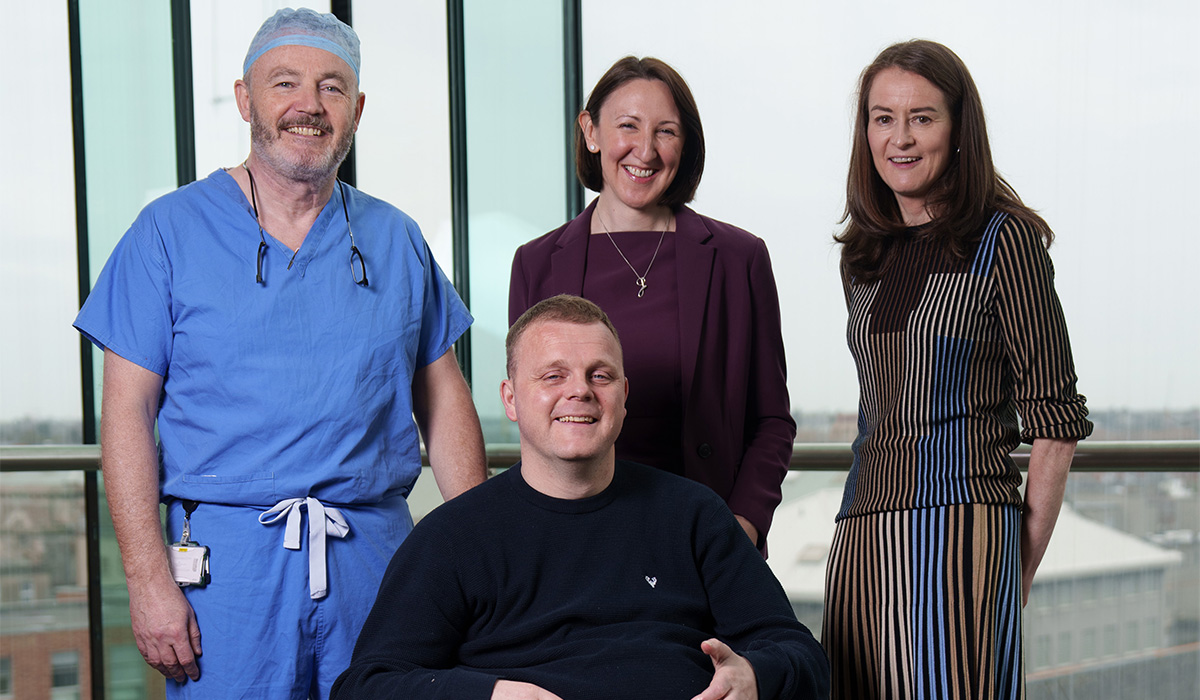

Surgeons at the Mater Hospital were amazed when a quadriplegic man had functionality in his hand restored by an innovative procedure.
The transformative surgery has restored significant hand and arm function to 12 people with spinal injuries.
One patient said it helped him to ‘regain a lot of the independence’ that he had once taken for granted.
Specialised nerve and tendon transfer surgery has delivered life-changing results for people with paralysis, including a man who blew surgeons away with the level of movement he regained.
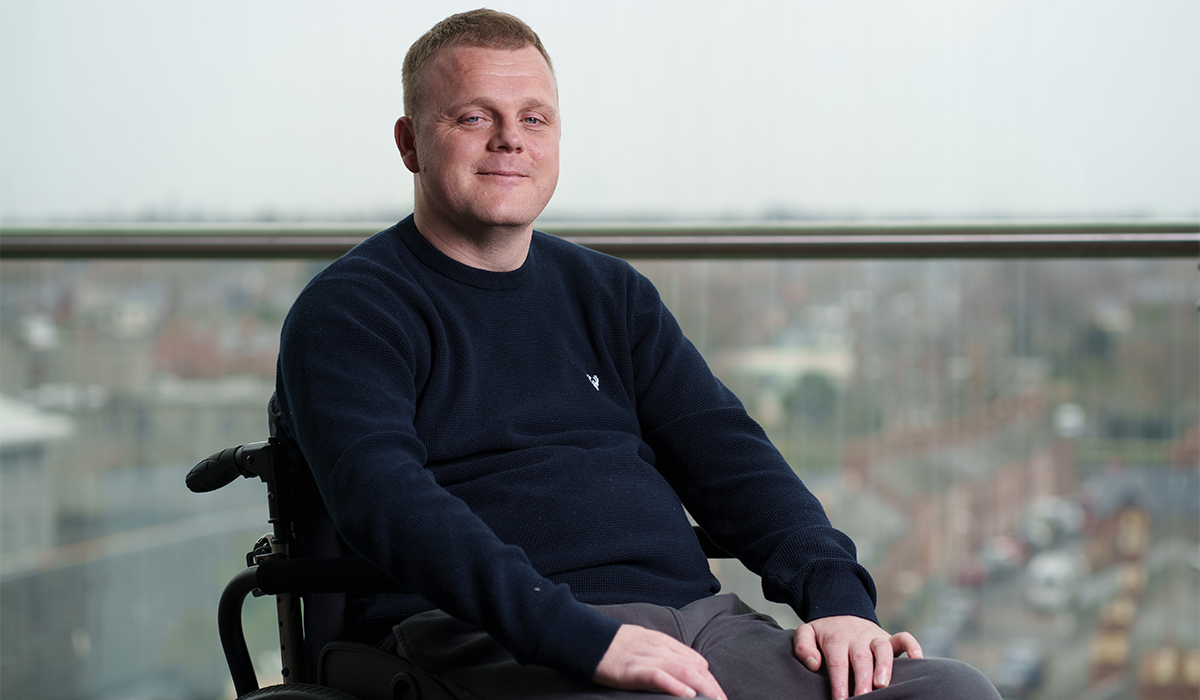
Brian Millar, 37, was cutting branches up a tree near his Co. Clare home in 2022 when he fell 20 feet and suffered paralysis in four limbs, or quadriplegia, after severely damaging vertebrae in his upper back.
Surgery in late 2023 to transfer undamaged nerves from his spine to forearm, and over a year of tireless rehabilitation work, allowed Mr Millar to regain ‘a great range of movement’ in his left hand that amazed Mater Hospital staff.
‘I can do a lot with the left hand and the right hand has been operated on as well much more recently but it’s still an early stage so there aren’t any improvements yet,’ Mr Millar said yesterday.
‘Getting improvement takes over a year. It’s very hard mentally to keep doing the physio when you don’t feel results for that long, but once my fingers started flicking it was huge.
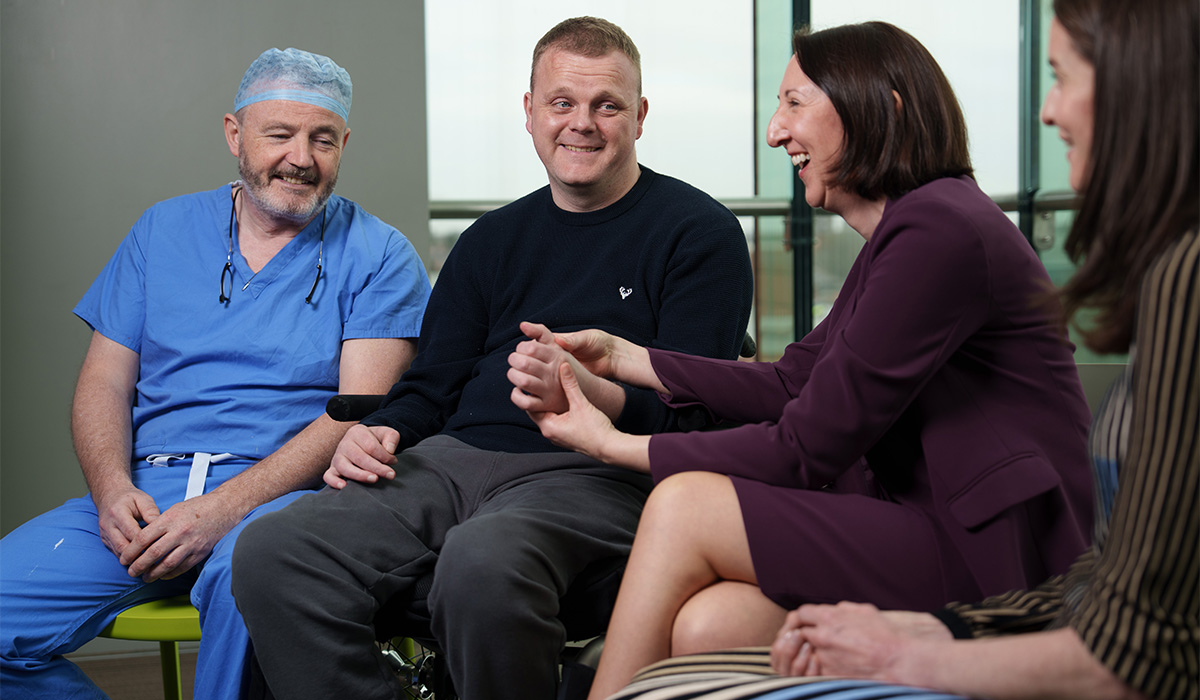
‘When you’re quadriplegic you haven’t got much independence. The fact that there was a surgery out there to be able to move my hand and regain that independence you take for granted is great.
‘It’s really improved my mental health and everything, just being able to pick up a cup of coffee or charge your phone and put on clothes easier, those daily things.’
Surgeon Kevin Cronin said 15 surgeries had been carried out in less than two years and that Mr Millar’s recovery was one of the best he had seen.
Mater Hospital launches new technology to deal with aggressive cancers
‘We take parts of the nerve that turns their forearm palm-up and we put it onto the nerve that extends their fingers. So when they want to open their hand, they turn their palm up and their fingers extend,’ he said.
‘These patients can feed themselves, do their hair, use their phone, use their wheelchair a lot more effectively. It’s great practically as well as psychologically because it improves their attitudes too.’
The success of the surgery can vary. Surgeon Gráinne Colgan explained: ‘Waiting afterwards for the nerve to regenerate is a slow process of a year or a year-and-a-half, and it’s difficult to relearn how to use the hand.’