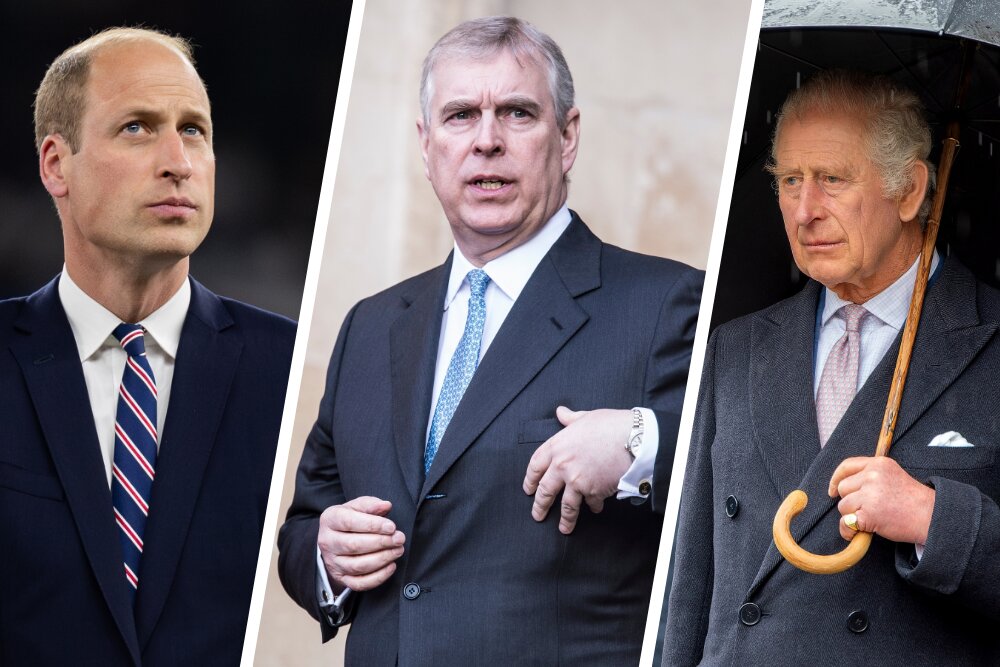

In recent days a seismic shift has taken place within the institution of the monarchy: King Charles III has moved to strip his younger brother, Prince Andrew, of his royal titles and force him out of the Royal Lodge at Windsor — an extraordinary intervention aimed at protecting the Crown’s reputation amid mounting scandal. For Irish audiences, this marks not simply a royal drama but a reflection of how privilege, accountability and power can collide in public life.
Prince Andrew will now formally be known as Andrew Mountbatten-Windsor, the palace announced. He is to vacate his long-held residence at the Royal Lodge, and his lease — which had provided him legal protection — is being surrendered. According to the palace statement: “These censures are deemed necessary, notwithstanding the fact that he continues to deny the allegations against him.” His demotion includes relinquishing the style His Royal Highness, the title Prince, and his military honours including the Order of the Garter and Knight Grand Cross of the Victorian Order. The changes precede any legislative measure, underscoring the urgency with which the monarchy has acted.
So, why now? The hanging shadow over Andrew is his connection to the convicted sex offender Jeffrey Epstein, and the explosive civil lawsuit brought by his accuser Virginia Giuffre, who alleged she was trafficked as a minor and forced into sexual encounters with the prince. Andrew consistently denied the allegations, but in 2022 settled the suit for a reported £12 million — without admitting liability. The controversy resurfaced in 2025 when new evidence emerged. Emails uncovered in court documents revealed that Andrew had written to Epstein in late February 2011, saying “Keep in close touch and we’ll play some more soon”, contradicting his earlier claims that their association had ended in December 2010.
The timing of the palace intervention also speaks volumes. With media scrutiny rising and Parliament’s disquiet evident, the King and his heir apparent, Prince William, appear to be moving decisively to prevent further reputational damage. William is reportedly preparing to exclude Andrew from future royal occasions, including the next coronation and the Sandringham Christmas gathering — signalling a permanent ostracism rather than a temporary pause.
Andrew’s downfall has been years in the making. He stepped back from his public duties in 2019 after a disastrous BBC interview in which he failed to express sympathy for Epstein’s victims and made unfounded claims about his alcoholic-fuelled night out. That interview is widely described as the moment his image shifted from royal favourite to liability. Veteran publications chart the timeline from his early closeness to Epstein in the 1990s, to the 2021 revelation of his flight on Epstein’s private plane, the 2019 interview, the 2022 settlement, and now this formal withdrawal of titles and privileges.
Another facet of the scandal emerged with the posthumous publication of Giuffre’s memoir, which accused Andrew of considering sex with her “his birthright” when she was 17. Her death by suicide in April 2025 intensified pressure on the palace. A greater public appetite for accountability — notably among younger, socially conscious audiences in Ireland and elsewhere — has made this a turning point.
Internally, the royal move also appears to be about control and future strategy. By removing Andrew’s titles, the palace enables a cleaner separation from a figure whose presence is seen as toxic. The younger royals and palace aides appear keen to protect the monarchy not only from scandal, but from the implication that birthright excuses behaviours that would otherwise face scrutiny.
Andrew will likely move to a smaller private residence on the Sandringham estate, where he will no longer represent the Crown in any capacity. Though his daughters, Princess Beatrice and Princess Eugenie, retain their royal status, they face the delicate task of navigating a family legacy now marred by scandal. Legal avenues remain open, though UK and US authorities have indicated they will not be reopening investigations into Epstein’s networks. The monarchy’s intention is to draw a line under the matter — but whether public memory will allow such closure remains uncertain.
In a statement, the palace added: “Their Majesties wish to make clear that their thoughts and utmost sympathies have been, and will remain with, the victims and survivors of any and all forms of abuse.” Whether that statement is seen as sincere or performative will depend on future actions, not words alone.
In conclusion, Prince Andrew’s forced step back from royal life marks one of the most dramatic blows to the House of Windsor in decades. It underscores that today’s institutions are no longer immune to the weight of public scrutiny — even when the person involved is a prince.