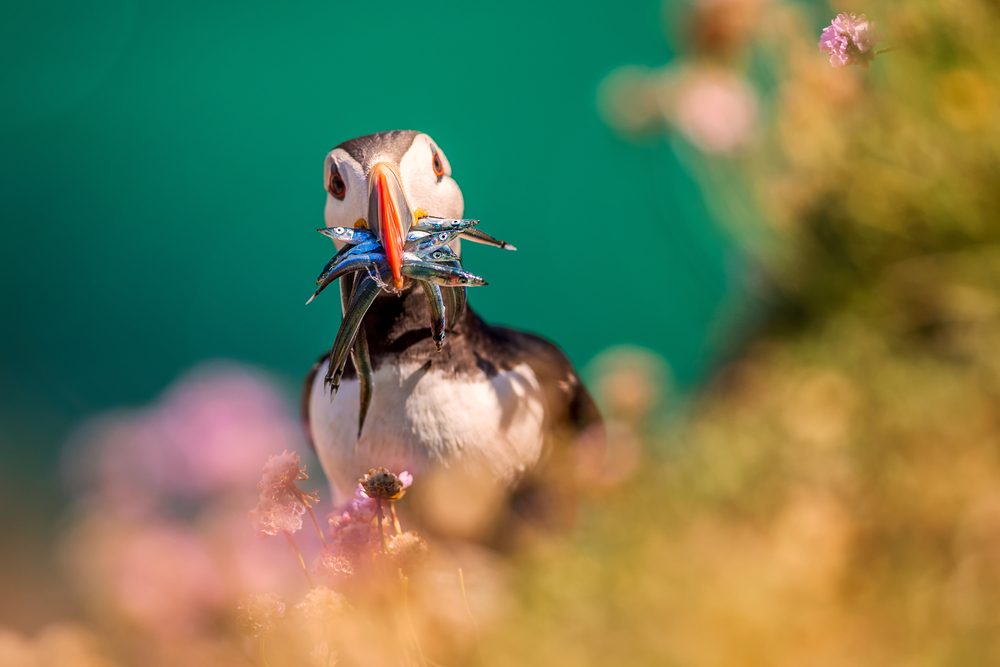

If you want to see puffins and seals in Ireland, you need two things: timing and the right locations. Get either wrong and you’ll come home with nice coastal views but no wildlife. Get them right, and you’ll have one of those days you don’t forget.
Puffins are the more seasonal of the two.

A pair of courting puffins kissing
In Ireland, we’re talking specifically about the Atlantic Puffin, and they only come ashore to breed between April and early August. Outside of that window, they’re out at sea and essentially impossible to spot.
If you’re serious about seeing them, aim for May and June — that’s when colonies are busiest, birds are most active, and you’ve the best chance of seeing them up close. By July, many are busy feeding chicks out at sea, and by early August, they’re already leaving.
Where you go matters just as much. The most reliable puffin spots aren’t roadside viewpoints — they’re islands.
At the top of the list is Skellig Michael.
You’ll need to take a boat from Portmagee or Valentia Island, and trips usually run between May and September (weather permitting — cancellations are common, so build in flexibility). If you land on the island, puffins are often surprisingly close, waddling around the cliff edges and burrows. If you don’t fancy the climb, eco boat tours circle the island and still give you a solid chance of spotting them.
@joshuanueva Largest puffin colony in Ireland 🐧 📍Skellig Michael, Co. Kerry #ireland ♬ Schoolyard Days - Amble
A more accessible (but still adventurous) option is the Saltee Islands
Ferries run from Kilmore Quay from April to August, and the crossing is only about 20 minutes. This is one of Ireland’s most important seabird sanctuaries, and in early summer, puffins are everywhere along the grassy cliff paths. Be aware: there’s no pier, no facilities, and landings can be wet and slippery. You need decent footwear and a bit of balance.
Up north, Rathlin Island is one of the easiest and most family-friendly places to see puffins. A short ferry from Ballycastle gets you there, and the Rathlin West Light Seabird Centre has viewing platforms overlooking the cliffs. Visit between mid-April and early July for peak activity.
Just off the coast near Portmagee, Puffin Island is a protected Irish Wildbird Conservancy reserve and an important breeding site for seabirds.
Located south of Valentia Island, the small island is separated from the mainland by a narrow sound and is home to thousands of nesting birds, including puffins, Manx shearwaters and storm petrels. While it’s a prime location for wildlife, access is strictly limited — landings are generally not permitted unless for authorised research, though visitors can sometimes view the island and its birdlife from chartered fishing boats operating out of Portmagee.
If you don’t want to take a boat, you can still get lucky from the mainland — just don’t expect guarantees. The Cliffs of Moher have nesting puffins between April and July, especially away from the main visitor centre around Hag’s Head or towards Doolin. In Donegal, places like Horn Head or ferries out to Tory Island give you a quieter shot at seeing them. You’ll need binoculars and patience — they’re small birds and often perched on lower cliff ledges.
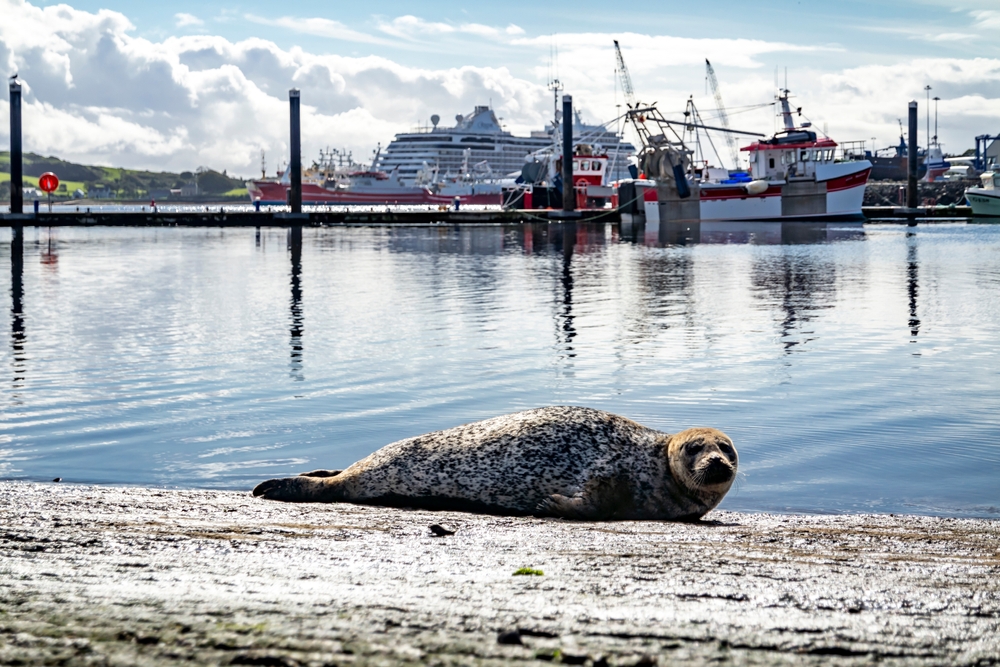
Seal resting on pier in Killybegs, County Donegal, Republic of Ireland
Seals are a different story entirely.
You can see them year-round, and they’re far less fussy about where they show up. Ireland has both grey seals and common (harbour) seals, and they’re found all along the coast — especially quieter, less developed stretches.
Your best bet is the Wild Atlantic Way, particularly areas with rocky shores, small islands, and sheltered bays.
West Cork is excellent for this — seals often haul out on rocks or beaches and can be spotted while walking coastal trails or from the water if you’re kayaking.
Further north, the limestone coastline around Burren National Park and the coasts of Sligo and Donegal are consistently good for sightings.
Timing helps here too. Low tide is ideal, as seals tend to haul out and rest on exposed rocks. Early morning or evening is quieter and increases your chances of seeing them undisturbed. Unlike puffins, you don’t need to plan months in advance — just get yourself to the right coastline and keep your eyes on the water.
A quick reality check: neither of these experiences is “zoo close.” The photos you see are usually taken with long lenses. Bring binoculars or a zoom lens, keep your distance, and don’t try to approach wildlife. If you push too close, they’ll simply disappear — and that’s on you.
If you want to do this properly, pick one puffin location, plan around May or June, and build a day trip around it. Then treat seal spotting as something you layer in along the coast rather than a standalone mission.