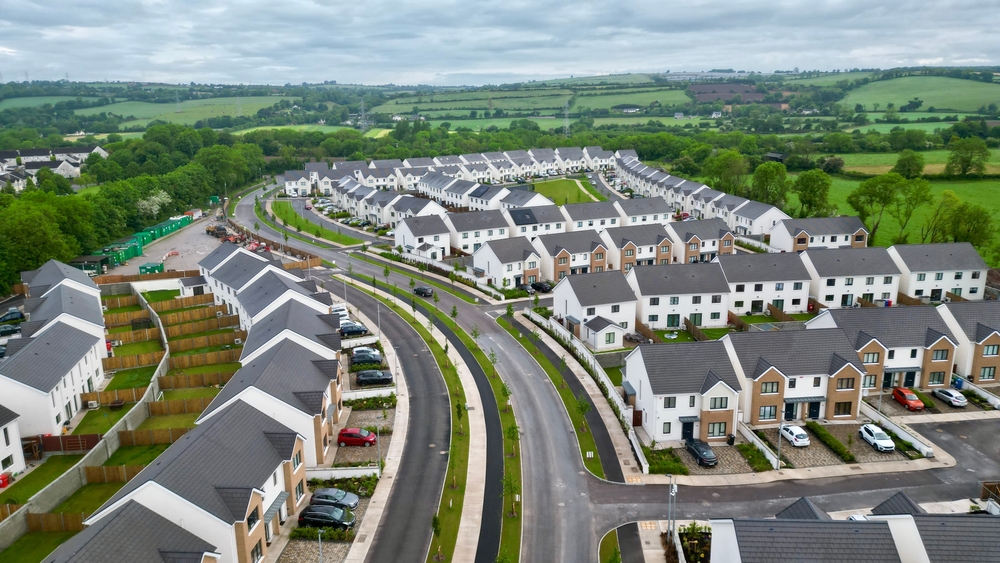

Homeowners are among the happiest people in Ireland, with new research showing a noticeable gap in life satisfaction between people who own their homes and those who rent.
The Central Statistics Office found that people living in owner-occupied homes rated their overall life satisfaction at 7.8 out of 10.
That compares with a score of 7.2 among people living in rented accommodation.
The difference was even more noticeable when it came to household finances.
Homeowners gave their financial situation an average score of 7.2 out of 10, compared with just 5.9 among renters.
The findings come as Ireland’s rental market continues to face significant pressure, with high rents and limited availability making it difficult for many people to find affordable accommodation.
The latest Daft.ie rental report found that the average monthly market rent for a two-bedroom home has reached €2,204.
There were almost 2,400 properties available to rent across Ireland on August 1, which was 5% higher than the same time last year.
However, the national figure hides a major difference between Dublin and the rest of the country.

Rental availability in Dublin fell by 18% over the year, with fewer than 1,150 homes available to rent.
Outside the capital, availability increased by 40%.
Despite that improvement, the number of rental properties available nationwide remains well below pre-pandemic levels.
Before Covid-19, more than 4,300 rental properties would typically have been available across Ireland at any one time.
Rent increases have also slowed considerably in recent months.
Prices increased by 1.4% between March and June, down sharply from the record 4.4% quarterly increase recorded during the first three months of 2026.
However, rents continue to rise significantly in many parts of the country.
Galway recorded a 13% annual increase in market rents during the second quarter, while Cork saw rents rise by 12% and Limerick by 11%.
Waterford recorded annual growth of 5.5%, while Dublin rents were 6.5% higher than a year earlier in June.
Rents also continued to climb outside the main cities, with annual increases of between 9% and 10% recorded across Leinster, Munster and Connacht-Ulster.
Professor Ronan Lyons of Trinity College Dublin, who authored the Daft.ie report, said Ireland’s rental shortage is now a nationwide issue.
“Rental scarcity is no longer a Dublin problem, or an urban one with a national fringe, but a national one,” he said.
He said measures aimed at increasing the supply of rental homes need to work across the country rather than focusing primarily on Dublin.
The latest figures also provide an early indication of the impact of changes to rent controls introduced earlier this year.
Prof Lyons said the sharp rise in rents during the first quarter appeared to have been a one-off adjustment rather than the beginning of a sustained acceleration.
“It suggests that the surge in rents in early 2026 was a one-off reset rather than the start of a new trend,” he said.
However, the underlying shortage of homes remains a major issue.
The average monthly rent for a double room in shared accommodation reached €812 during the second quarter, up 1.5% on the previous three months and 6.3% year-on-year.
There were 2,480 rooms advertised for rent across Ireland on August 1, a 20% fall compared with the previous year.
That was the lowest August availability recorded since 2022, with the number of rooms available also 26% below the average recorded between 2015 and 2019.