
Kildare woman Katelyn Hegarty-Kelly has always felt the ocean was where she was supposed to be, which led her down the somewhat uncommon path of marine biology in Ireland.
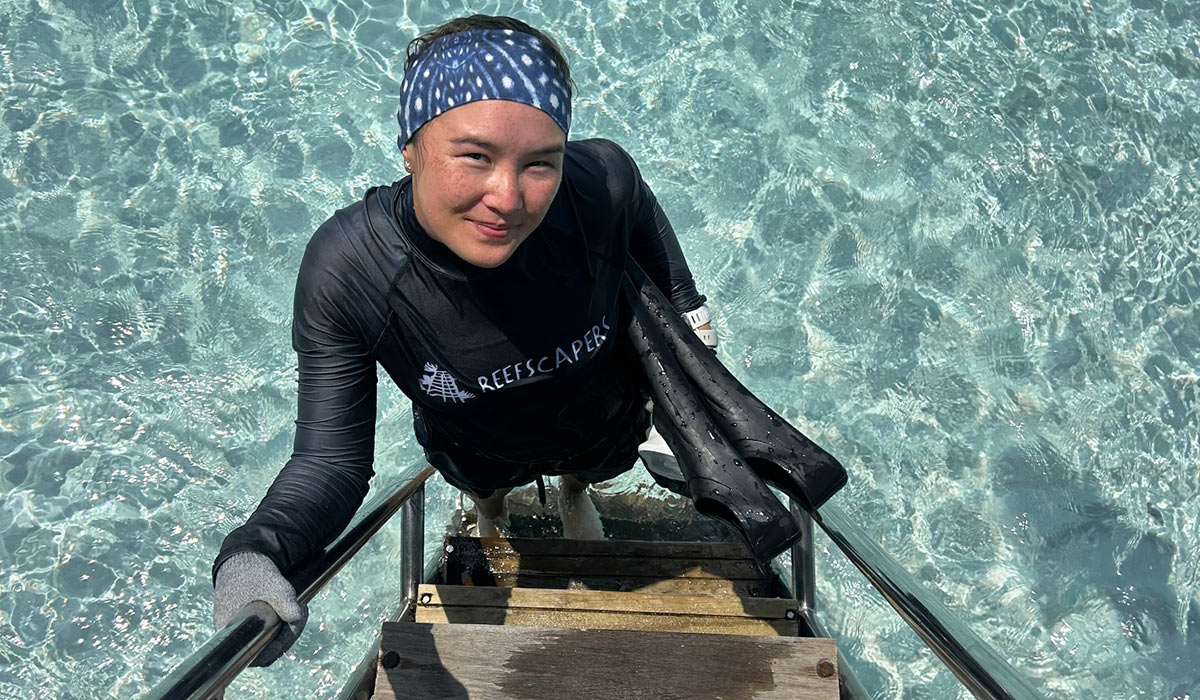
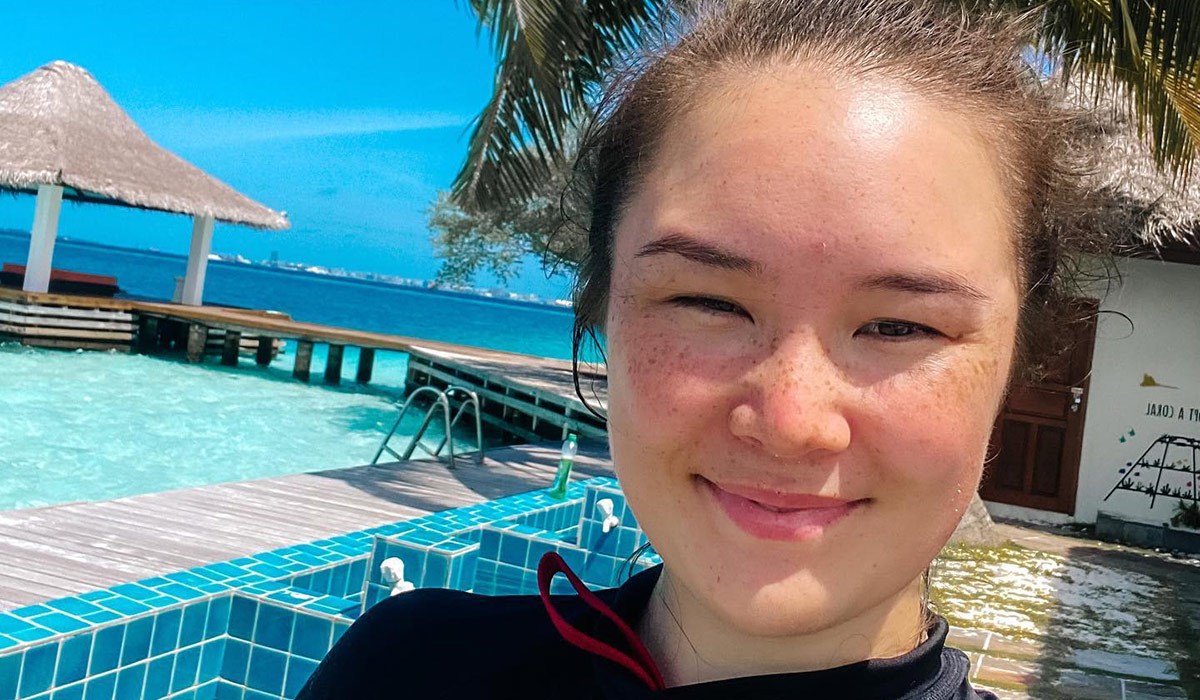
The 26-year-old is currently stationed in the Maldives, where she has been working her 'dream' job for three years: restoring coral reefs. Ireland and the Maldives are oceans away (literally), so just how did this young woman from Kilcullen wind up where she is today?
'I feel like wildlife and marine life have always been very much integrated into our childhood, despite being from Kildare, because that always seems to confuse people quite a lot,' Katelyn says, laughing, citing her dad's love for National Geographic and the family holidays they'd take.
'I had my first scuba dive with my dad when we were on holidays [in Denmark] one year,' she recalls. 'It was actually in an aquarium setting; it wasn't in the open ocean.
'There were loads of baby sharks and different kinds of animals; I just fell in love with it. Now, every time I'm dealing with guests and I see people doing their first dive, whether they're an adult or a young kid, I'm like, "You're going to get addicted. I hope you have the best time."'
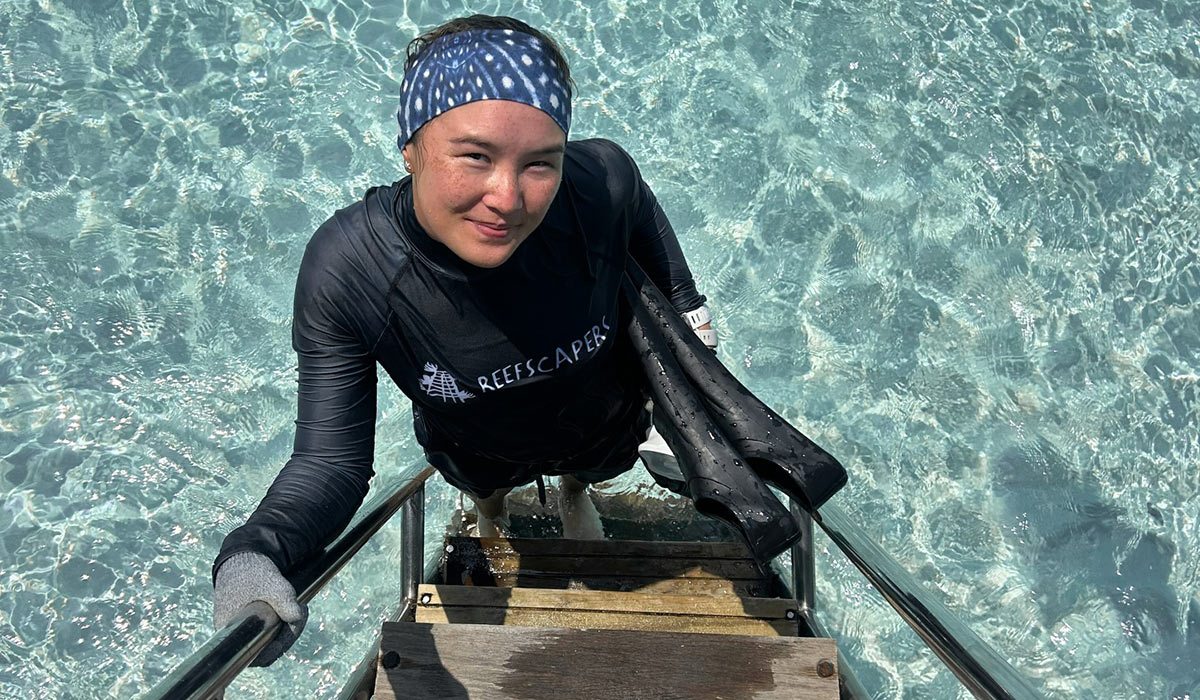
'Guests?', you might query. Katelyn clarifies: 'I'm a marine biologist based at the Sheraton's Maldives resort. I work for a company called Reefscapers.
'We're not international; we only work in the Maldives. And what we do is we partner with hotels, like resort islands in the Maldives, to restore the coral reefs around the island and bring awareness to and revive the reef.
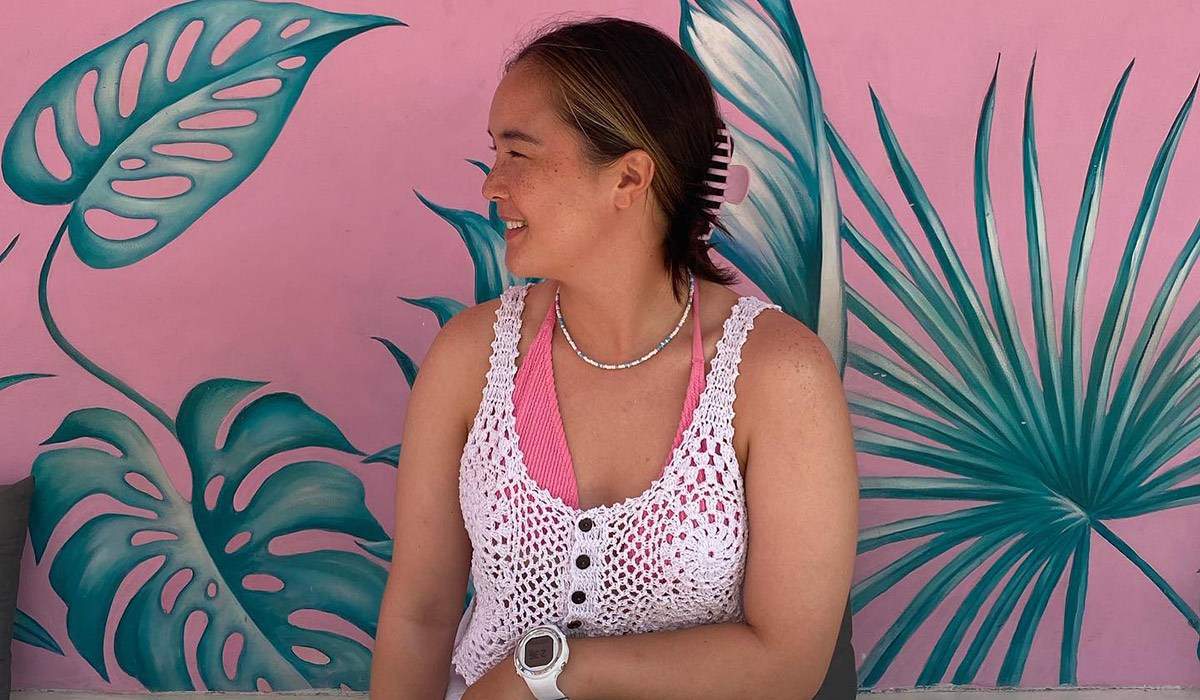
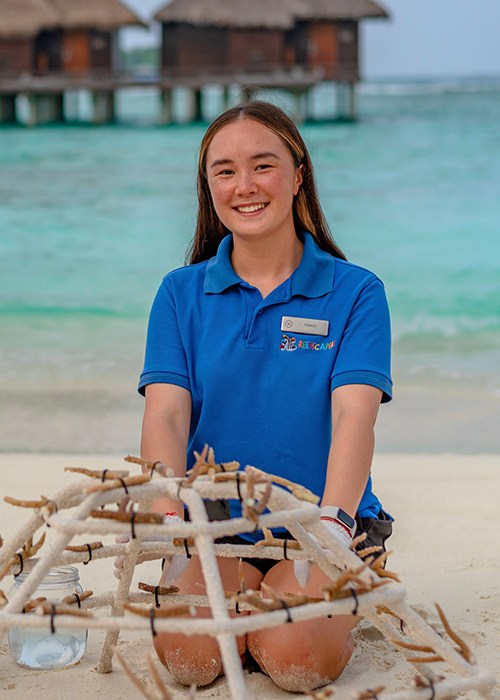
'I'm based at this hotel trying to build and grow and restore the reef around the particular island,' Katelyn explains. 'So, mainly our work is coral restoration. We're constantly planting corals, minding them, cleaning them, and making sure they're healthy.
'Another huge aspect of the job is the hospitality side of it, because we're based in a hotel. We always talk about how people need to take action for our oceans, but it all stems back to, if they don't understand what they need to protect, then they'll take no action.'
That's where Katelyn and her team of marine biologists come in. 'We are really strong believers in the power of education and awareness.'
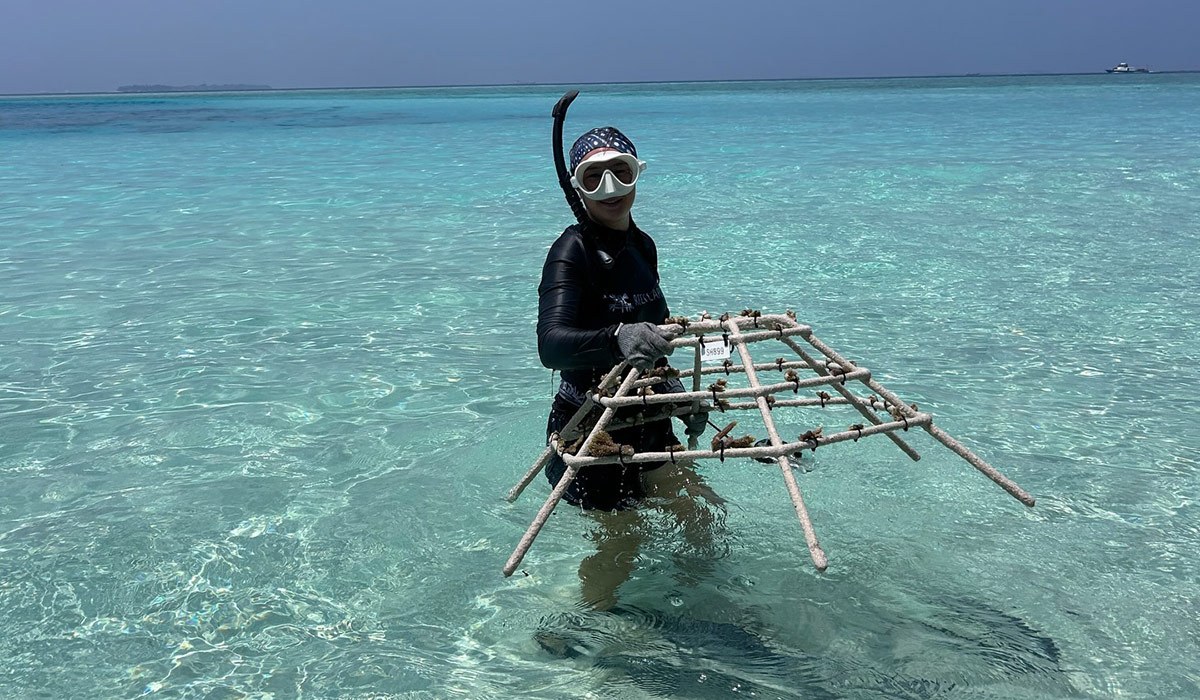
It's hard to fathom the marine biology pipeline from Ireland to the Maldives. 'I just fell in love with it. I remember being so close [to the animals], but also respecting marine life and understanding them,' Katelyn says.
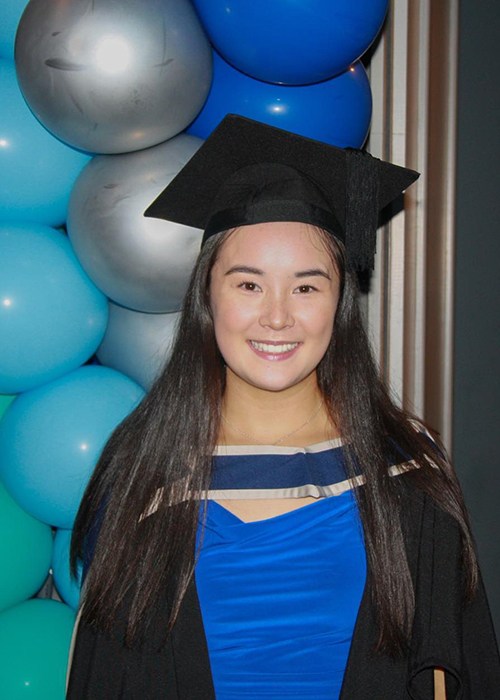
And so, it was a no-brainer for Katelyn to seek out a degree in Marine Biology from Galway's ATU. At that time, she also had her scuba diving licence under her belt.
It was just before the COVID-19 lockdown that Katelyn began her training, which was being conducted in Dublin once a week. She was travelling inter-county, but when the lockdown struck, she was confined to Kildare.
So determined she was to get her scuba licence, Katelyn actually relocated to the capital for a few weeks, staying with some family, and finished her scuba diving course.
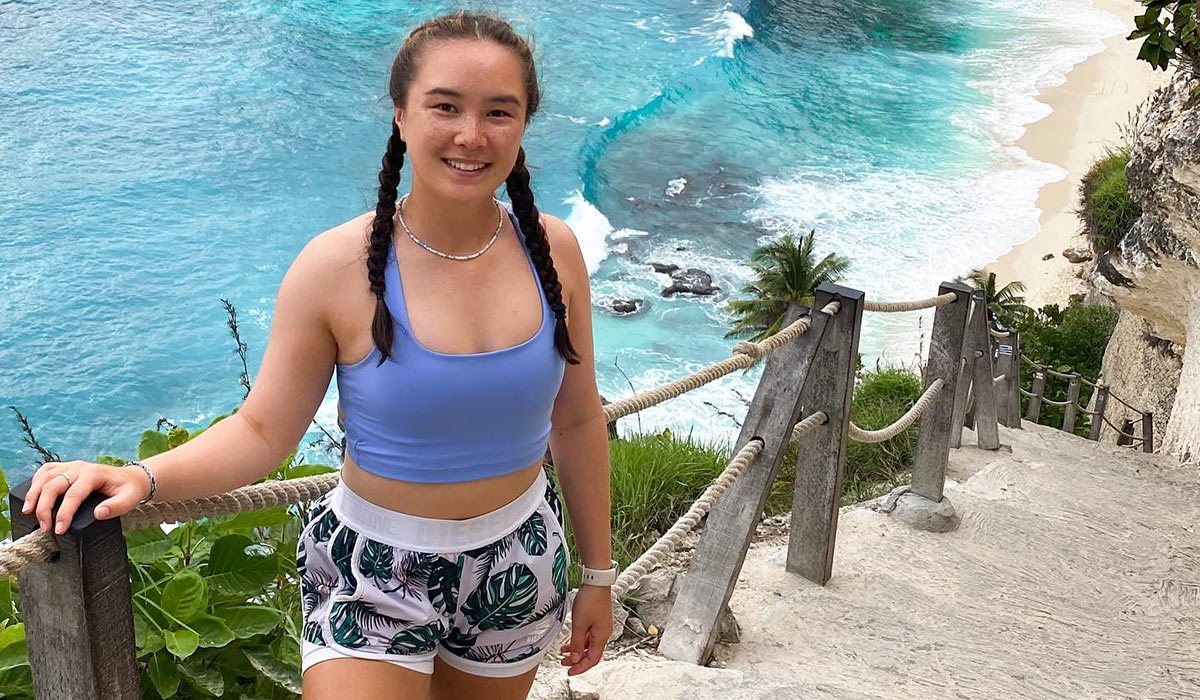
'I can't drive a car, but I can scuba dive!' Katelyn laughs. 'For my particular fieldwork, the requirements are that you're a very confident swimmer and confident free diver.
'I haven't done a qualification for free diving, but it's something that you're expected to be confident in doing.' Katelyn explains that she 'got so lucky' to land her dream job with just her degree and scuba diving licence under her belt.
'The basic requirement is they'd be looking for people who have a marine biology degree or equivalent; we've had people through to marine biology from geography, zoology, conservation, ocean science. It's a broad spectrum.'
'I was banking a lot on marine biology,' the Kildare woman reflects. 'Which was probably not very wise of me; but I was stubborn. My back-up would've been forensic science.'
Katelyn's job is very fulfilling, very rewarding, on a day-to-day basis. 'My job is honestly so amazing,' she gushes. 'I love it, and I'm very privileged to say that.
'It's really rewarding when we go out to check up on a particular coral garden, because we have loads around the island, and I think back to when I started growing the coral. You can really notice that coral growing, and seeing the fish that are starting to suddenly appear around it that weren't there maybe a year, or even a few weeks ago.'
'It kind of gives you goosebumps a little bit, because you've grown something from nothing. And it shows that it can be done once you have people that are willing to do it.'
Free diving and swimming in open water isn't free of its dangers, but Katelyn's been very lucky to have not experienced any such dangers. Her family, however, are constantly worried about her safety in the water, she says.
'We have quite a few different species of sharks, and I'd say that's one of the biggest things that my family always worries about,' she admits.
'We have many reef sharks; they like shallow water. They're the ones you'll see swimming towards your room around the island. But we do have more top predators and bigger sharks in the Maldives, but they wouldn't be coming up to the shallows.
'You'd see them deep diving, maybe about 30 metres, more often than not. Our top predator in the Maldives is the tiger shark. They're in the waters, but there are certain places where people go to swim with them in a somewhat regulated space.
'But for my day-to-day, seeing a tiger shark or a very large shark is not something we'd see based on our location, surroundings, and the depth that we work at.'
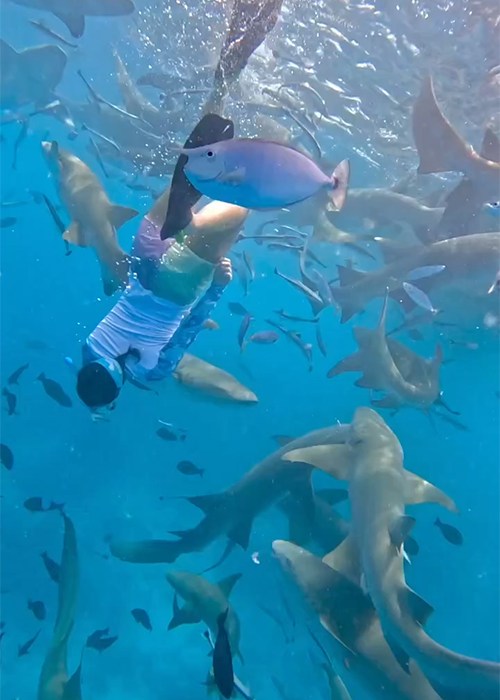
'They're definitely there, but the sharks we'd mainly see are nurse sharks and black tip reef sharks. They're all very calm, a little bit lazy, a little bit shy,' she laughs.
'Sometimes I have to remind myself how crazy it is that I can jump in the water here and see my whole surroundings because it's so clear. You can say that you're comfortable that a shark is just going to swim past you, hopefully, touch wood, it's not going to harm you, but it's a crazy environment to be in, for sure.
'But of course, you can never guarantee what marine life is going to do, and you do still have to respect their space.'
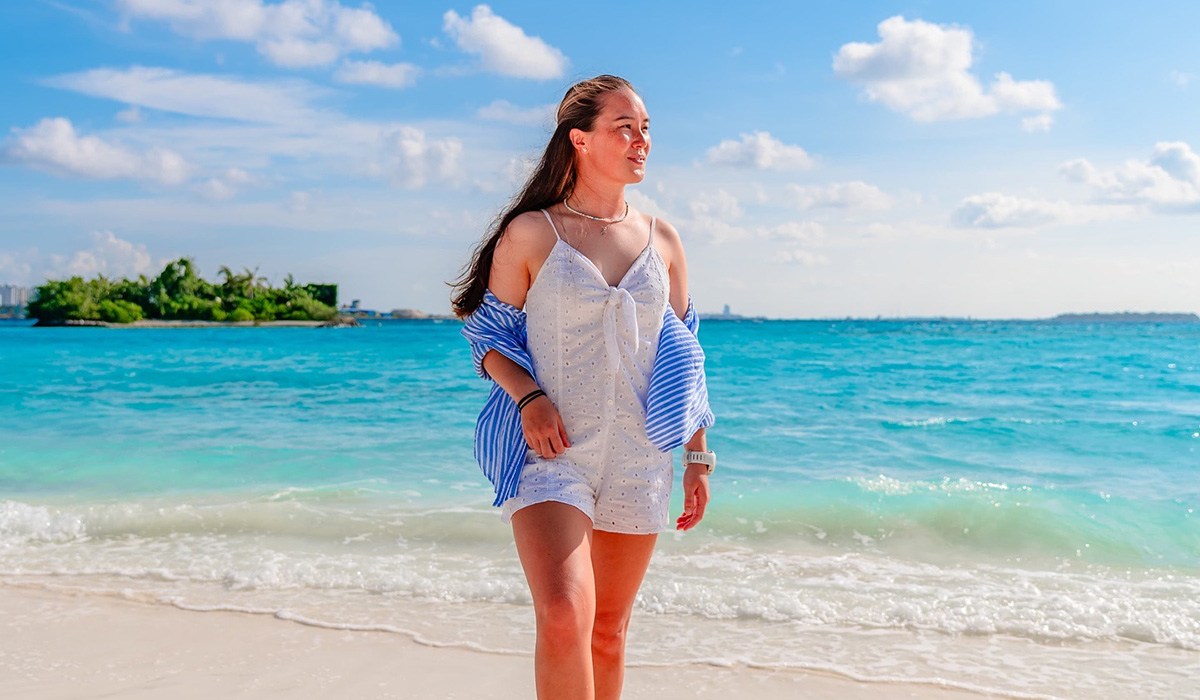
Katelyn has been based in the Maldives for three years, and she's undeniably missing her parents, five brothers and two sisters, and partner immensely, but she has her heart set on some more travelling and working before returning home to the Emerald Isle.
'I think there are many opportunities elsewhere to a certain extent,' she says. 'Again, this is a whole other conversation, so I'll try not to waffle too much. It's a very competitive field that doesn't have enough jobs, or at least paid jobs.'
'There's this stigma of "maybe there's not enough interest in it". People are in denial about what's happening today.
'But there are coral restoration projects in Indonesia and Australia; they've been very tempting. They all have their pros and cons, but I've definitely been intrigued.
'I've learned a lot from this position, and being able to apply that and grow into another project is something that's in my future, definitely. I have no idea what's going to happen; I was only supposed to be here for six months, and I'm here three years.'
'I've grown this little project from something so small, with the help of my team, of course, that has become amazing through the years. It feels so rewarding to be able to see that,' Katelyn says.
'I have been looking at other projects, and Australia is very tempting, you know, who wouldn't want to go to the Great Barrier Reef? That's definitely something on my list.
'I'd love to go there and potentially engage with people and educate guests, and maybe be involved with the reef in some aspect sometime in the future.
'But I will definitely come back home and settle down a little bit. I have a really big family; I miss them so much, and I definitely won't be able to do coral restoration back home, but there are a few other opportunities.'