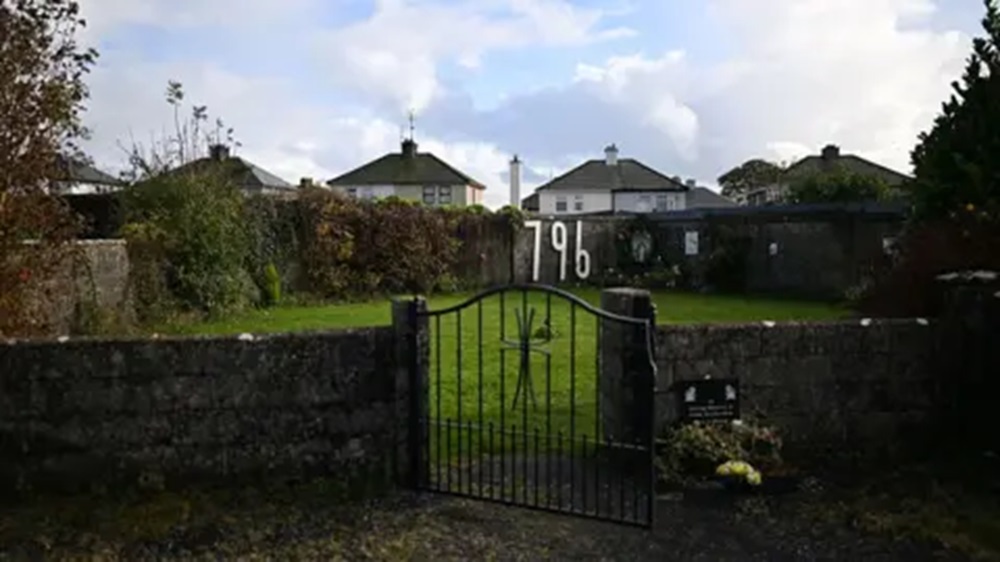

Excavation work at the former Mother and Baby Home site in Tuam, Co. Galway has uncovered the remains of a further 36 infants, bringing the total number recovered so far to 69.
The findings were confirmed in a recent update from the Office of the Director of Authorised Intervention in Tuam (ODAIT), which is overseeing the ongoing excavation. Investigators have reported that the remains appear to have been buried in individual coffins, many of which have since deteriorated over time. Evidence suggests that most of the coffins were likely single-shouldered designs fitted with metal mounts and had been painted white. In a smaller number of cases, more than one infant was placed in the same coffin.
The excavation is focused on an area situated near a memorial garden. This location was previously flagged during earlier investigations, when a preliminary probe carried out by the Commission of Investigation into Mother and Baby Homes, nearly a decade ago, uncovered significant quantities of bone fragments. The area itself is a large subsurface feature measuring over three metres in width. Historical documents had identified it as a burial ground, although no visible surface markers exist to indicate graves were ever present.
According to investigators, there is also evidence that some of the burials were disturbed during the formation of the site. Marks found on the sides and base of the feature suggest that mechanical excavation equipment, likely a digger fitted with a toothed bucket, had been used. The excavated area was subsequently filled in with a mixture of sand, gravel, and construction-related debris.
Aerial photographic analysis indicates that the disturbance occurred sometime after 1977, though researchers say further excavation and analysis will be required to narrow down the timing more precisely.
Work at the site began in July of last year, following years of renewed public attention and research. A key catalyst was the work of local historian Catherine Corless, who uncovered the absence of official burial records for nearly 800 infants and young children who died at the institution.
As part of the ongoing effort to identify those buried at the site, a DNA-based identification programme is underway. So far, 33 family reference DNA samples have been submitted to Forensic Science Ireland, and additional samples are expected to be collected in Ireland, the United Kingdom, and the United States in the coming weeks.
Authorities have appealed to anyone who believes they may have a relative buried at the Tuam site to come forward and contact ODAIT, as efforts continue to establish identities and provide answers to affected families.