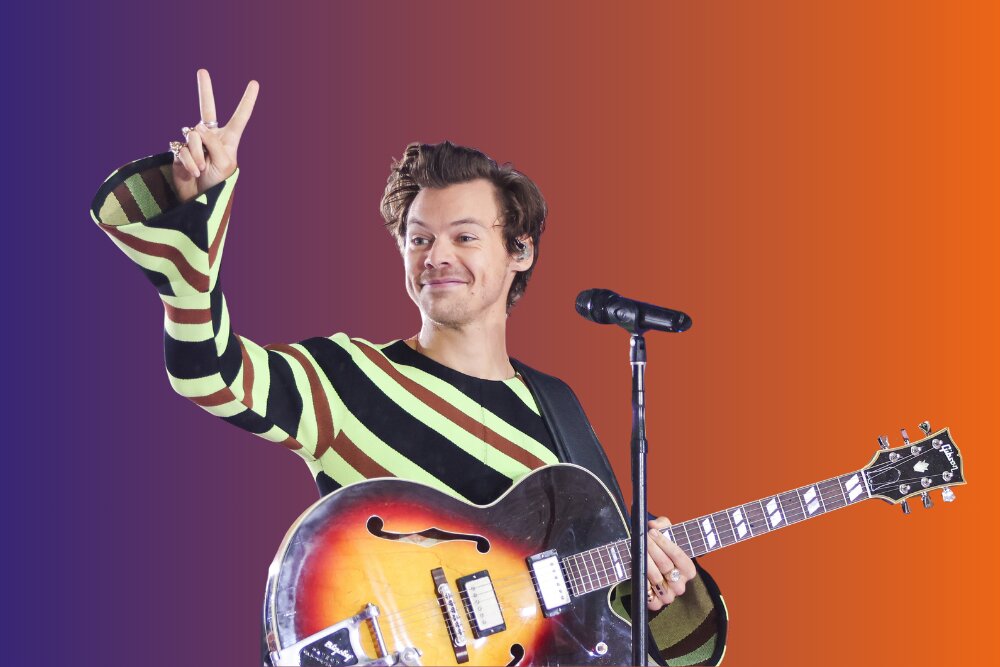


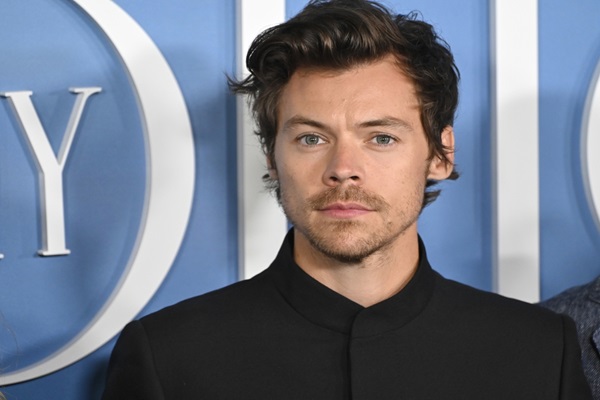
Harry Styles has spent the better part of the last decade transforming from global boyband phenomenon into something far more elusive: a solo artist who seems determined to explore the strange emotional territory that comes with fame.
His fourth studio album, Kiss All The Time, Disco, Occasionally, arrives Friday, his first new record in four years, and it appears to capture that tension head-on. The songs circle around visibility, expectation, and the curious weight of living in public view.
The tone is set early on Paint By Numbers, where Styles acknowledges the strange duality of celebrity with a line that feels both grateful and quietly conflicted: “what a gift it is to be noticed, but it’s nothing to do with me”.
Later in the same track, he pushes the idea further, hinting at how fame can trap a person inside an image created by others.
“It’s a little bit complicated when they put an image in your head and now you’re stuck with it.
“You’re the luckiest, oh the irony, holding the weight of the American children, whose hearts you break.”
It’s a striking sentiment. Recognition framed not as triumph, but as a responsibility that can feel unexpectedly heavy.
Elsewhere on the album, Styles appears to playfully reference his transatlantic life. The track American Girls includes the line “all my friends are in love with American girls,” a lyric that inevitably invites speculation, given his reported relationship with actor Zoë Kravitz.
Musically, Kiss All The Time, Disco, Occasionally marks another stylistic shift. Produced by longtime collaborator Kid Harpoon, the record leans heavily into an electroclash-inspired palette. Echoes of LCD Soundsystem’s restless groove, Tame Impala’s glossy psychedelia and the hyper-pop instincts of Charli XCX’s Brat surface throughout the album.
The result feels more kinetic than introspective, but that contrast appears intentional. Styles has said the record was designed as something joyful.
It’s for “all my friends to dance to”.
Still, moments of reflection creep in. Coming Up Roses, arguably the most traditional pop song on the record, and the one that might feel closest to Styles’ One Direction roots, touches on regret and vulnerability.
“Now I see your tears, on account of my wants and now it appears, that I’m feeling guilty and worried dear.
“That you think I might not want you here.”
Beyond the music, Styles has spoken openly about the strange psychology of touring and fame. In a recent conversation with Japanese novelist Haruki Murakami for Runner’s World, he admitted that the scale of global attention sometimes left him questioning his own role in it.
“Something I’ve often struggled with, in the middle of a tour, is feeling like I’m not sure what I’m giving, not sure what I’m adding to the world,” he said.
“At times, I felt quite existential about that.”
His answer to that noise was unexpectedly simple: running.
Marathons in Tokyo and Berlin became a way to process the intensity of touring life. “So something I love so much about running is the simplicity of it,” he explained.
“You are the observer once more, and you can go about your day in the most naked form. It’s just you, alone, moving through the world.
“That’s what I love about it: You don’t need anything, just a pair of shoes.”
Nearly ten years after One Direction paused and Styles stepped into the spotlight alone, Kiss All The Time, Disco, Occasionally suggests he’s still figuring out how to live inside it.