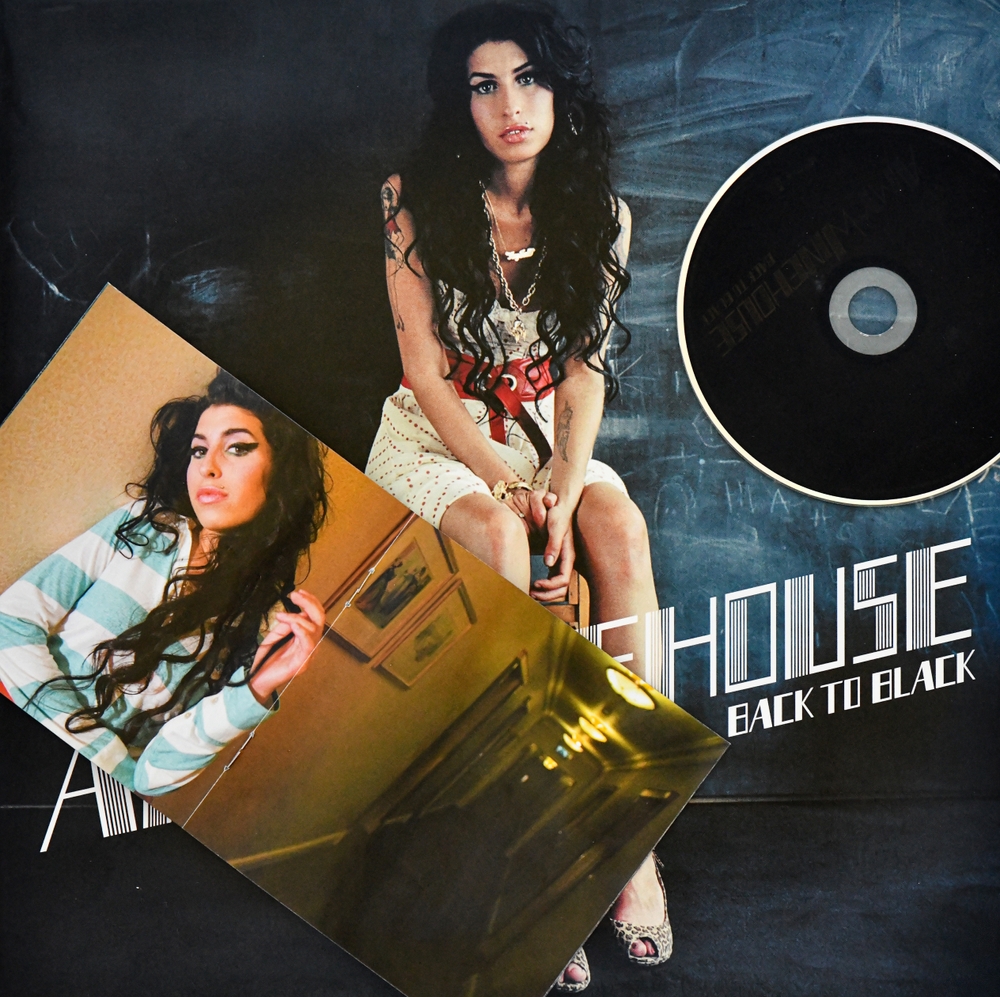

Mark Ronson has built a career defined by immaculate taste, technical brilliance and an uncanny ability to tap into cultural moments before the rest of the world catches up. But when he stepped up to collect the Outstanding Contribution to Music award at the 2026 BRIT Awards, it wasn’t about the Grammys, the chart-toppers, or the endless run of collaborations.
It was about Amy Winehouse.
Ronson, now a fixture of modern pop history, made it clear that his journey pivoted on one particular evening almost two decades ago. Reflecting on his early partnership with Winehouse, he told the audience: “It means so many things to get this award.”
Then came the memory.
“I realised on the way here that on Thursday 6 March, it will be 20 years to the day that Amy Winehouse came up to my studio in New York City.”
What followed has become part of music folklore.
“She came up to the steps and she said, 'I'm here to meet Mark Ronson’. And I said, ‘That’s me’, and she goes, ‘I thought you were an old guy with a beard’.”
The room laughed. But the next part carried weight.
“Anyway, we went upstairs and we talked for four hours and that night we wrote Back To Black, and that day changed my life forever.”
That partnership produced Back To Black in 2006, one of the defining albums of the century, and later the now-ubiquitous cover of “Valerie” in 2007. Ronson made no attempt to downplay her impact.
“I know the music I made with Amy is the reason that any of them know who I am anyway. That’s why I always treasure her voice, her talent and our bond, all of it.”
He added: “I just wouldn’t be here if it wasn’t for some amazing people.”
For a producer whose résumé includes Bruno Mars’ “Uptown Funk,” Miley Cyrus’s “Nothing Breaks Like A Heart,” Dua Lipa, Queens of the Stone Age, Raye and Lily Allen, it was telling that he framed his legacy around that first seismic collaboration.
Ronson also turned the spotlight back on the audience: “You put these songs into your lives. You’re the reason any of us are up here. So make some noise for yourselves.”
He admitted that the scale of it all still feels surreal.
“Every time in a wedding and I hear the song Uptown Funk or I see someone busking Shallow or Valerie in the subway, I can’t believe that I’ve been lucky enough to be a part of songs that mean something to people.”
“So I’m so grateful, and thank you so much.”
The tribute didn’t stop at words. Ronson performed “Ooh Wee” with Ghostface Killah before closing with “Back To Black,” complete with archival footage of Winehouse speaking about him. Dua Lipa joined him for “Dance The Night” and “Electricity,” underscoring just how wide his influence now stretches.
Nine Grammys. An Oscar. A Golden Globe. Now a BRIT for Outstanding Contribution to Music.
And yet, in that moment, it all traced back to four hours in a New York studio, and a voice that changed everything.