
It has been found that the risks associated with AI glasses involved "quasi-sexual abuse" and their use as a "harassment tool".
These comments were made by the Chair of Digital Rights Ireland and Associate Professor at UCD's Sutherland School of Law, Professor TJ McIntyre, amid growing concerns that these smart glasses are often being used to secretly record people without their consent.
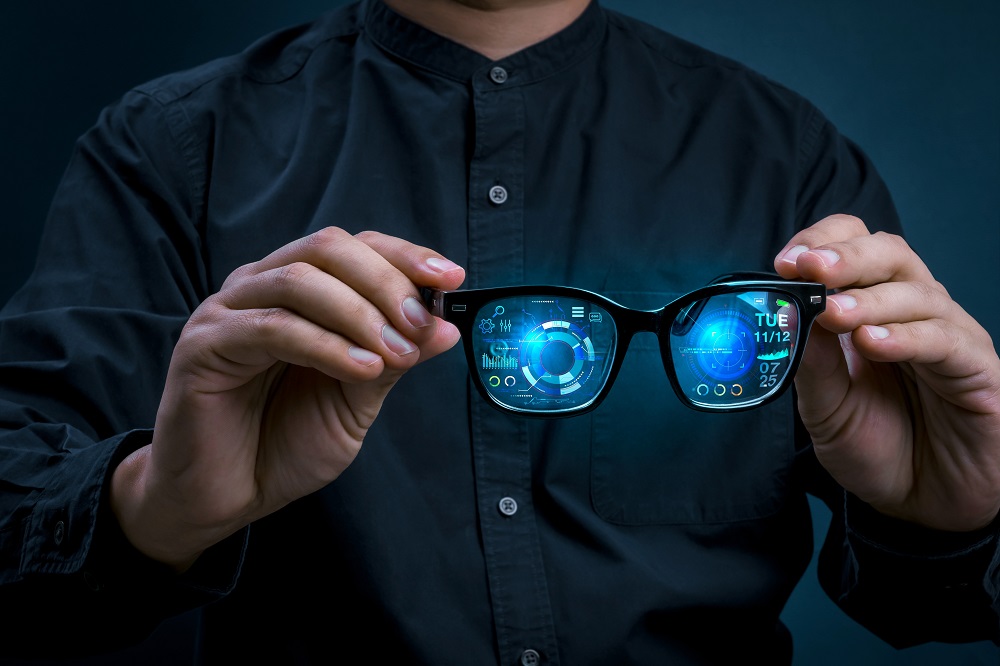
Smart glasses are wearable, devices connected via the internet, combining a traditional eyewear with digital features like cameras and speakers.
Speaking to RTÉ Radio, Professor McIntyre said that these glasses are being used with sordid intentions.
He added that they are effectively "covert, stealth devices" and are being used in that way.
He continued: "You've seen people filming in places like beaches, filming people in bikinis ... it's been used in places like swimming pools sometimes, other public places like gyms and that's why sometimes you see this referred to as the 'pervert glasses'".
"Now that's obviously a particular subset of the problem, but more generally then you have this being used as a harassment tool".
Professor McIntyre explained that the a US study conducted last month showed that children in American schools who had access to these glasses were using them "almost invariably to target girls, going up to them asking for names, numbers and the like, and then posting footage online when the girls declined their advances".
He added: "The point is that these are essentially stealth, covert devices. They're being used for that purpose because that's what they're designed to be used for. It's very different to traditional photography with a camera where it's visible or even photography with a phone where it's obvious that somebody is doing something".
"You do have a kind of a token nod to transparency in that some of these cameras have little lights that indicate when they're filming, but in practice those are either very unobtrusive or they can be easily disabled by the users".
Speaking about Meta's LED light which blinks if the devise is taking a photo or video, the professor added: "there's a thriving market already of people who will, for a small fee, disable these or show you how to disable them just by drilling them out, covering them with epoxy and so on".
Such is the severity of the situation, politicians in Norway are planning to implement a new law which would temporarily ban these use of these glasses in certain places, with the government saying that people are concerned about being photographed, filmed, or audio recorded without their knowledge.
Professor McIntyre gave his full backing to Norway, calling it "the correct approach", and saying that "you can't have a situation where this becomes pervasive and normalised and then try to fix the problem after the fact".
"The Norwegian ban is really codifying something that's happening already, so lots of places have already indicated that smart glasses can't be used, leisure centres, the court service in Ireland has indicated they can't be used in Irish courts," he continued. "I've banned them in my own lectures. You see pubs, for example, the entire chain of Wetherspoon pubs has recently banned them.
"The point is that people want to be sure that they're not going to be secretly monitored in this way," he added.
Prof McIntyre said people have the right to know if the glasses are banned in certain settings.
"I don't see how people could be comfortable in the gym or the swimming pool otherwise", he added.
He went on to state that there is a need for wider rules around the technology, which could be introduced in several ways.
"The Data Protection Commission should be looking into the wider issues associated with this, including the way in which this data is being streamed back to Meta and the uses that Meta is making of that, which is a separate problem," he said. "I think we should look to the Norwegian experience here". (All quotes according to RTÉ).