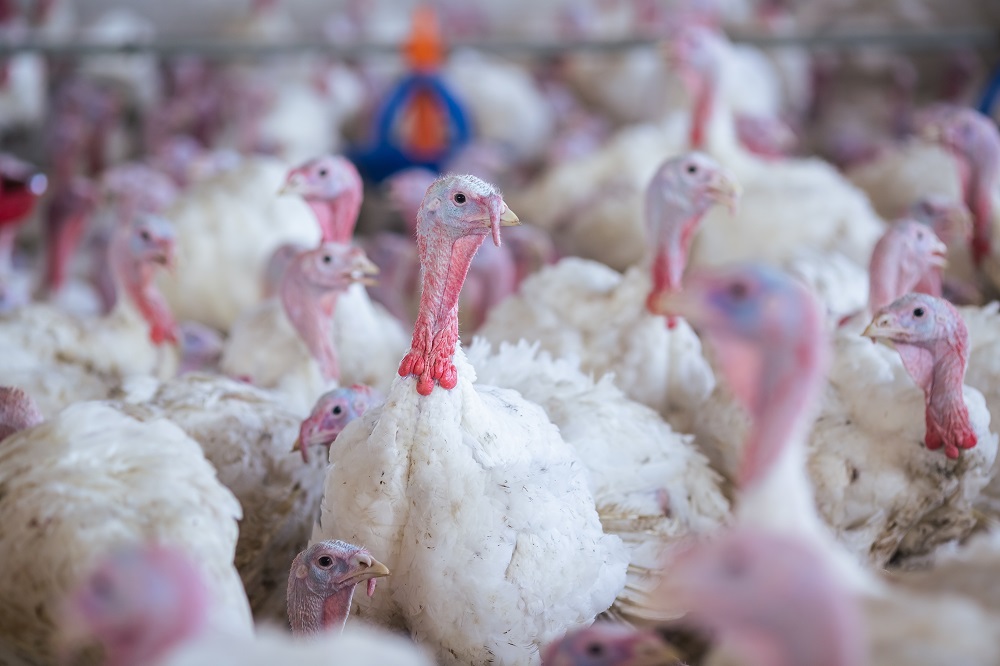

A second wave of highly pathogenic avian influenza has taken hold in Ireland, raising concerns about the availability of Christmas turkeys.
The Highly Pathogenic Avian Influenza H5N1 virus has been confirmed at a commercial turkey farm in County Carlow, where a flock of 3,240 birds was infected, resulting in the death of 3,130 turkeys. A second outbreak at a commercial turkey facility in County Meath has also been reported this week. In response, the Department of Agriculture, Food and the Marine has issued a compulsory housing order for all poultry and captive birds in Ireland, coming into effect from 10 November 2025. Officials maintain there is no immediate threat to turkey stocks for Christmas, but the fact that the virus has appeared earlier and in multiple locations has triggered concern within the industry.
“It is contagious and it’s here,” said Dr June Fanning, Chief Veterinary Officer at the Department of Agriculture.
Wild birds have accounted for more than 40 confirmed cases of bird flu in Ireland this year, signalling sustained viral activity beyond commercial farms. Restriction measures around infected farms now include a 3 km protection zone and a 10 km surveillance zone to control the movement of birds, litter, and other materials. The outbreak comes as Europe experiences early and widespread H5N1 activity, increasing pressure on poultry supply chains and raising the risk of higher prices or localised shortages.
For Irish consumers, the latest developments cast uncertainty over the traditional Christmas dinner table. While officials insist that current supplies are secure, any further spread of the virus could jeopardise that outlook. Poultry farmers have been urged to maintain “laser-like” biosecurity measures, and all bird keepers — whether commercial or domestic — have been reminded of their vital role in containing the disease.
The emergence of a second bird flu outbreak in Ireland, and its early timing, places the turkey supply chain under close scrutiny as the festive season approaches. Though immediate shortages are not confirmed, the combination of widespread wild bird infection, containment measures, and the contagious nature of H5N1 means both producers and shoppers will be watching developments anxiously in the coming weeks.