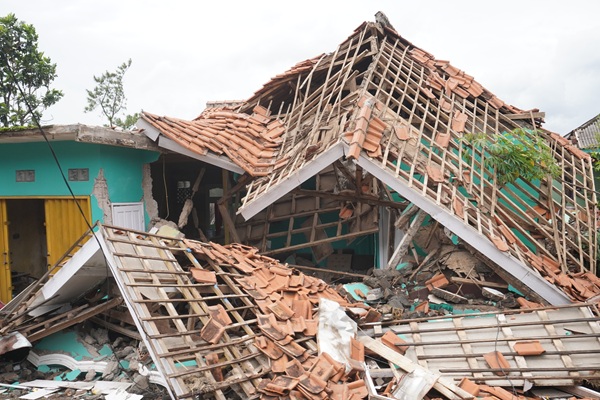

The 7.7-magnitude earthquake occurred offshore and generated a series of aftershocks. Authorities issued a temporary tsunami alert after waves below one metre were detected in some areas. The warning was later withdrawn after officials determined that the immediate tsunami danger had passed.
Maumere, a port town on Flores Island, was among the areas hit hardest. Local rescue chief Fathur Rahman said teams searching through damaged structures had found 20 people dead. Six others were receiving treatment, while two people were believed to be trapped under rubble.
Nagekeo, located near the earthquake's epicentre, remained difficult for emergency workers to access. Landslides had blocked roads into the region, forcing authorities to consider sea transport. Damage to communications infrastructure also made it harder for officials to establish the full extent of the destruction.
The BNPB reported that approximately 2,000 residents had evacuated Nagekeo. Homes, warehouses and public buildings were among the structures damaged by the earthquake. Power cuts and heavy traffic were also reported.
Officials were still working to establish an accurate death toll. The governor of East Nusa Tenggara said several people died when structures collapsed during the early-morning shaking, while the national disaster agency initially recorded one death and four injuries.
The earthquake caused panic in several communities. Footage from Maumere showed people fleeing into the streets as sections of buildings gave way. In Ende, hospital staff moved patients outside as a precaution, while reports also emerged of landslides in the region.
The shaking was felt across East Nusa Tenggara, West Nusa Tenggara and parts of South Sulawesi. Disaster officials said many residents immediately left their houses after feeling the powerful tremors.
A resident of Talibura village recalled how her family reacted when the earthquake hit. She said 13 people were inside their home and all of them quickly escaped to avoid being injured by falling debris.
According to BMKG, the earthquake occurred at 4:58 a.m. local time at a depth of 15 kilometres. Further tremors were recorded afterward.
The area has a history of destructive earthquakes. A magnitude-7.5 earthquake struck nearby in 1992, causing significant damage and destruction.
Indonesia is particularly vulnerable to earthquakes because it sits along the Pacific Ring of Fire, one of the world's most active geological zones. Despite the tsunami warning issued after the latest earthquake, Australia's tsunami monitoring authority confirmed there was no threat to the Australian mainland or its surrounding territories.