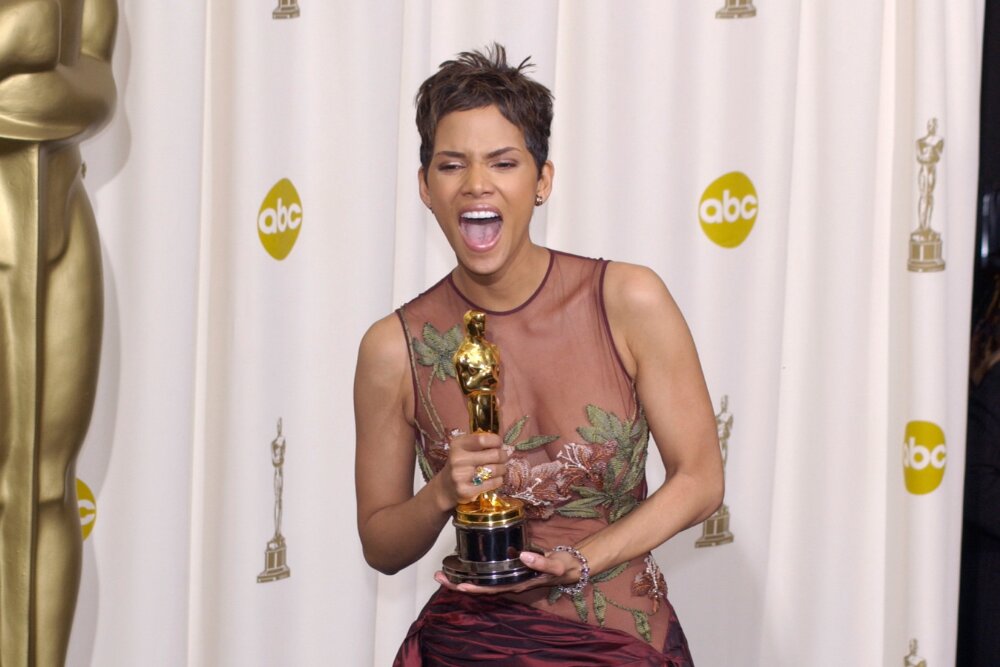
It has been 22 years since Halle Berry made history at the Academy Awards, becoming the first Black woman to win Best Actress for her performance in Monster's Ball — a moment that remains one of the most significant milestones in Hollywood.
When Berry’s name was called at the Academy Awards in 2002, her emotional reaction instantly became iconic.
Fighting back tears as she took to the stage, she acknowledged the weight of the moment not just for herself, but for generations of Black actresses who had been overlooked.
“This moment is so much bigger than me,” she said. “This moment is for Dorothy Dandridge, Lena Horne, Diahann Carroll.”
"It's for the women that stand beside me, Jada Pinkett, Angela Bassett, Vivica Fox. And it's for every nameless, faceless woman of colour that now has a chance because this door tonight has been opened."
24 years on, her acceptance speech remains one of the most powerful Oscar moments in history.
Her win marked a historic breakthrough in an industry long criticised for its lack of diversity, and more than two decades on, she still remains the only Black woman to have won the Best Actress Oscar.
Berry’s journey to that stage had been years in the making.
Born in Cleveland, Ohio, she first found success as a model and beauty queen before transitioning into acting in the late 1980s.
Early roles in television and film gradually built her profile, but it was her performance in Boomerang alongside Eddie Murphy that brought her wider recognition.
Throughout the 1990s, she took on a mix of commercial and dramatic roles, including the biographical film Introducing Dorothy Dandridge, where she portrayed the trailblazing actress and became the first Black woman to win an Emmy and Golden Globe for that role.
By the time she took on Monster’s Ball, Berry was already an established name — but the film marked a turning point in how she was perceived as an actress.
In the gritty, emotionally raw drama, she played Leticia Musgrove, a grieving widow navigating trauma, poverty and an unlikely relationship with a prison guard connected to her husband’s execution. The role demanded an unflinching vulnerability, and Berry delivered a performance that was widely praised for its intensity and honesty.
Critically, the film did not shy away from difficult themes, and Berry’s portrayal sat at the centre of its emotional weight.
Her performance was stripped back, exposing a level of fragility and resilience that challenged the kinds of roles typically offered to Black actresses at the time. It was this complexity — and her willingness to fully inhabit such a demanding character — that ultimately led to her historic Oscar win.
Following that breakthrough, Berry’s career took on a new scale. She became one of the most recognisable faces in Hollywood, starring in major franchises such as X-Men, where she played Storm, and later appearing as a Bond girl in Die Another Day. While her post-Oscar career has included both critical successes and commercial blockbusters, she has continued to move between genres, taking on roles that range from action to drama.
In more recent years, Berry has also stepped behind the camera.
She made her directorial debut with Bruised, in which she also starred, signalling a shift towards greater creative control over her work. The film was widely seen as a personal project, reflecting her ongoing commitment to telling more nuanced and challenging stories.
Despite the progress made since her win, Berry has spoken candidly about the fact that no other Black woman has since won the Best Actress Oscar — a reality that continues to spark debate about representation in the industry.
Her victory remains both a landmark achievement and a reminder of the barriers that still exist.
More than two decades on, Berry’s Oscar-winning performance in Monster’s Ball continues to stand as a defining moment in film history — not just for its artistic merit, but for what it represented.
It was a breakthrough that reshaped expectations, opened doors, and left a legacy that still resonates today.