Fifteen years on from her death, Elizabeth Taylor remains one of the most enduring and influential figures in Hollywood history — a star whose impact stretched far beyond the silver screen and helped shape the very idea of modern celebrity.
Born in London in 1932, Taylor rose to fame as a child star before successfully transitioning into one of the defining actresses of Hollywood’s Golden Age.
By the 1950s and 1960s, she had become one of the most recognisable faces in the world, known for her striking violet eyes, commanding screen presence, and ability to move seamlessly between romantic drama and complex, emotionally charged roles.
Her filmography includes some of cinema’s most iconic works.
In Cleopatra, Taylor delivered a performance that became as legendary for its scale as for its cultural impact, with the production itself making headlines as one of the most expensive films ever made at the time.
She also starred in Cat on a Hot Tin Roof and Who’s Afraid of Virginia Woolf?, the latter earning her one of her two Academy Awards and cementing her reputation as a serious dramatic actress.
Earlier, she won her first Oscar for BUtterfield 8, marking a turning point in her career from glamorous star to critically acclaimed performer.
But Taylor’s legacy extends far beyond her film roles. At a time when the studio system tightly controlled actors’ lives and public images, she broke boundaries by asserting control over her career and personal narrative. She was among the first actors to command a $1 million salary for a single film — a landmark moment that changed how stars were valued and compensated in Hollywood.
Her personal life was equally headline-making, with eight marriages — including two to actor Richard Burton — turning her into one of the first true tabloid-era celebrities.
Elizabeth Taylor was famously married eight times to seven men, with her relationships becoming a major part of her public image. Here’s a clear, factual rundown of each marriage, including how long they lasted and the context around them:
Her first marriage was to Conrad Hilton Jr., heir to the Hilton hotel fortune. They married in 1950, when Taylor was just 18, but the relationship quickly broke down and they divorced in 1951, lasting less than a year. Taylor later described the marriage as unhappy and short-lived.
She then married British actor Michael Wilding in 1952. The couple had two sons together and remained married until 1957, making it one of her longer unions at around five years. Their split was reportedly due to differences in lifestyle and growing distance as Taylor’s career surged.
Her third husband was film producer Mike Todd, whom she married in 1957. This was widely described as one of the happiest periods of her life. They had a daughter together, but the marriage was tragically cut short when Todd died in a plane crash in 1958, after just over a year of marriage.
In 1959, Taylor married singer and actor Eddie Fisher. The relationship caused a major scandal at the time, as Fisher had been married to Debbie Reynolds, a close friend of Taylor’s. The marriage lasted until 1964, around five years, before ending in divorce.
Later in 1964, she married Welsh actor Richard Burton, whom she had met while filming Cleopatra. Their relationship, which began during the filming of Cleopatra, captivated global audiences and blurred the line between on-screen drama and real-life spectacle, helping to define the modern obsession with celebrity relationships. They divorced in 1974 after ten years of marriage, marked by intense passion and public scrutiny.
Remarkably, Taylor and Burton remarried in 1975, making him her sixth husband — though the same man. This second marriage was short-lived, ending in divorce again in 1976, lasting less than a year.
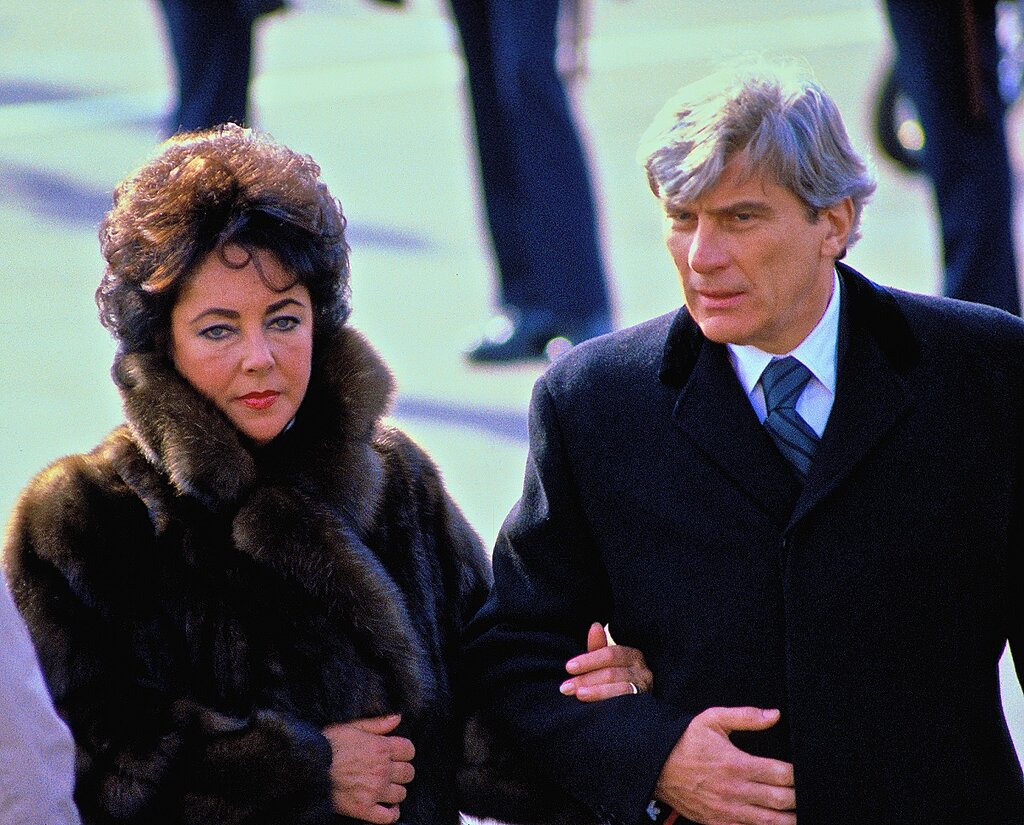
Elizabeth Taylor and Husband Senator John Warner R Va.,Ronald Reagan Swearing Ceremony, 1981
Her seventh marriage was to US politician John Warner in 1976. Warner would later become a US senator, and Taylor took on the role of political spouse during their marriage. However, she struggled with the lifestyle, and they divorced in 1982, after about six years together.
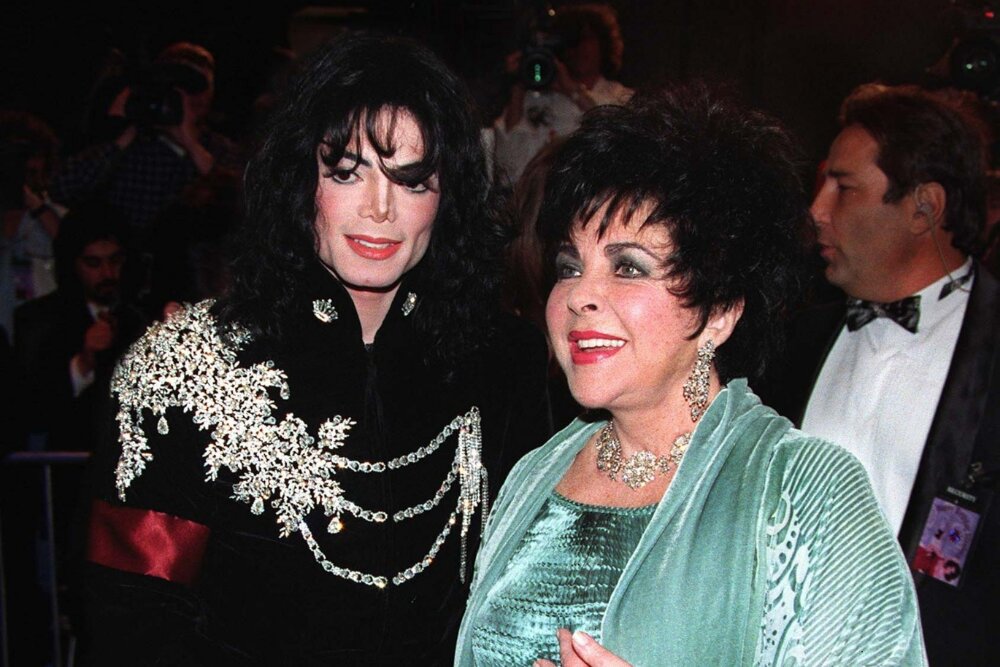
Finally, Taylor married construction worker Larry Fortensky in 1991. The wedding, held at Michael Jackson’s Neverland Ranch, attracted huge media attention. Their marriage lasted until 1996, around five years, before ending in divorce.
Across her life, Taylor’s marriages ranged from less than a year to a decade, reflecting both the intensity and complexity of her personal life. While often the subject of tabloid headlines, these relationships also played a role in shaping her public persona — contributing to her status as one of the first truly global, modern celebrities.
In later years, Taylor used her platform to become a pioneering activist, particularly in the fight against HIV/AIDS at a time when stigma around the illness was widespread.
She co-founded the American Foundation for AIDS Research and established her own Elizabeth Taylor AIDS Foundation, raising millions and using her influence to push for awareness, funding, and compassion.
Her advocacy work is widely regarded as transformative, helping to shift public perception and policy during a critical period.
Taylor’s influence can also be seen in how modern Hollywood operates.
From negotiating power and media scrutiny to the blending of fame, activism, and personal branding, many of the dynamics that define today’s celebrity culture can be traced back to the path she forged.
She was not just a film star — she was a cultural force who redefined what it meant to be famous.
She died on 23 March 2011, at the age of 79, but her legacy continues to resonate.
For audiences in Ireland and around the world, her films remain staples of classic cinema, while her life story continues to be referenced in discussions about fame, power, and resilience in the entertainment industry.
Fifteen years after her passing, Elizabeth Taylor is remembered not only for her extraordinary talent, but for the way she transformed Hollywood itself — leaving behind a blueprint that still shapes the industry today.
Written by Louise Ducrocq
Louise is an expert content creator, and online author for Ireland's Classic Hits Radio. She's evolved in a few different fields, including mental health and travel, and is now excited to be part of the wonderful word of Radio.