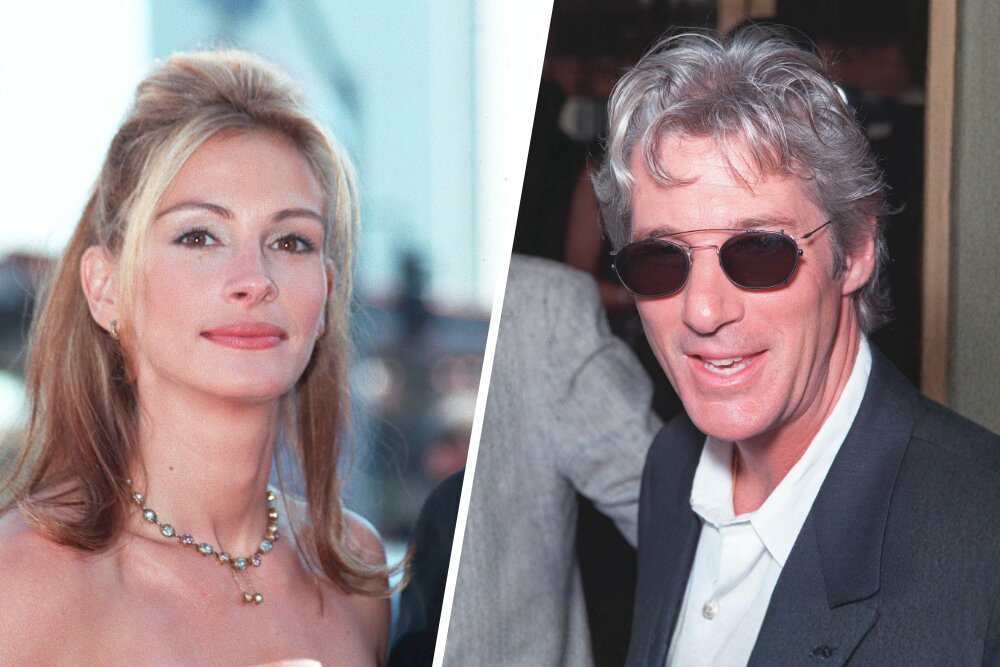

When Julia Roberts and Richard Gere were making Pretty Woman, neither star had any idea they were creating one of the most beloved romantic comedies of all time. In fact, both actors were convinced the film was going to flop — so much so that Roberts once said the cast and crew actually thought they were making “the worst movie in Hollywood.”
Speaking about the 1990 classic in a recent interview, Julia Roberts recalled how unsure she and Gere were during filming. “I remember we didn't know what we were doing,” she confessed. “I'd sort of say to Richard, ‘What are we doing? What are we doing?’ He goes, ‘I don't know.’” According to Roberts, director Garry Marshall would often simply tell her to be entertaining, leaving her to improvise much of her performance. “I was like, ‘Okay, so a man walks into a bar…’ Like, I mean, we were really shooting from the hip, for sure.”
Roberts continued: “When we finished, we all kind of thought, ‘We just had the most fun making the worst movie in Hollywood.’ Crew members were reportedly so convinced the film would be a disaster that they held secret lunch meetings to figure out how to gently break the bad news to Marshall. Roberts described how they planned “how to let him down that this movie was such a steaming piece of s**t.”
@netflixph Just screamed my biggest “Akala mo, ha!” ever 🤭🤭 #PrettyWoman #Netflix #NetflixRecommendation #throwback ♬ original sound - Netflix Philippines
Of course, the irony is that Pretty Woman went on to become one of the biggest successes in Hollywood history — a film that not only rescued the romantic comedy genre but also turned Julia Roberts into an international superstar and solidified Richard Gere as one of the leading men of his generation.
Released on March 23, 1990, Pretty Woman was a runaway box‑office hit. Made on a reported budget of around $14 million, it grossed more than $463 million worldwide, making it the third‑highest grossing film of that year and one of the most profitable romantic comedies ever released. Its success was particularly remarkable given the modest expectations from studios and filmmakers at the time, and it became a defining film of both stars’ careers.
Julia Roberts, then a relatively young actress with a handful of credits, instantly became one of Hollywood’s most bankable stars. Her portrayal of Vivian Ward, a spirited and charismatic escort who is taken under the wing of Gere’s wealthy businessman Edward Lewis, earned her the first of multiple Academy Award nominations. The role also brought her a Golden Globe Award for Best Actress – Motion Picture Musical or Comedy, as well as widespread critical acclaim.
For Richard Gere, already an established actor after roles in films such as An Officer and a Gentleman and American Gigolo, Pretty Woman added a new dimension to his career, demonstrating his effortless charm and chemistry with co‑stars in a mainstream romantic setting.
The film’s cultural impact was enormous. Its soundtrack, featuring classic songs like Roy Orbison’s “Oh, Pretty Woman”, became iconic, and its influence on fashion, relationships and romantic comedies has endured for decades. The story of a wealthy man falling for someone from a completely different walk of life resonated with audiences around the world, and the film’s blend of humour, heart and fairy‑tale optimism helped define the rom‑com genre for a new generation.
In the years since its release, Pretty Woman has been referenced, parodied and celebrated countless times in popular culture. Broadway even adapted it into a successful stage musical, further cementing its legacy.
Looking back now, the idea that Roberts, Gere and the cast thought Pretty Woman would be a disaster seems almost unbelievable. What was once seen as a light, somewhat improvised project turned into a cultural phenomenon that changed careers and captivated audiences globally. The film not only exceeded all expectations in 1990, it remains one of the most enduring and cherished romantic comedies in cinema history — a testament to serendipity, chemistry and the unpredictable magic of filmmaking.