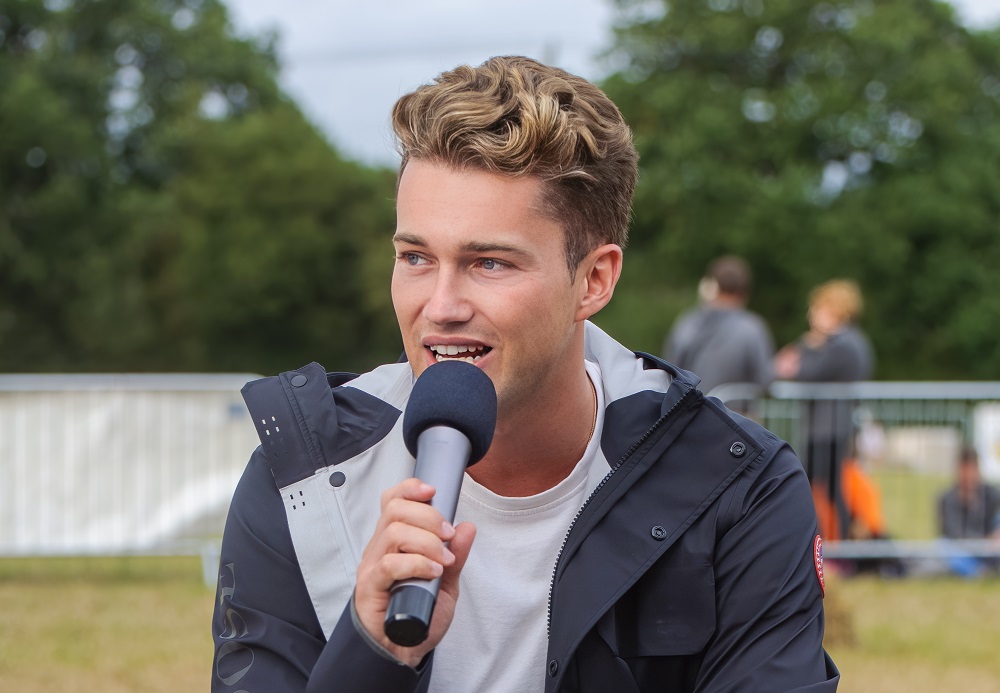

AJ Pritchard has pulled back the curtain on what life is really like for professional dancers on Strictly Come Dancing, admitting that when they’re paired with a celebrity who struggles on the dancefloor, it’s tougher than fans might realise — and “certain things just won’t work”.
Pritchard, who was part of the BBC One series from 2016 until 2019, spoke candidly on the Spent podcast with Matt Edmondson about the challenges professionals face when a celebrity partner doesn’t take to dancing naturally.
Asked bluntly by Edmondson whether there’s “a sinking feeling” when a pro is matched with someone who isn’t naturally skilled, Pritchard acknowledged the reality: training celebrities with limited dance ability is “a lot harder work”.
He stressed it forces professionals to adapt creatively rather than simply coach traditional technique — and admitted there are times where no amount of choreography magic can disguise limitations.
“I’m trying to be diplomatic… what I do think inside is like, okay, it’s gonna be a lot harder work … and I’m gonna have to be smarter about how I make this really flourish,” he said on the podcast.
Pritchard’s reflections offer a rare window into the mechanics of Strictly Come Dancing, a show beloved across the UK and Ireland for its blend of glitz, storytelling and dramatic transformation arcs.
Born Alex Joseph Pritchard on 5 November 1994 in Stoke‑on‑Trent, England, AJ was the youngest male professional on Strictly during his tenure. Across four series, he was paired with a diverse range of celebrities, from Olympic gymnast Claudia Fragapane in 2016 to YouTube personality Saffron Barker in 2019.
All three of his first partnerships — with Fragapane, Mollie King and Lauren Steadman — reached the semi‑finals of the competition, a notable achievement for any pro.
Pritchard and King, in particular, forged a memorable journey in 2017. The former The Saturdays singer became one of the standout contestants that series, earning praise for her progress as they danced through a range of styles and navigating intense judging critiques before bowing out just short of the final.
Yet even in that relatively successful pairing, the hard work behind the scenes was immense. Pritchard’s comments about “working smarter not harder” reflect how pros often tailor choreography to highlight strengths and mask weaknesses — a balancing act that’s become a defining element of the show’s success.
Strictly’s format is deceptively simple: each celebrity is matched with a professional, learns new dances each week, and is judged by a panel that includes Shirley Ballas, Craig Revel Horwood and others. But beyond that, the pairing itself can significantly shape a contestant’s trajectory.
While athletic, rhythm‑savvy stars like Olympians and stage performers often adapt quickly, those without a dance or performance background can struggle with basics such as timing, posture and partnering skills. Pros like Pritchard are then faced with teaching from square one, often in a compressed rehearsal schedule that leaves little room for error.
In some cases, this disparity becomes obvious to audiences — and to judges. Judges will comment not just on performance quality, but on control, musicality and connection between partner and pro. Even small flaws can be unforgiving when showcased on a prime‑time BBC stage.
Pritchard’s remarks come amid continued scrutiny of the show’s pressures and working environment. In recent years, the BBC has publicly apologised to past contestants after reports of negative experiences — a rare admission from the broadcaster for one of its flagship entertainment programmes.
Strictly remains one of the UK’s most expensive and watched shows, attracting millions to Saturday night viewing, but behind the sequins there is no denying the demands placed on both celebs and their pro partners.
For Pritchard, those demands were enough to ultimately prompt his departure — he left Strictly in 2020 to pursue presenting and other TV opportunities after four seasons on the dancefloor.
What his comments underline is something viewers only glimpse in edited highlights and results shows: the profession of teaching dance on Strictly Come Dancing is as much about psychology and adaptation as it is about steps.
A pro might see potential in a celebrity, but that doesn’t always translate instantly into polished performance — and as Pritchard said, “certain things just won’t work” no matter how hard you try.