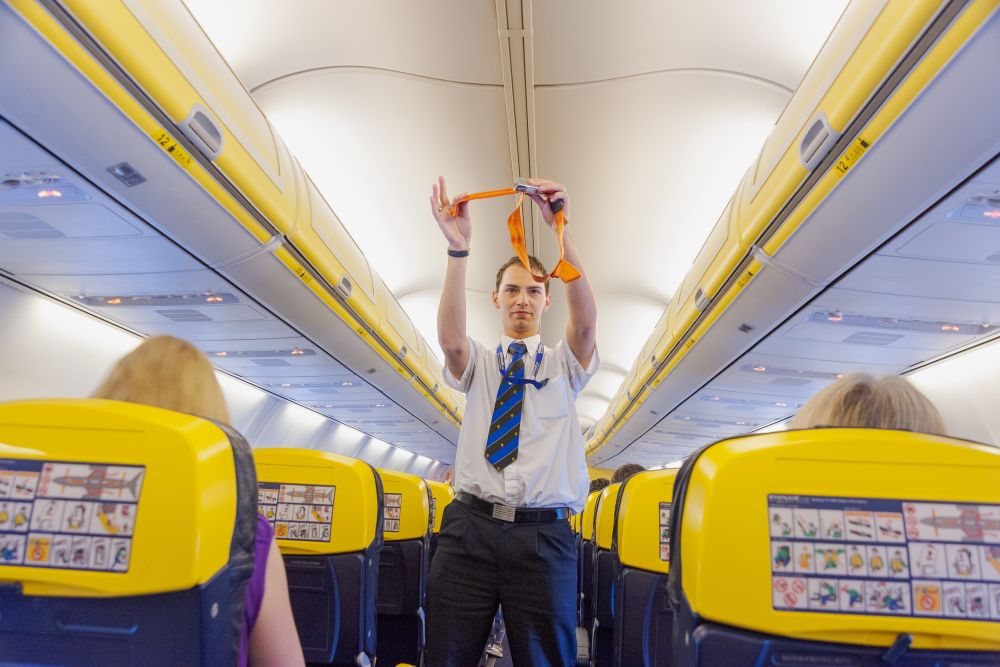

Ryanair has warned that employees may be asked to accept temporary pay freezes as the airline looks to cut costs in response to soaring fuel prices.
The warning came as Europe's largest airline by passenger numbers reported a 15% fall in net profit for the six months to the end of September, despite an increase in passenger numbers and overall revenues.
Chief executive Michael O'Leary said the airline was reviewing all areas of expenditure as it prepares for a potentially prolonged period of higher fuel costs.
Ryanair expects its fuel bill to increase by around €2 billion in the financial year ending March 2028, based on current forward prices. The airline warned that rising ticket prices are unlikely to fully offset the additional expense.
"Unless there is a swift resolution of the Middle East conflict, we expect jet fuel prices to remain elevated well into 2027," Mr O'Leary said.
The possibility of temporary wage freezes forms part of a wider cost-cutting strategy as the airline seeks to protect its profitability. Other measures under consideration include renegotiating airport charges, reducing crew numbers on flights and expanding the use of artificial intelligence in administrative and back-office operations.
Ryanair reported an after-tax profit of €2.15 billion for the six-month period, down from €2.54 billion during the same period last year.
However, revenues increased by 3% to €10.08 billion, while passenger numbers rose by 6% to 125.8 million, compared with 119 million a year earlier.
Average fares fell by 4% during the first half of the financial year, from €58 to €55.70. The airline said fares had recovered modestly in the current quarter, although the strength of late bookings would be a key factor in determining prices over the Christmas period.
Ryanair said it expected short-haul fares to increase materially next year but cautioned that higher ticket prices alone would not be sufficient to absorb the anticipated rise in fuel expenditure.
The airline has secured 80% of its fuel requirements through March 2027 at $67 a barrel. However, its hedging position for the following 12 months has increased to 25%, at an average price of $95 a barrel.
Mr O'Leary said it was too early to provide full-year profit guidance, citing uncertainty surrounding the conflicts in the Middle East and Ukraine, fuel prices, wider economic conditions and potential European air traffic control strikes.
Despite the challenges, Ryanair said demand remained strong and its management expected passenger demand to continue growing next year.
Chief financial officer Neil Sorahan said an increase of €5 or €10 in ticket prices would not necessarily discourage customers from travelling.
Ryanair's second-quarter after-tax profit, covering the peak summer holiday season, came in at €1.61 billion, in line with analysts' expectations.
The airline's shares rose in Dublin trading following the results.