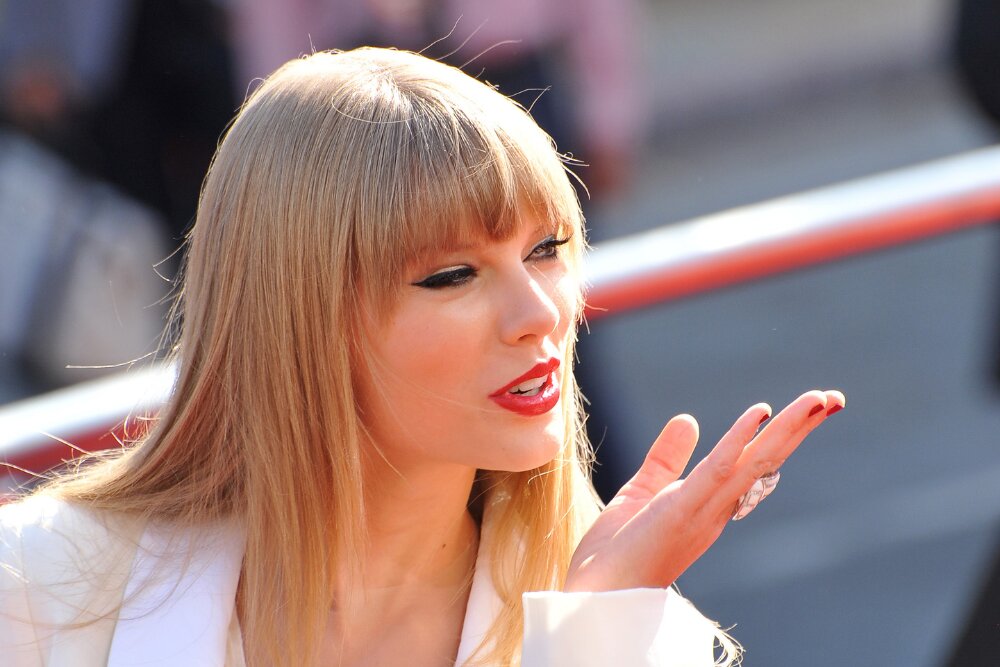

Taylor Swift is facing legal action over her 2025 album The Life of a Showgirl, but the dispute comes against the backdrop of extraordinary commercial success for the project and her wider career.
A Las Vegas-based entertainer has sued the pop superstar, alleging she originally created the name and concept behind the album. Writer-entertainer Maren Wade filed legal documents in federal court accusing Swift and Universal Music Group of trademark infringement, false designation and unfair competition.
“A solo performer who spent twelve years building a brand shouldn't have to watch it disappear because someone bigger came along,” her attorney Jaymie Parkinnen said in a statement.
Wade is seeking damages and a restriction on the continued use of The Life of a Showgirl branding.
However, the legal challenge arrives as the album itself has become one of the most dominant releases of 2025.
Upon its release, The Life of a Showgirl debuted at No. 1 in multiple countries, including the United States and United Kingdom, and reportedly shifted over 1 million units in its first week globally, continuing Swift’s streak of blockbuster openings.
The record also generated billions of streams within months, with several tracks quickly surpassing 100 million streams individually across major platforms.
In the US, it marked yet another No. 1 album on the Billboard 200, extending Swift’s record as one of the most commercially successful artists of her generation.
Beyond pure sales, the album’s success has been amplified by Swift’s cultural dominance, driven in large part by her record-breaking The Eras Tour.
The tour has officially become the highest-grossing tour in music history, pulling in over $1 billion (€900m+) in revenue — a milestone no artist had previously reached.
At its peak, The Eras Tour was generating tens of millions per night, with sold-out stadiums across North America, Europe, and beyond. Industry estimates suggest it ultimately surpassed $2 billion in total gross, further cementing Swift’s position at the top of the global music industry.
That level of commercial power is central to the stakes of the current lawsuit. The Life of a Showgirl is not just an album title — it is tied to a hugely profitable brand ecosystem spanning music sales, streaming, merchandise and live performances.
According to court filings, Wade claims she began developing her own “showgirl” concept as far back as 2014, including a column titled Confessions of a Showgirl in Las Vegas Weekly, where she documented her experiences as an entertainer.
The case will now test how intellectual property law applies when a globally dominant artist intersects with a smaller, independently developed brand.
View this post on Instagram
For Swift, whose commercial influence is virtually unmatched in modern pop, the outcome could determine whether one of her most successful recent projects faces restrictions.
For now, The Life of a Showgirl continues to perform strongly, underscoring the scale of the empire at the centre of the dispute — one built not only on chart-topping albums, but on record-shattering tours and a level of audience demand rarely seen in the industry.
Taylor Swift has once again proven her unmatched influence in the music industry after being named the best-selling female artist of the 21st century, cementing her status as one of the most commercially successful performers of the modern era.
The global pop superstar comfortably topped the rankings thanks to her extraordinary record sales and massive streaming numbers accumulated across nearly two decades of chart domination.
The list, compiled by Billboard to celebrate International Women’s Day, places Swift ahead of a long line of some of the biggest names in modern music.
Swift is followed in second place by Rihanna, who remarkably maintains her position despite not releasing a studio album for nearly a decade. Beyoncé takes the third spot, with Adele – the only British female artist to make the ranking – landing in fourth place thanks to the massive global success of her blockbuster albums.
Katy Perry sits in fifth place, followed by Lady Gaga, Pink, and Ariana Grande, who at 32 is the youngest artist to feature in the top ten. Pop favourites Miley Cyrus and Alicia Keys round out the prestigious list, which highlights the women who have dominated global music consumption since the year 2000.
View this post on Instagram
While the ranking itself is impressive, Swift’s position at the very top reflects not only her record-breaking sales but also the immense cultural power of her fanbase – known worldwide as the Swifties.
Over the years, the community has become one of the most organised and influential fan movements in modern pop culture, capable of driving chart success, breaking streaming records, and turning every album release into a global event.
Swift’s relationship with her fans has long been a cornerstone of her success.
From interacting directly with supporters on social media to hosting intimate “Secret Sessions” listening parties in her own homes during earlier album cycles, the singer has cultivated an unusually close bond with her audience.
That connection has translated into fierce loyalty, with fans rallying behind her projects in huge numbers and supporting each new release with extraordinary enthusiasm.
@fallontonight Julia Roberts is a big-time #Swiftie! #FallonTonight #JuliaRoberts #TaylorSwift #1989TaylorsVersion ♬ original sound - FallonTonight
The strength of the Swiftie community has been particularly evident in the streaming era, where coordinated listening campaigns frequently propel Swift’s music to the top of global charts within hours of release. Albums such as “Midnights”, “1989 (Taylor’s Version)”, and “Speak Now (Taylor’s Version)” have all delivered massive first-week numbers, often breaking platform records in the process.
Beyond streaming and sales, Swift’s fanbase has also played a major role in the overwhelming success of her live performances. Her record-breaking Eras Tour, which began in 2023, quickly became one of the biggest concert tours in history, selling out stadiums across multiple continents and generating billions in revenue.
Tickets were snapped up within minutes of going on sale, and the tour sparked a global cultural phenomenon that extended far beyond the concerts themselves.
Cities hosting the shows reported major economic boosts as thousands of travelling fans flocked to hotels, restaurants and local businesses.
The tour even inspired friendship bracelet-trading among concertgoers – a tradition that spread widely on social media and became one of the defining symbols of the Swiftie community.
@independent Taylor Swift fans attending her global Eras Tour have been pictured wearing stacks of beaded friendship bracelets up their arms, sometimes exchanging them with fellow Swifties at the shows. Usually handmade, and often unique, the brightly-coloured jewellery often features song titles, lyrics, or other fandom references. The idea appears to have come from the lyrics to "You're On Your Own, Kid", which say: "Make the friendship bracelets, take the moment and taste it." The Independent headed to Wembley Stadium for Swift's second London date on Saturday, 22 June, to find out why the practice of making and trading the memorabilia is so important to Swifties. #taylorswift #swifties #erastour ♬ original sound - Independent
Swift’s dominance also reflects the sheer size of her catalogue and her unique ability to continually reinvent herself musically. Beginning her career as a teenage country singer with her 2006 self-titled debut album, she later transitioned into pop superstardom with the release of “1989” in 2014, before experimenting with darker electro-pop sounds on “Reputation” and indie-folk storytelling on “Folklore” and “Evermore.”
Her decision to re-record her earlier albums – following a dispute over the ownership of her original master recordings – has further strengthened fan engagement. Each “Taylor’s Version” release has been treated like a brand-new album event, with previously unreleased “From The Vault” songs generating fresh excitement among listeners.
Taken together, those projects have created a rare level of sustained commercial momentum. Few artists manage to remain at the top of the industry for multiple decades, but Swift has not only maintained her popularity – she has continued to grow it.
Being crowned the best-selling female artist of the 21st century therefore represents more than just a numerical achievement. It reflects the powerful combination of an evolving musical career, a deeply engaged fanbase, and a cultural influence that extends far beyond the charts.
With millions of devoted Swifties around the world continuing to champion her work, Taylor Swift’s position at the top of the rankings suggests her extraordinary run of success may be far from over.
@jimmyfallon Thanks for coming on the show this week and keeping it 💯 @Taylor Swift #TaylorOnFallon #TSTheLifeofaShowgirl ♬ original sound - Jimmy Fallon