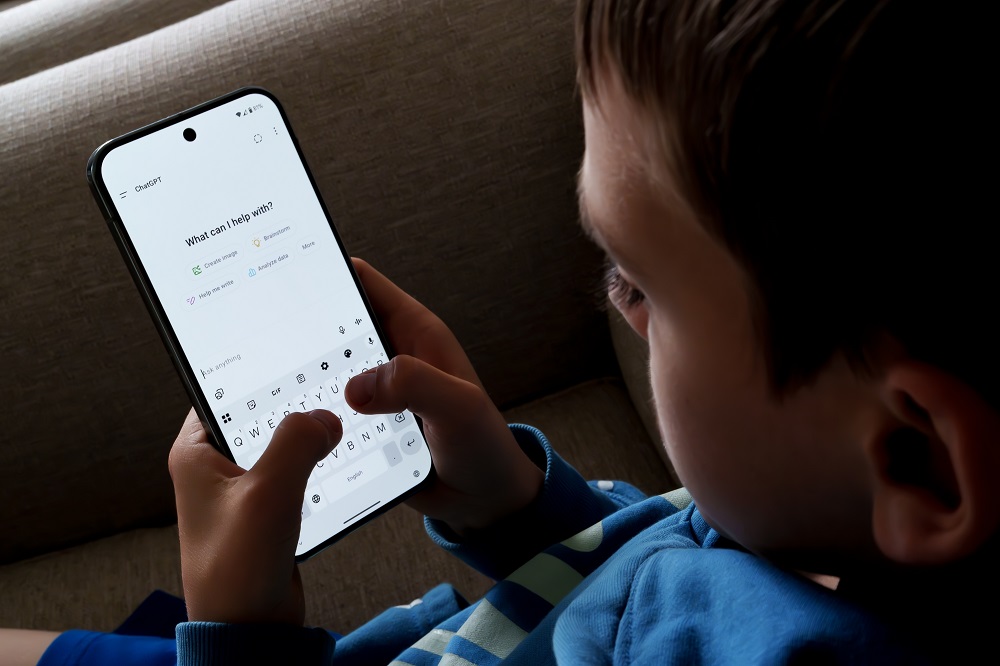

Modern parents are becoming more and more open to using AI to assist with their parenting decisions, according to recent research.
A report found three in 10 parents of under‑18s who use AI tools have done so to give advice to their children, while 33 per cent have considered doing so.
Help with homework or school projects is when AI is most commonly utilised (45 per cent), while others turn to it when they want age‑appropriate entertainment or books (39 per cent).
However, as many as 40 per cent will look to the likes of Copilot or ChatGPT if they need to talk about difficult issues such as bullying, grief or relationships.
With 39 per cent of the parents in the study of 5,000 adults finding AI useful to help explain more complex topics like climate change or puberty.
Only 37 per cent of parents of under‑18s who use AI said they have not given any thought to using AI to assist with their parenting decisions, or to seek advice.
TOP 13 WAYS MODERN PARENTS ARE UTILISING AI
Helping with homework or school projects
Talking about difficult topics (e.g., bullying, grief, relationships)
Finding age‑appropriate entertainment or books
Explaining complex topics (e.g., AI, climate change, puberty)
Creating routines (e.g., bedtime, study schedules)
Managing screen time and digital habits
Planning meals and nutrition for children
Navigating online safety and social media use
Understanding developmental milestones
Managing behavioural challenges
Choosing extracurricular activities or hobbies
Deciding on education paths or school choices
Supporting children’s mental health and emotional wellbeing
There’s no publicly available, large‑scale study — to date — that matches the report above specifically for Irish parents. That said, broader data suggests that AI adoption is rising rapidly among Irish adults, with many using AI-powered tools such as chatbots and writing assistants for everyday tasks, including education help, writing, and information searches.
This trend implies that the patterns seen in the broader survey — helping kids with homework, tackling difficult topics and using AI for educational support — are likely mirrored by many Irish families. Given Ireland’s high rate of smartphone and broadband access, and growing digital literacy, it’s reasonable to expect that a sizeable portion of parents would be open to integrating AI into parenting — particularly for academic support, digital safety advice, and navigating complex issues like mental health or social media pressures.
Still, without official national research, the numbers remain speculative. The broader takeaway is that AI’s role in everyday life — including parenting — is increasing, and Ireland is unlikely to be an exception to that trend.