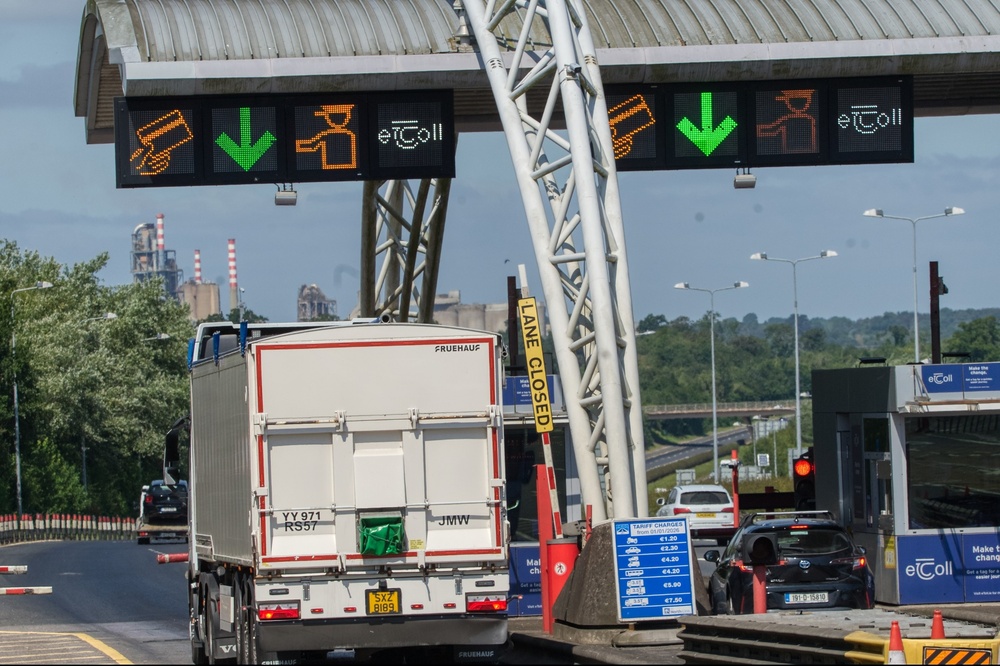

Motorists across Ireland will face higher toll charges from 1 January 2027, with increases confirmed for all 10 toll roads on the national road network.
Transport Infrastructure Ireland (TII) has approved the changes, which will affect the M50 and Dublin Port Tunnel, as well as eight toll roads operated under public-private partnership (PPP) arrangements.
On the M50, all vehicle categories will see an increase. Drivers with a registered tag or video account will pay an extra 10 cent per journey, while those without a tag will face a 20 cent increase.
Goods vehicles weighing no more than 2,000kg will see increases of 10 or 20 cent, depending on their payment method. Heavier HGVs will pay an additional 20 or 30 cent.
The current M50 toll for cars ranges from €2.60 to €3.80 per journey, depending on how the charge is paid.
Dublin Port Tunnel charges will also increase for drivers travelling southbound towards the city during the morning rush hour. From January, the toll will rise by €1, from €14 to €15, for journeys made between 6am and 10am, Monday to Friday.
TII said the increase reflects rising traffic volumes during the morning peak and the need to maintain capacity for heavy goods vehicles travelling to Dublin Port.
The authority said the change is “aligned with the approach adopted in recent years” and is intended to help preserve access for freight traffic.
On the eight PPP toll roads, car and motorcycle charges on the M3 Clonee to Kells will remain unchanged. However, car tolls at all other locations will increase by 10 cent.
Heavier goods vehicles will generally see increases of 20 cent, with vehicles weighing more than 3,500kg and having four axles facing a 30 cent increase. The exception is the M3 Clonee to Kells, where the increase for these vehicles will be 10 cent.
TII said toll charges are regulated through an inflation adjustment mechanism. The M50 and Dublin Port Tunnel are public toll roads operated on behalf of the authority, while the remaining eight are run under PPP arrangements.