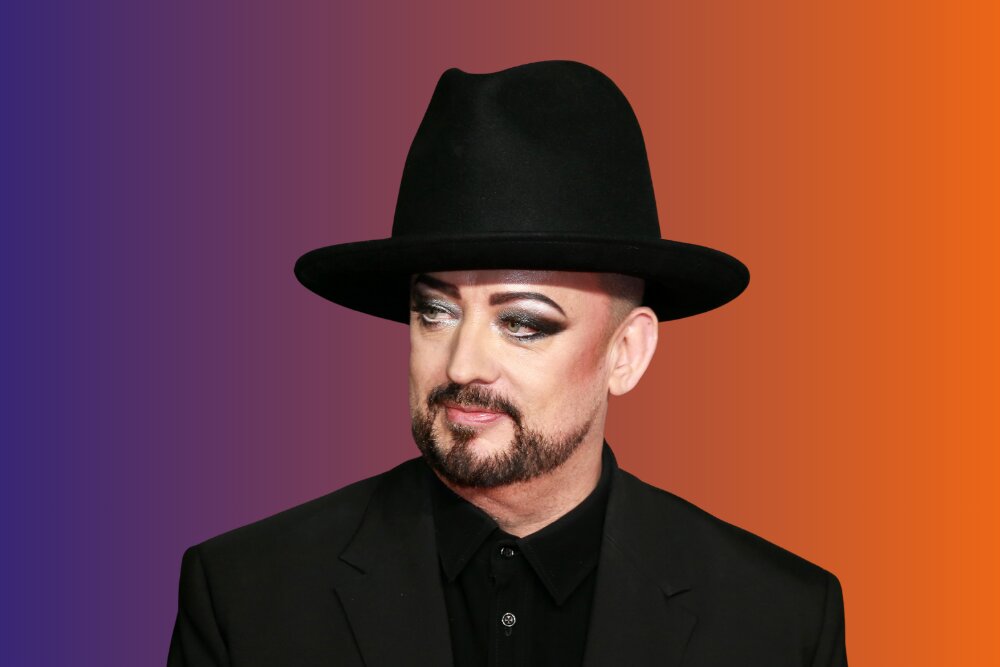

Boy George has told Chappell Roan to “cheer up” following the singer’s recent confrontation with paparazzi in Paris, sparking a wave of debate online about celebrity boundaries and media scrutiny.
The former Culture Club frontman shared his thoughts on X on March 10, after a video of Roan challenging a group of paparazzi began circulating widely on social media.
In the clip, the “Pink Pony Club” singer can be seen filming herself while surrounded by photographers, who are shouting at her and asking for autographs. Addressing the situation directly on camera, Roan says she had already repeatedly asked the photographers to back away.
“I’ve asked these people several times to get away from me,” she says in the video before turning the camera toward the crowd. “These are all the people that are completely disregarding my boundaries.”
The footage quickly went viral online, with many fans praising the singer for standing up to aggressive paparazzi behaviour.
chappell roan was so fed up with the paps in paris that she decided to film them to show their faces in a video pic.twitter.com/Q6yo1HYXSP
— pop backup ꧂ (@favsbackupp) March 9, 2026
However, Boy George offered a different perspective. Posting on X, the singer — who rose to fame in the 1980s with Culture Club — suggested that dealing with paparazzi attention is part of life as a celebrity.
He wrote that after decades in the public eye he had learned that stars “don’t get a free pass once you turn yourself into a bird of paradise.” Addressing Roan directly in the post, he encouraged her to embrace the attention rather than resist it.
“Own your fame!” he wrote. “Cheer up girl. The world is at your feet stop kicking it!”
He also suggested that celebrities should respond to public attention with positivity, adding that “boundaries are boring” and advising the singer to “break them with the magic of kindness.”
His comments quickly sparked backlash online, with many social media users defending Roan and arguing that celebrities should still be allowed to set personal limits when dealing with intrusive photographers.
Several posts criticised the idea that public figures should simply accept unwanted attention, particularly when it becomes aggressive or invasive.
Chappell Roan fans were quick to come to her defence, in a fierce way.
One user wrote: “Why is everyone so eager to tell women to just take unwanted attention.” Another comment referenced Boy George’s past legal controversy, saying: “Maybe she should handcuff someone to a radiator instead next time.”
It's probably not helpful but I have been doing this fame thing for a while and you learn slowly and painfully that you don't get a free pass once you turn yourself into a bird of paradise. I watched @ChappellRoan filming the paps in Paris and I laughed because I have kicked off…
— Boy George (@BoyGeorge) March 10, 2026
The remark referred to George’s 2009 conviction for false imprisonment in London, after he handcuffed a male escort to a radiator during an incident in 2007. The singer was sentenced to 15 months in prison following the case.
The exchange highlights the generational divide in how artists approach fame and privacy. Boy George became globally famous in the early 1980s as the lead singer of Culture Club, scoring hits such as “Karma Chameleon” and “Do You Really Want to Hurt Me.” The band went on to win the Grammy Award for Best New Artist in 1984.
More than four decades later, Chappell Roan has emerged as one of the defining new pop voices of her generation. The singer’s theatrical stage persona and breakout hits have propelled her into the global spotlight in recent years, culminating in her own Best New Artist win at the 2026 Grammy Awards — 41 years after Culture Club won the same prize.
While George may disagree with her approach, several other musicians have voiced support for Roan’s stance on paparazzi behaviour.
Singer-songwriter Noah Kahan defended the pop star in a series of posts on his Instagram Stories, arguing that the harassment faced by artists can go far beyond casual fan interaction.
“Maybe they should just idk leave her alone?” he wrote initially.
In a follow-up video, he described how paparazzi often track celebrities’ movements in order to obtain photos or autographs that can later be sold.
“These people literally find out where you’re staying, where you’re flying in to, where your team, family, whoever is staying,” he explained. “They are clearly not your fans, they just sit outside places so they can try to guilt you into signing sh– so they can sell it.”
This is not the first time Roan has publicly pushed back against photographers. At the 2024 MTV Video Music Awards, she confronted a photographer on the red carpet who she claimed told her to “shut the f— up.”
Chappell Roan claps back at a photographer telling her to ‘shut the f**k up’ at the #VMAs:
“You shut the f**k up!” https://t.co/tGiMm45H3D
— Pop Base (@PopBase) September 11, 2024
The same year, she also called out another photographer at the premiere of the Olivia Rodrigo: Guts World Tour film, accusing him of being rude to her during a previous encounter.
Her willingness to challenge photographers has even had an impact on how events are run. At the 2026 Grammys, singer Sabrina Carpenter credited Roan with influencing the atmosphere on the red carpet.
According to Carpenter, photographers were noticeably quieter during the arrivals that year, joking that “Chappell really started a movement.”
Sabrina Carpenter jokes about it being quiet on the #GRAMMYs red carpet:
“It is very quiet, right?“
“She [Chappell Roan] whipped them into shape.” pic.twitter.com/bGUGcChePk
— Pop Base (@PopBase) February 1, 2026
As debates around privacy, celebrity culture and paparazzi conduct continue, the differing reactions from artists like Boy George and Chappell Roan highlight how attitudes toward fame — and the boundaries that come with it — continue to evolve across generations of performers.