
Fashion’s biggest night returned in spectacular form as the Met Gala 2026 took over Metropolitan Museum of Art on the first Monday in May.
Built around this year’s exhibition, Costume Art, and the dress code “Fashion as Art,” the 2026 gala pushed attendees beyond traditional glamour into something far more conceptual.
From the moment guests began arriving, it was clear this was not a subtle year.
There was a strong Irish presence throughout the night. Sinéad Burke not only attended as part of the host committee but was also featured within the exhibition itself, marking a significant moment of representation.
Voir cette publication sur Instagram
Irish design talent was equally visible, with Jonathan Anderson — now leading Dior — dressing multiple high-profile attendees including Sabrina Carpenter and Alexa Chung.
Simone Rocha and Seán McGirr showcased their work on the global stage.
View this post on Instagram
Beyoncé made a long-awaited return after a decade away, embracing the theme with a skeletal-inspired gown complete with a dramatic feathered train — a literal interpretation of the body as structure.
View this post on Instagram
Meanwhile, Bad Bunny stunned by appearing almost unrecognisable, using prosthetics to age himself and pairing the look with an unexpected Zara outfit, proving high concept didn’t have to mean high couture.
View this post on Instagram
Sculptural fashion quickly emerged as the night’s defining trend. Kylie Jenner leaned into illusion dressing with a trompe-l’œil corset, while Hailey Bieber wore a striking blue chiffon gown anchored by a gold breastplate inspired by body-sculpting artwork.
View this post on Instagram
Kim Kardashian took a more futuristic route, arriving in a liquid-copper, sci-fi-inspired ensemble that blurred the line between fashion and wearable art.
View this post on Instagram
Elsewhere, metallics and exaggerated forms ruled. Rihanna delivered one of the standout looks of the night in a sculptural metallic design, while Margot Robbie and Gracie Abrams both embraced shimmering, structured silhouettes.
View this post on Instagram
Sarah Paulson seemed to be delivering a strong statement, walking the red carpet blindfolded by an American dollar.
View this post on Instagram
Art history played a huge role across the carpet. Sabrina Carpenter wore a gown constructed from film reels referencing Audrey Hepburn’s Sabrina, merging cinema with couture.
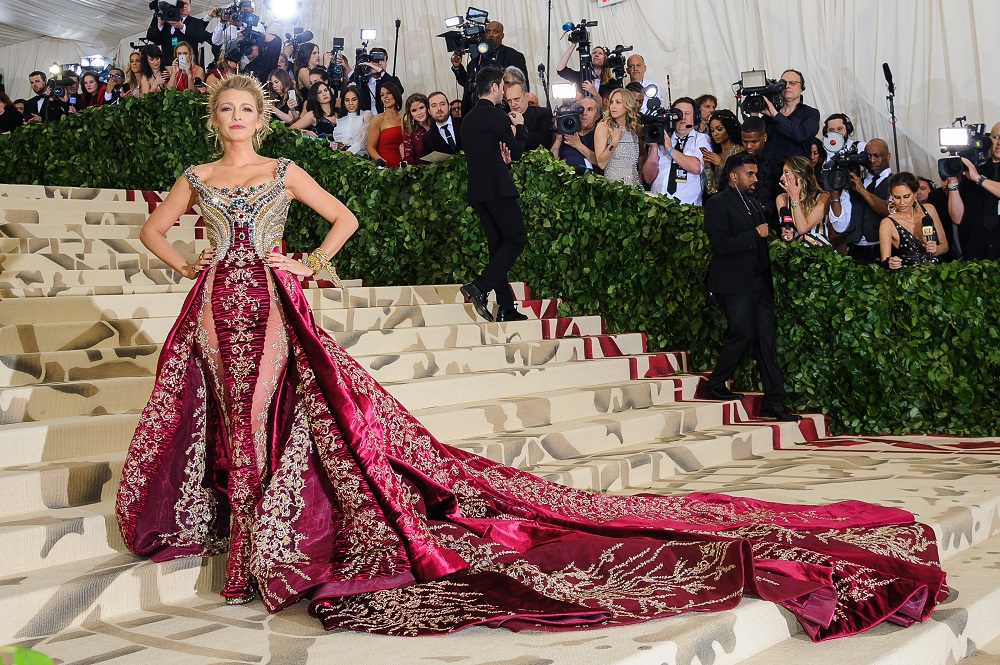
Blake Lively turned to Rococo painting for inspiration, arriving in a pastel-toned gown with a sweeping train, while Charli XCX offered a darker take on art references with a gothic interpretation of Irises.
Emma Chamberlain stole the show with a stunning gown, draping the carpet with a melting painting.
View this post on Instagram
Even the more surreal looks made an impact, with Heidi Klum transforming into a Grecian statue and Janelle Monáe blending technology and nature in a futuristic custom design.
Despite the conceptual direction, the ever-present “naked dress” trend didn’t disappear. Sheer fabrics and second-skin illusions were seen on Kate Moss, Gigi Hadid, and Joey King, proving that even in a theme-heavy year, some red carpet staples remain untouchable.
View this post on Instagram
Menswear also took a sharper turn, with leather tailoring emerging as a surprise trend. Nicholas Hoult and Luke Evans embraced tougher silhouettes, while Patrick Schwarzenegger added a cropped leather jacket to his tux.
View this post on Instagram
Dramatic capes, seen on Sam Smith, added further theatrical flair to the evening.
Beyond the fashion, the night retained its core purpose. The Met Gala remains the primary fundraiser for the museum’s Costume Institute, with designers purchasing tables and inviting celebrities to represent their vision on the red carpet.
Every guest list decision ultimately passes through Anna Wintour, ensuring the event maintains its reputation as the most exclusive invitation in fashion.
If previous years were about spectacle, Met Gala 2026 was about meaning.
From wearable sculptures to deeply personal interpretations of identity and form, the red carpet became less about dressing up — and more about making a statement.