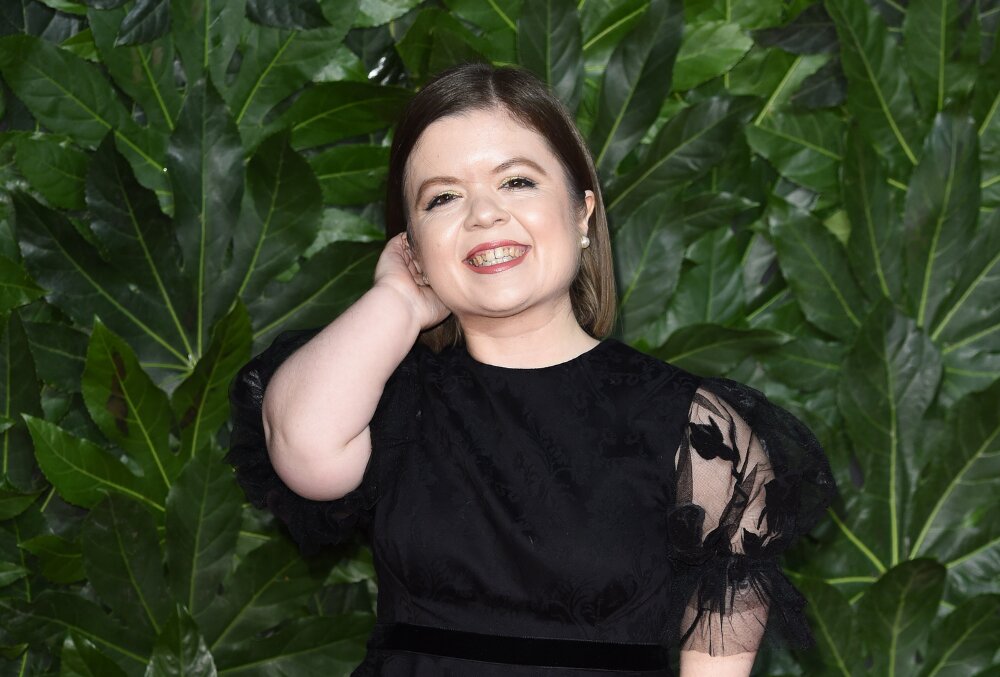

While the Met Gala 2026 delivered its usual spectacle of high fashion and celebrity glamour, an Irish voice was quietly reshaping the event behind the scenes — making it more accessible than ever before.
Sinéad Burke (born 1990) is an Irish writer, academic and disability activist, known for her TED talk 'Why design should include everyone'. She is the director of the consulting organisation Tilting the Lens, which works to raise the baseline standards in accessibility, towards design for an equitable and accessible world. She was a member of the Irish Council of State from 2019 to 2025.
Burke released her first book, Break the Mould, in October 2020. It was awarded the Specsavers Children's Book of the Year award at the An Post Irish Book Awards. Sinéad appeared on the cover of the 'Forces for Change' issue of British Vogue, guest-edited by the Duchess of Sussex. She also appeared on the cover of The Business of Fashion in May 2018 alongside Kim Kardashian with an interview as part of 'The Age of Influence' series.
Sinéad Burke, as the founder and CEO of Tilting the Lens, played a central role in advising the Costume Institute on how to improve inclusion at one of fashion’s most exclusive events.
Attending the invitation-only gala at the Metropolitan Museum of Art, Burke revealed that her work with the institution has been ongoing for well over a year.
“For the past 18 months, we have been working with the Costume Institute on a number of initiatives.”
A key part of that work is tied to this year’s exhibition, Costume Art, which for the first time includes a dedicated focus on disability and representation.
“This includes their 2026 exhibition 'Costume Art'. In this exhibition, for the first time, there is a whole section called 'The Disabled Body' which we consulted on.”
Burke explained that the exhibition not only broadens representation but actively highlights disabled creatives and lived experiences.
“We have suggested incredible disabled designers like Sugundha Gupta and Helen Cookman. We also have an amazing array of mannequins based on disabled bodies, from Aimee Mullins to myself.”
Beyond the exhibition itself, Burke’s influence extended to the physical experience of the Met Gala — particularly one of its most iconic but historically inaccessible features: the steps.
“In thinking about the Met Gala, for so many people with disabilities the steps are a symbol of inaccessibility,” she said.
For the first time, organisers introduced a step-free entrance designed to match the visual impact of the famous staircase, ensuring that accessibility did not come at the expense of the event’s aesthetic.
“So tonight, for the first time, those with physical disabilities are able to have fairer access to the Met Gala.”
Burke emphasised that this moment goes beyond a single event, framing it as part of a broader shift within the fashion industry.
“And what that really means is this is an explicit and radical invitation for disabled people to see themselves in fashion, to see themselves at the Met, to see themselves in the Costume Institute.”
However, she also acknowledged that more work remains.
“This is one milestone of many that we need. It also reveals the lack of disabled talent that we have in the fashion industry, the need to create pipelines of talent, and the need for more accessibility overall.”
Voir cette publication sur Instagram
Burke, who previously featured on the cover of British Vogue as part of a landmark issue spotlighting disabled voices, wore a black sequinned gown by Christian Siriano on the night — a fitting presence for someone helping redefine who fashion is truly for.
While the red carpet remained a showcase of creativity and couture, Burke’s contribution marked a significant step toward making that world more inclusive — ensuring that, for the first time, access and representation were part of the design.