

Netflix has confirmed that its smash-hit animated musical KPop Demon Hunters will return with a sequel — though fans will have to wait several years, with the follow-up film scheduled for 2029.
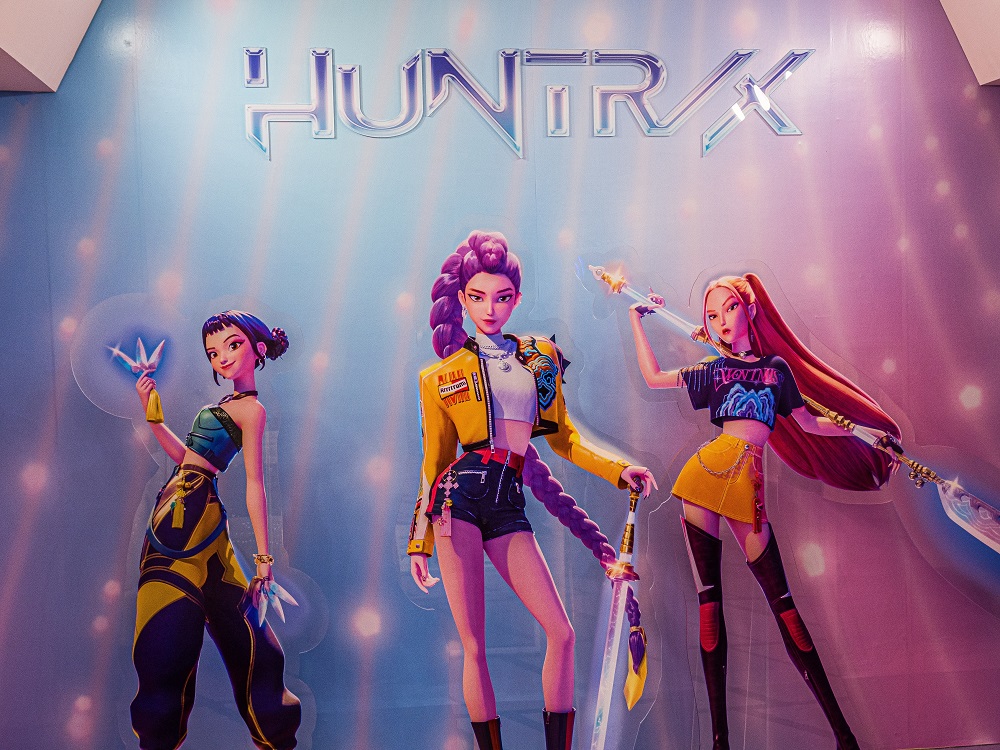
The original film, produced by Sony, follows fictional K-pop group Huntr/X, a trio made up of Rumi, Mira and Zoey, who secretly live double lives as demon hunters. While performing as global pop stars, they also battle supernatural threats targeting their fans — including a rival boy band known as the Saja Boys, who are actually demons in disguise.
Directors Maggie Kang and Chris Appelhans will both return to helm the sequel, continuing the animated universe they first introduced in 2025.
Kang said the overwhelming response to the original film has made the prospect of expanding the story especially meaningful.
“I feel immense pride as a Korean filmmaker that the audience wants more from this Korean story and our Korean characters.”
“There's so much more to this world we have built, and I'm excited to show you. This is only the beginning.”
The film features a star-studded voice cast, including Ken Jeong, known for The Hangover, and Daniel Dae Kim, famous for roles in projects such as Hellboy.
Meanwhile, the singing voices behind the fictional K-pop trio are provided by artists Ejae (Rumi), Audrey Nuna (Mira) and Rei Ami (Zoey).
When it debuted in June 2025, KPop Demon Hunters became a huge streaming success. According to Netflix’s platform Tudum, the film recorded more than 325 million views in its first 91 days, making it the most popular film in Netflix history.
Appelhans said the creative team is eager to revisit the world of the characters.
“These characters are like family to us, their world has become our second home.”
“We're excited to write their next chapter, challenge them, and watch them evolve, and continue pushing the boundaries of how music, animation, and story can come together.”
The film has also become a major awards contender. KPop Demon Hunters has picked up multiple honours, including awards at the Critics Choice Awards and the Golden Globe Awards, where it won Best Animated Motion Picture and Best Original Song for the track Golden.
The song made history earlier this year when it became the first K-pop track to win a Grammy Award, taking home Best Song Written for Visual Media at the Grammy Awards.
It has also been nominated for Best Original Song at the Academy Awards, where performers Ejae, Rei Ami, and Audrey Nuna are set to perform Golden during the ceremony.
The 98th Academy Awards, hosted by Conan O'Brien, will be broadcast live in Ireland on RTÉ channels RTÉ One from 11:00pm on Sunday, 15 March, with a repeat airing on RTÉ2 the following evening at 9:30pm.
How KPop Demon Hunters 'Golden' Might Make Oscar History
The song Golden from the animated film KPop Demon Hunters could be on the verge of making Academy Awards history, as it heads into the ceremony as one of the strongest contenders for Best Original Song.
The global smash has already built serious awards momentum after winning the category at both the Golden Globe Awards and the Critics Choice Awards, placing it firmly among the favourites heading into the Academy Awards, which will take place on March 15 at the Dolby Theatre in Los Angeles.
Beyond the awards buzz, the track has also become a genuine commercial phenomenon. “Golden” topped the Billboard Hot 100 for eight weeks, while the film’s soundtrack reached No. 1 on the Billboard 200> and spent 35 weeks inside the top 10 — a rare achievement for a soundtrack in the modern streaming era.
If the song does go on to win the Oscar, it would not just be another awards victory. It would mark several historic firsts for both the film industry and K-pop’s growing global influence.
One of the most unusual records relates to the number of songwriters involved. “Golden” is credited to seven writers: EJAE, Mark Sonnenblick, Joong Gyu Kwak, Yu Han Lee, Hee Dong Nam, Jeong Hoon Seo, and Teddy Park.
In the history of the Best Original Song category, no winning track has ever had more than four credited writers. The only previous winners with four writers were Arthur's Theme (Best That You Can Do) in 1982 and Shallow in 2018.
However, because the Academy of Motion Picture Arts and Sciences limits the number of physical trophies awarded in this category, a win for “Golden” would come with an unusual twist. The Academy typically gives no more than four statuettes, meaning all seven writers would technically become Oscar winners — but they would have to share a single trophy as a group.
Another record relates to the song’s chart success. If it wins, “Golden” would become only the third song in Oscar history to have spent eight or more weeks at No. 1 on the Billboard Hot 100 before winning the award. The only previous examples are You Light Up My Life, which topped the chart for 10 weeks in 1977, and Lose Yourself from 8 Mile, which ruled the chart for 12 weeks between 2002 and 2003.
It would also mark the first time in more than two decades that a song which had already reached No. 1 on the Hot 100 won the Oscar. In contrast, Shallow only climbed to the top of the chart after winning the award and being performed on the broadcast by Lady Gaga and Bradley Cooper.
A victory would also represent a major cultural milestone for South Korea’s music industry. Six of the seven writers behind the song were born in South Korea, meaning they would become the first South Korean winners ever in the Best Original Song category.
South Korean artists have made history at the Oscars before, most notably when Bong Joon-ho, Kwak Sin-ae, and Han Jin-won won multiple awards for Parasite in 2020, and when Youn Yuh-jung won Best Supporting Actress for Minari the following year.
But the song category has remained elusive for Korean artists. The closest previous attempt came when Karen O was nominated for The Moon Song, ultimately losing to Let It Go.
The potential historic moment extends beyond the song itself. Maggie Kang, who co-directed KPop Demon Hunters, is also seen as a strong contender in the Best Animated Feature race. If the film were to win, Kang could become the first South Korean filmmaker to receive that award.
Competition in the category remains strong. Other nominees include I Lied to You by Raphael Saadiq and Ludwig Göransson, Dear Me by Diane Warren, Sweet Dreams of Joy, and Train Dreams by Nick Cave and Bryce Dessner.
“Golden” and “I Lied to You” are also the only two nominees scheduled to be performed live during the Oscar ceremony, giving both songs an additional moment in the spotlight during the broadcast.
Regardless of the outcome, the song’s journey already reflects the growing crossover between global pop music and Hollywood filmmaking. K-pop has dominated streaming and touring charts for years, but an Oscar victory would mark one of the clearest signals yet that the genre’s influence now extends firmly into the film industry as well.
If “Golden” does take home the trophy on Oscar night, it would not just be another awards win — it would mark a major milestone for K-pop, South Korean creators, and the evolving global sound of cinema.