
The UK music industry has achieved another milestone, with its contribution to the national economy reaching a record €9 billion in 2024—marking a 5 per cent rise from the £7.6 billion recorded in 2023. This latest figure comes from the annual report by trade body UK Music, titled This Is Music 2025.
The report highlights a number of key drivers behind this growth. International revenue from British artists surpassed €5.4 billion, up 5% on the previous year. Across the industry, employment climbed to a record 220,000 full‐time equivalent posts—an increase of 2% from 2023.
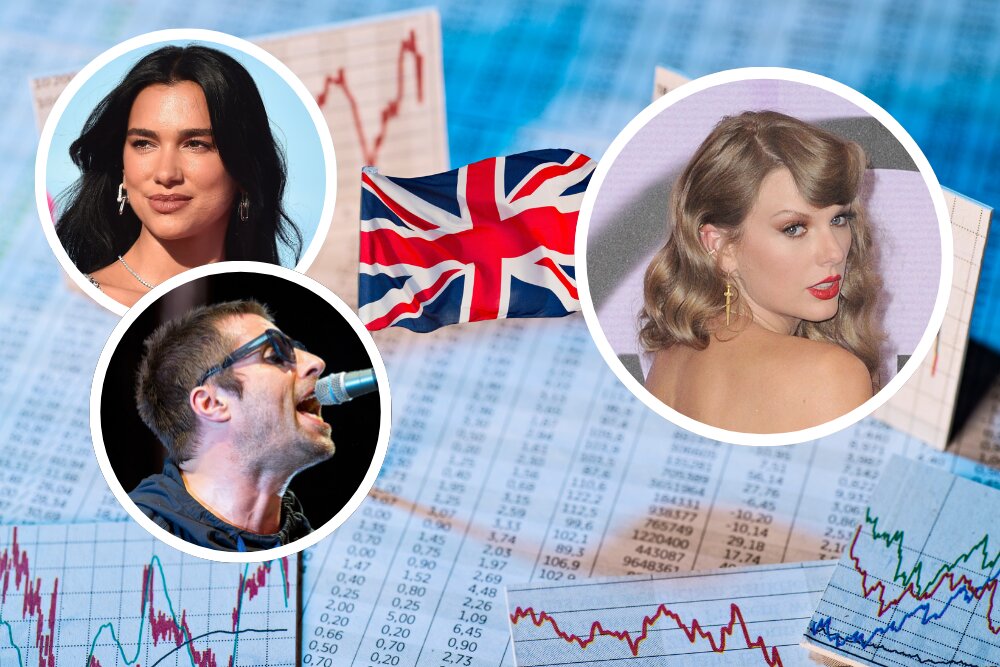
Major global tours from acts such as Taylor Swift, Take That, Liam Gallagher, and others are cited as major contributors, while rising exports from artists including Charli XCX and Dua Lipa helped push British music’s global footprint further.

Delving into the components, the report notes that royalties distributed to songwriters, composers and music publishers surpassed £1 billion for the first time—£1.02 billion, representing an 8.1 per cent increase from the previous year. Meanwhile, the recorded-music sector, covering physical sales, downloads and streaming, also showed growth.
Yet despite the good news, the report carries warnings. The rate of growth has slowed significantly: from double‐digit increases in previous years to 5 per cent in 2024.
UK Music’s Chief Executive Tom Kiehl remarked that “in recent years UK Music has reported that the music industry has enjoyed double-digit annual growth. That growth has now halved… This points to the need for urgent action. If problems are not addressed then future growth cannot be guaranteed.”
The report flags several structural challenges: lingering post-Brexit complications for touring in Europe, rising costs for artist development, and the impact of artificial intelligence on creativity and profits. For instance, nearly one-third of creators surveyed reported their earnings had declined due to changes in access to European markets.
While reports single out Dua Lipa and Charli XCX among others, they also underline that for the industry as a whole, it’s the large-scale live performances, merch, branding and global streaming combined that have moved the needle. That means the health of the ecosystem—venues, promoters, touring routes, artist development—is as important as headline acts.
The UK music industry is enjoying its best-ever economic outcome, but the slower rhythm of growth signals that maintaining momentum will require targeted policy support, investment and infrastructure. For Ireland, which often shares musical, cultural and export dynamics with its neighbour, the lessons are clear: global ambition, domestic support and adaptability in a changing market are key.