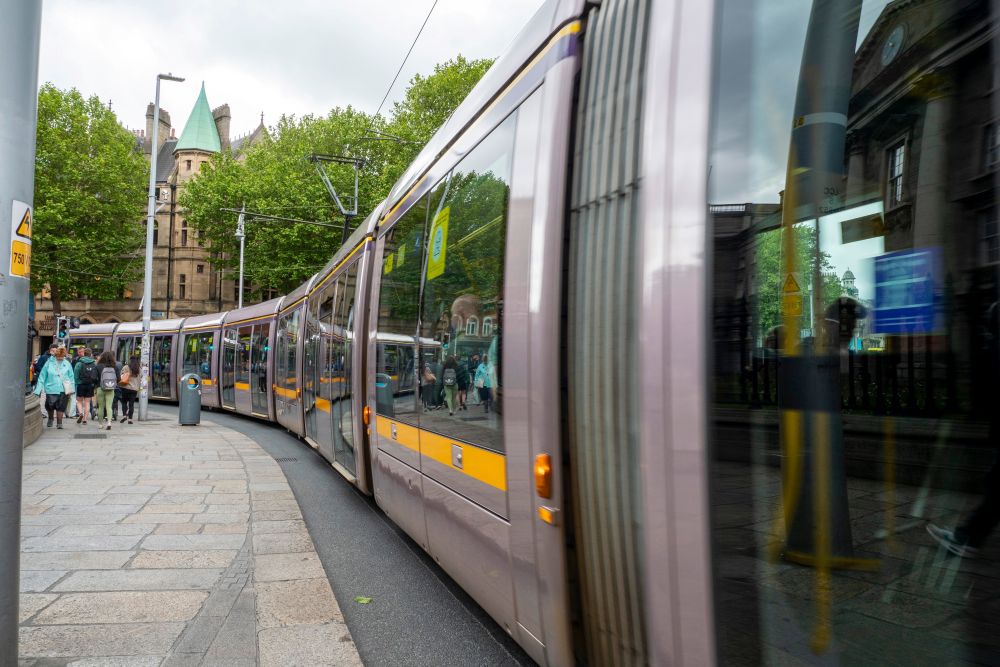

Sports clubs impacted by the proposed Cork Luas route should be compensated through the provision of new facilities and additional playing grounds, according to Transport Minister Darragh O’Brien.
The minister reiterated his support for the €2.5 billion light rail project and expressed confidence that construction could commence before the end of the current Government's term, despite opposition from some community groups and concerns raised by local politicians.
The preferred Luas Cork route would deliver a 20-kilometre east-west light rail network linking Ballincollig and Mahon, with 27 planned stops across the city. However, aspects of the route have drawn criticism from sports organisations, particularly Bishopstown GAA Club and Highfield Rugby Club, whose lands would be affected by the development.
Bishopstown GAA has pledged to oppose the plans, describing the proposed loss of club lands as unacceptable.
Speaking about the concerns, Mr O’Brien pointed to the experience of Dublin’s MetroLink project, where sports facilities affected by the scheme were compensated through investment in replacement infrastructure.
“You'll see that being done,” he said when asked whether similar measures would be provided for Cork clubs.
The minister highlighted the example of Fingallians GAA Club in Swords, which secured upgraded all-weather and floodlit pitches as part of MetroLink planning arrangements after some of its facilities were impacted.
“The community gain is not only the transport system, which people would say is badly needed, and it is, but is other planning gains for communities, and we've real live examples of that in the MetroLink project,” he said.
Mr O’Brien stressed that engagement with affected clubs would remain a priority throughout the planning process.
“What we've done in Fingal is we've got the local authority, TII, who are very good at this, engaging with the sports clubs right the way through the planning process, looking at where we can acquire a piece of land or looking at the State land there as well. We're very open to that,” he said.
The minister also sought to reassure those concerned about the project, noting that public consultation remains ongoing and could influence the final design.
“I don't want to pre-empt what the public consultation will bring forward, and then what the revision will be on the back of the public consultation, because it may be these things are worked out through the public consultation. But it is the preferred route,” he said.
“Public consultation is exactly that — it's there to listen to people.”
Concerns over the route have also emerged within Government ranks. Junior Transport Minister Jerry Buttimer recently stated that he was dissatisfied with elements of the current proposal.
Meanwhile, Transport Infrastructure Ireland (TII) defended the selected alignment, saying it was chosen following extensive assessment of alternative options.
A spokesperson for TII said the project had been designed to serve Cork’s long-term transport needs while acknowledging that some impact on local residents, businesses and landowners would be unavoidable.
Mr O’Brien said major infrastructure projects often attract objections but argued that effective consultation can significantly reduce opposition.
Referring to MetroLink, which received planning approval last year after a lengthy process, he said there were “very few objections” once communities were properly engaged.
The minister also pointed to reforms under the Planning and Development Act, which introduces statutory timelines for decisions on major infrastructure projects. He believes the legislation will help speed up delivery of the Cork Luas scheme.
“We are depending on the planning process,” he said, adding that Transport Infrastructure Ireland could advance procurement and other preparatory work in parallel with planning decisions.
Describing the project as transformative for the city, Mr O’Brien said the Luas would represent a significant investment in Cork’s future transport network.
While Cork’s light rail project continues to move forward, the minister acknowledged that proposals for a similar system in Galway remain at an earlier stage.
He said priority in Galway would be given to the long-planned ring road project, arguing that worsening traffic congestion must first be addressed.
According to Mr O’Brien, motorists face substantial delays travelling across Galway and accessing routes towards Connemara, making the road project a key infrastructure priority before consideration of a future light rail network.